
When a patient needs regular nursing support but prefers to stay at home, a Male Nurse at Home can provide professional care in a familiar environment.
Home nursing may be useful for elderly patients, people recovering after surgery, patients with limited mobility, individuals with chronic conditions, or those who need assistance with ongoing nursing tasks.
Home-based care can also reduce the practical difficulties of repeated hospital visits.
The World Health Organization recognizes home and community-based care as an important way to extend health services beyond hospitals, particularly for people who need ongoing support.
In Karachi, families can arrange male nursing support according to the patient’s condition, care requirements, schedule, and level of dependency.
This guide explains what male home nursing involves, who may need it, what services may be available, how to choose a suitable nurse, and what families should check before hiring one.
What Is a Male Nurse at Home?
A male nurse at home is a trained nursing professional who provides appropriate nursing care to a patient in their residence instead of requiring the patient to remain in a hospital or visit a clinic for every routine need.
The exact services depend on the nurse’s qualifications, scope of practice, and the patient’s care plan.
Nursing is broader than basic personal assistance. According to the World Health Organization, nursing includes care for people of different ages and health conditions and can involve health promotion, illness prevention, treatment, rehabilitation, and care for people with disabilities or serious illness.
For patients in Pakistan, it is sensible to verify that a nurse is appropriately registered or licensed.
The Pakistan Nursing & Midwifery Council (PNMC) is responsible for nursing registration and licensing in Pakistan and maintains standards related to professional nursing practice.
Why Do Patients Choose Male Home Nursing Care?
A male nurse may be preferred for practical, cultural, privacy, mobility, or personal care reasons.
Some male patients may feel more comfortable receiving certain types of assistance from a male caregiver.
Home nursing can also make daily care easier for families when a patient needs regular supervision or support but does not necessarily need to remain hospitalized.
Common reasons include:
- Assistance for elderly or dependent male patients
- Recovery after surgery or hospitalization
- Support for patients with limited mobility
- Assistance with personal hygiene and daily activities
- Nursing support for chronic or long-term conditions
- Wound and dressing care when clinically appropriate
- Monitoring of vital signs
- Support for patients requiring rehabilitation or recovery assistance
- Palliative or supportive care, when arranged according to the patient’s care plan
Home care does not replace emergency medical treatment.
A patient experiencing a serious or rapidly worsening condition may require a hospital or emergency department rather than routine home nursing.
Who May Need a Male Nurse Home Service?
A Male Nurse Home Service may be appropriate for patients whose condition requires regular nursing attention or assistance at home.
Elderly Patients
Older adults may need help with mobility, hygiene, medication routines, nutrition, monitoring, or other daily care activities.
The level of support should be based on the patient’s actual needs rather than age alone.
Patients Recovering After Surgery
After discharge, some patients may need assistance while they regain strength and mobility.
A nurse can help with appropriate nursing tasks and observe changes that may need to be communicated to the treating healthcare professional.
Patients With Limited Mobility
People who are temporarily or permanently unable to move around independently may need assistance with daily activities and nursing care.
Patients who spend prolonged periods in bed can also be at increased risk of pressure injuries.
Regular repositioning, skin checks, and appropriate preventive measures can be important parts of care for patients at risk.
Patients With Chronic Conditions
Some people with long-term health conditions may require regular monitoring and support at home.
However, the nurse’s responsibilities should follow an appropriate clinical plan and remain within their professional scope.
Patients Who Need Personal Care Support
Depending on the patient’s condition and the service arrangement, home care may include assistance with bathing, grooming, dressing, mobility, feeding, and other activities of daily living.
WHO distinguishes professional health workers from home-based personal care workers, so families should clarify whether they are hiring a registered nurse, healthcare assistant, or another type of caregiver.
What Services Can a Male Nurse Provide at Home?
The exact services available vary between providers and depend on the nurse’s qualifications and the patient’s medical needs.
A suitable home nursing plan may involve patient assessment, monitoring, basic nursing procedures, personal care support, wound care, mobility assistance, and communication with the patient’s doctor or family.
Vital Sign Monitoring
Depending on the patient’s needs, monitoring may include:
- Blood pressure
- Pulse
- Temperature
- Respiratory rate
- Oxygen saturation
Regular observations can help families and healthcare professionals identify changes that may require attention.
Wound and Dressing Care
Patients recovering from surgery or dealing with wounds may need dressing changes and wound observation according to their clinical plan.
Professional wound care may involve assessing the wound, following appropriate dressing procedures, maintaining hygiene, and reporting concerning changes.
Specialist nursing services can also provide wound management and pressure ulcer prevention in home settings.
A nurse should not independently change a prescribed wound treatment plan without appropriate clinical direction.
Personal Hygiene and Daily Assistance
Some dependent patients require help with:
- Bathing
- Grooming
- Changing clothes
- Toileting
- Position changes
- Eating or drinking assistance
- Moving safely around the home
This support can be particularly valuable when family members cannot remain with the patient throughout the day.
Mobility and Positioning Support
Patients with reduced mobility may need assistance moving from a bed to a chair or changing positions safely.
For people who remain in bed for extended periods, appropriate positioning and skin monitoring can help reduce the risk of pressure injuries.
Catheter or Other Nursing Care
Some patients may require catheter care or other clinical nursing tasks.
These should only be performed by appropriately trained personnel and according to the patient’s clinical requirements.
Community nursing services in some healthcare systems include wound care, catheter care, continence support, blood tests, insulin administration, and palliative care, illustrating how home nursing can range from basic support to more specialized services.
Post Hospitalization Support
After discharge, a patient may still require assistance at home. A nurse can help families follow the prescribed care routine, observe the patient’s condition, and communicate relevant concerns to the appropriate healthcare professional.
Male Nurse at Home vs Male Caregiver: What Is the Difference?
The terms nurse and caregiver should not be treated as interchangeable.
A registered nurse has professional nursing education and regulatory requirements, while a caregiver may primarily assist with personal care and daily activities.
|
Factor |
Male Nurse |
Male Caregiver |
|
Main role |
Nursing and patient care |
Daily living and personal assistance |
|
Clinical training |
Nursing education and professional registration may apply |
Training level can vary |
|
Vital monitoring |
May be part of nursing duties |
May be limited or performed under direction |
|
Wound care |
May be provided when within training and scope |
Usually requires appropriate supervision or referral |
|
Personal care |
Can provide or supervise appropriate care |
Common part of caregiver duties |
|
Clinical procedures |
Depends on qualification and scope |
Generally more limited |
|
Best suited for |
Patients requiring nursing support |
Patients mainly need daily assistance |
Before arranging care, families should ask exactly what professional category the person belongs to and what services they are qualified to provide.
How Does Home Male Nursing Care Work?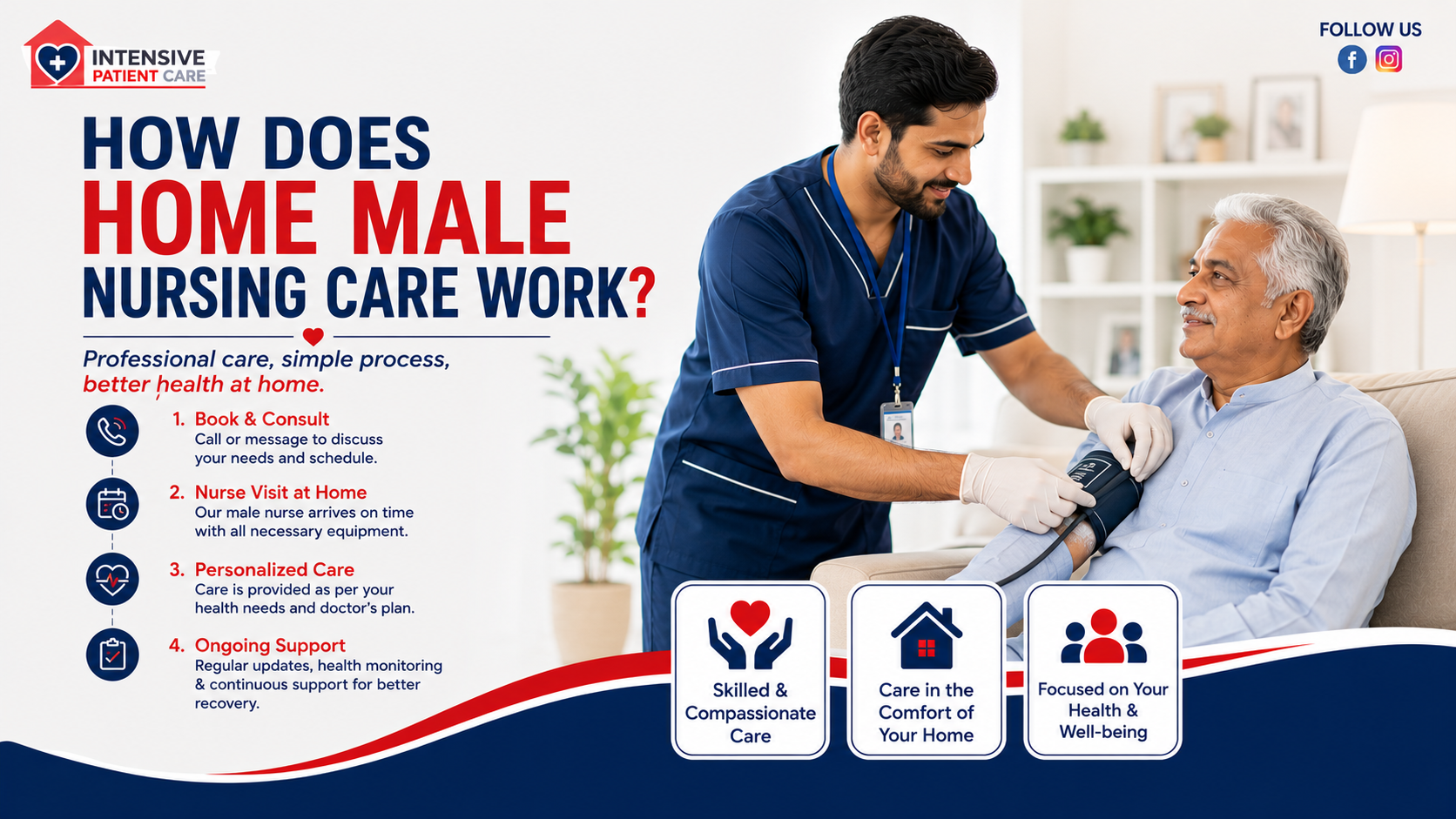
The process usually starts by identifying the patient’s care needs.
The family or service provider should gather information about the patient’s diagnosis, mobility, daily routine, nursing requirements, medication schedule, recent hospital discharge instructions, and any special equipment needed.
A suitable nurse can then be assigned according to the patient’s needs and the agreed schedule.
For example, an elderly male patient recovering after surgery may need assistance with mobility, wound care, vital sign monitoring, personal hygiene, and communication with family members.
Another patient may only need a few hours of support each day.The care arrangement should therefore be based on the patient rather than simply selecting the cheapest or most readily available option.
How to Hire a Male Nurse at Home in Karachi
Searching for a Male Home Nurse Near Me can produce many options, but proximity should not be the only factor.
1. Confirm Nursing Credentials
Ask for evidence of relevant nursing education, registration, licensing, or professional credentials.
In Pakistan, PNMC provides registration and licensing services for nursing professionals.
2. Explain the Patient’s Condition Clearly
Tell the provider about the patient’s current condition, mobility, nursing procedures, personal care requirements, and any special needs.
This allows the provider to determine whether the assigned nurse is appropriate.
3. Ask About Relevant Experience
If the patient needs wound care, postoperative support, catheter care, elderly care, or another specific service, ask whether the nurse has appropriate training and experience for that responsibility.
Do not assume that every nurse has the same clinical skills or specialty experience.
4. Clarify the Working Schedule
Discuss whether the patient needs:
- Short daily visits
- Daytime nursing
- Night nursing
- 12-hour care
- 24-hour support
- Temporary post-hospital care
- Longer-term assistance
The schedule should match the patient’s actual care needs.
5. Discuss Costs Before Starting
Home nursing charges can depend on factors such as care complexity, working hours, visit frequency, location, and required services.
Instead of relying on a generic advertised price, ask for a clear estimate based on the patient’s specific requirements.
6. Ask About Backup Arrangements
If a nurse becomes unavailable, the family should know whether the provider can arrange a replacement.
This is particularly important for patients who depend on continuous care.
What Should Families Check Before Hiring a Male Nurse?
Choosing the right nurse is not only about availability. Patient safety, professional competence, communication, and reliability should be considered.
Important checks include:
- Relevant nursing qualification and registration
- Experience with the patient’s specific care requirements
- Clear working hours and responsibilities
- Communication with family members
- Hygiene and infection prevention practices
- Emergency escalation procedures
- Availability of replacement staff if required
- Clear payment terms
- Privacy and confidentiality expectations
The Pakistan Nursing & Midwifery Council provides official information about nursing registration, licensing, recognized institutions, and professional regulation in Pakistan.
Families can use official regulatory information when verifying professional credentials.
What Questions Should You Ask Before Hiring?
Before arranging Home Male Nursing Care, families should ask practical questions rather than relying only on promotional descriptions.
Consider asking:
- What nursing qualification does the nurse have?
- Is the nurse registered or licensed where applicable?
- Has the nurse cared for patients with similar needs?
- What services are included?
- What services are not included?
- Is the service available during nights or weekends?
- What happens if the assigned nurse is unavailable?
- How will changes in the patient’s condition be reported?
- What are the charges and payment terms?
- Who should the family contact if there is a concern?
These questions can prevent misunderstandings after care begins.
Common Mistakes When Hiring Home Nursing Services
Families sometimes choose a home nurse based only on price or immediate availability. That can be risky when the patient requires clinical care.
Another mistake is assuming that a nurse can independently handle every medical situation.
Nursing care has professional boundaries, and serious changes in a patient’s condition may require physician assessment or hospital treatment.
Families should also avoid hiding important information about the patient’s condition.
Accurate information helps the provider determine what level of care is appropriate.
Finally, do not assume that home nursing is an alternative to emergency care.
If a patient develops severe breathing difficulty, chest pain, loss of consciousness, sudden weakness, uncontrolled bleeding, severe confusion, or another potentially life-threatening symptom, seek urgent medical attention.
Why Choose Intensive Patient Care for Home Nursing Support?
If Intensive Patient Care is being considered for home nursing support in Karachi, families should discuss the patient’s exact requirements before arranging service.
The appropriate care plan may differ significantly between a patient recovering from surgery and someone who needs long-term assistance with mobility and daily activities.
Therefore, families should provide accurate information about the patient’s condition and ask which nursing services are appropriate.
Any service provider should be evaluated on the basis of professional qualifications, suitability for the patient’s needs, clear communication, availability, and transparent service arrangements rather than unsupported claims such as “best” or “number one.”
When Is Home Nursing Not Enough?
Home nursing can support many patients, but it does not replace emergency or specialist medical care.
A patient may need urgent medical evaluation if there is a sudden or severe deterioration, such as:
- Severe difficulty breathing
- Chest pain
- Unconsciousness or inability to wake
- New severe confusion
- Sudden weakness or difficulty speaking
- Heavy or uncontrolled bleeding
- Severe allergic reaction
- A rapidly worsening condition
A nurse may identify a concerning change, but the next step depends on the situation and may require a doctor, emergency service, or hospital.
Frequently Asked Questions
What is a male nurse at home?
A male nurse at home is a qualified nursing professional who provides appropriate nursing support to a patient in their residence.
Services can vary from monitoring and personal care assistance to wound care or other nursing procedures, depending on the nurse’s qualifications and the patient’s care plan.
Can I hire a male nurse at home in Karachi?
Yes, home nursing services can be arranged in Karachi through suitable healthcare providers.
Before hiring, verify the nurse’s qualifications, professional registration where applicable, experience, service scope, working hours, and charges.
Who needs a male home nurse?
A male home nurse may be useful for elderly patients, people recovering after surgery, patients with limited mobility, individuals with chronic conditions, or people who require ongoing nursing support at home. The appropriate level of care depends on the patient’s medical and personal needs.
What services can a male nurse provide at home?
Depending on qualifications and the care plan, services may include vital sign monitoring, wound and dressing care, mobility assistance, personal hygiene support, catheter related care, post hospital support, and other appropriate nursing tasks.
Is a male nurse the same as a male caregiver?
No. A nurse and caregiver can have different qualifications, responsibilities, and scopes of practice.
A caregiver may mainly provide assistance with daily activities, while a qualified nurse can provide professional nursing care within their training and scope.
How do I find a male home nurse near me?
Start by identifying the patient’s required services and preferred schedule. Then compare qualified providers in your Karachi area, verify professional credentials, ask about relevant experience, confirm service availability, and discuss the complete cost before care begins.
How much does a male nurse at home cost in Karachi?
There is no single price that applies to every patient. Charges can vary depending on the nurse’s qualifications, hours, number of visits, care complexity, location, and required services. Request a patient-specific quotation rather than relying on a generic price.
Can a male nurse provide 24-hour home care?
Some home nursing providers may arrange extended or round-the-clock care, but availability depends on staffing and the patient’s needs.
If continuous care is required, ask about shift arrangements, nurse replacement, supervision, and emergency escalation procedures.
Conclusion
A Male Nurse at Home can be a practical option for patients who need nursing support while remaining in their own home.
It may help elderly patients, people recovering after hospitalization, individuals with reduced mobility, and patients requiring ongoing assistance.
For families in Karachi, the priority should be selecting care based on the patient’s actual needs rather than choosing a provider solely because it is nearby or inexpensive.
Verify professional credentials, clarify the nurse’s responsibilities, discuss schedules and costs, and ensure the service is appropriate for the patient’s condition.
If you are considering Intensive Patient Care, discuss the patient’s requirements in detail before arranging home nursing support.
A clear care plan and appropriate professional involvement can help families make a safer and more informed decision.