
When a patient needs close medical monitoring after hospital discharge, an ICU Nurse at Home can provide skilled nursing support in a familiar home environment.
Home-based critical care may be appropriate for selected patients who are medically stable enough to leave the hospital but still require regular assessment, nursing procedures, monitoring, or support with complex care.
Critical care nursing is a specialized area of nursing for patients who have actual or potential life-threatening health problems.
The American Association of Critical-Care Nurses notes that critical care nursing can extend beyond traditional intensive care units into settings such as home health, depending on the patient’s needs.
For families in Karachi, arranging an ICU Nurse at Home in Karachi may be considered when a doctor recommends continued skilled nursing care outside the hospital.
This guide explains what home ICU nursing involves, who may need it, what a critical care nurse can do, how 24-hour care works, and what families should check before selecting a service.
What Is an ICU Nurse at Home?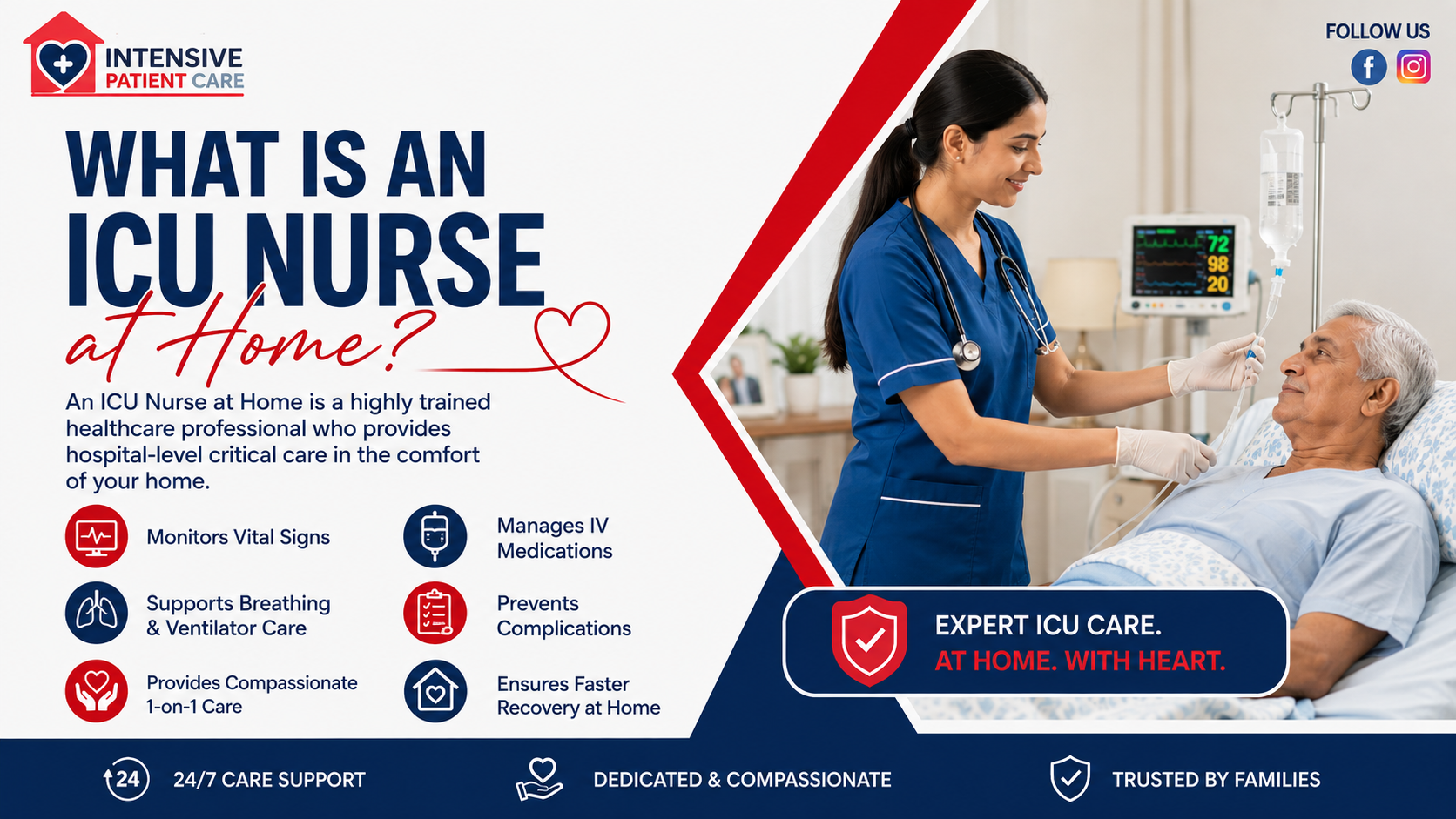
An ICU nurse at home is a qualified nursing professional who provides specialized care to critically ill or medically complex patients in their own residence.
Depending on the care plan, responsibilities may include patient assessment, monitoring vital signs, administering medication as prescribed, providing wound care, managing catheter care, providing respiratory support, documenting patient care, and communicating with the treating medical team.
Home ICU nursing is not simply a replacement for a hospital intensive care unit. The level of care possible at home depends on the patient’s medical condition, available equipment, nursing expertise, physician’s instructions, and emergency arrangements.
Critical care nurses are trained to care for patients with complex and potentially life-threatening conditions.
Who May Need Critical Care Nursing at Home?
A patient may require a Critical Care Nurse at Home after a serious illness, major surgery, prolonged hospital admission, neurological event, severe infection, respiratory problem, or another condition requiring close nursing observation.
The decision should not be based only on the family’s preference. A physician or appropriate healthcare team should determine whether the patient’s condition can safely be managed at home.
Home nursing may be considered for patients who:
- Need frequent nursing assessment and monitoring
- Require continued care after hospital discharge
- Have complex wounds or surgical sites
- Need assistance with prescribed oxygen or respiratory equipment
- Require catheter or feeding tube care
- Have limited mobility and need regular repositioning
- Need ongoing nursing observation because of a complex medical condition
- Require post ICU nursing support after becoming stable enough for home care
- Need long term nursing assistance under a physician directed care plan
The exact service should be matched to the patient’s condition rather than selected solely because it is described as “ICU” or “critical care.”
What Does Home ICU Nursing Care Include?
Home ICU Nursing Care can vary considerably from one patient to another. A nurse should follow an individualized care plan based on the patient’s diagnosis, current condition, prescribed treatments, equipment, and instructions from the healthcare team.
Depending on the patient’s needs and the nurse’s scope of practice, services may include:
Patient Assessment and Monitoring
A critical care nurse can monitor relevant clinical observations such as temperature, pulse, blood pressure, respiratory rate, oxygen saturation, level of consciousness, fluid intake and output, and other parameters specified by the care plan.
Regular observation is particularly important when a patient’s condition can change quickly.
Medication Support
A nurse may administer medications according to the prescription and care plan, monitor the patient for relevant changes, and document care.
Families should not ask a nurse to independently change medication doses or treatment plans without appropriate medical direction.
Wound and Post Surgical Care
Some patients return home with surgical wounds, pressure injuries, drains, or other areas requiring professional nursing attention.
Care may involve assessment, dressing changes, infection prevention practices, and reporting concerning changes to the treating clinician.
Catheter and Feeding Tube Care
Patients who cannot independently manage urinary catheters, feeding tubes, or other devices may require skilled nursing assistance.
The nurse can follow the prescribed care routine, monitor for problems, and communicate concerns to the appropriate healthcare professional.
Respiratory Support
Some medically complex patients require oxygen therapy or other respiratory equipment at home.
Home oxygen should be used according to medical advice. For example, the NHS notes that oxygen therapy is prescribed following clinical assessment, and safe use requires appropriate equipment and precautions.
The nurse’s role depends on the equipment, the patient’s condition, training, and medical plan. Not every home nurse is qualified or equipped to manage every form of respiratory support.
Mobility, Positioning, and Personal Care
Critically ill or weak patients may spend long periods in bed. Appropriate positioning, mobility assistance, hygiene support, and skin observation can form part of a broader nursing care plan.
These measures can be particularly important for patients with limited mobility.
What Is 24/7 ICU Nurse at Home Care?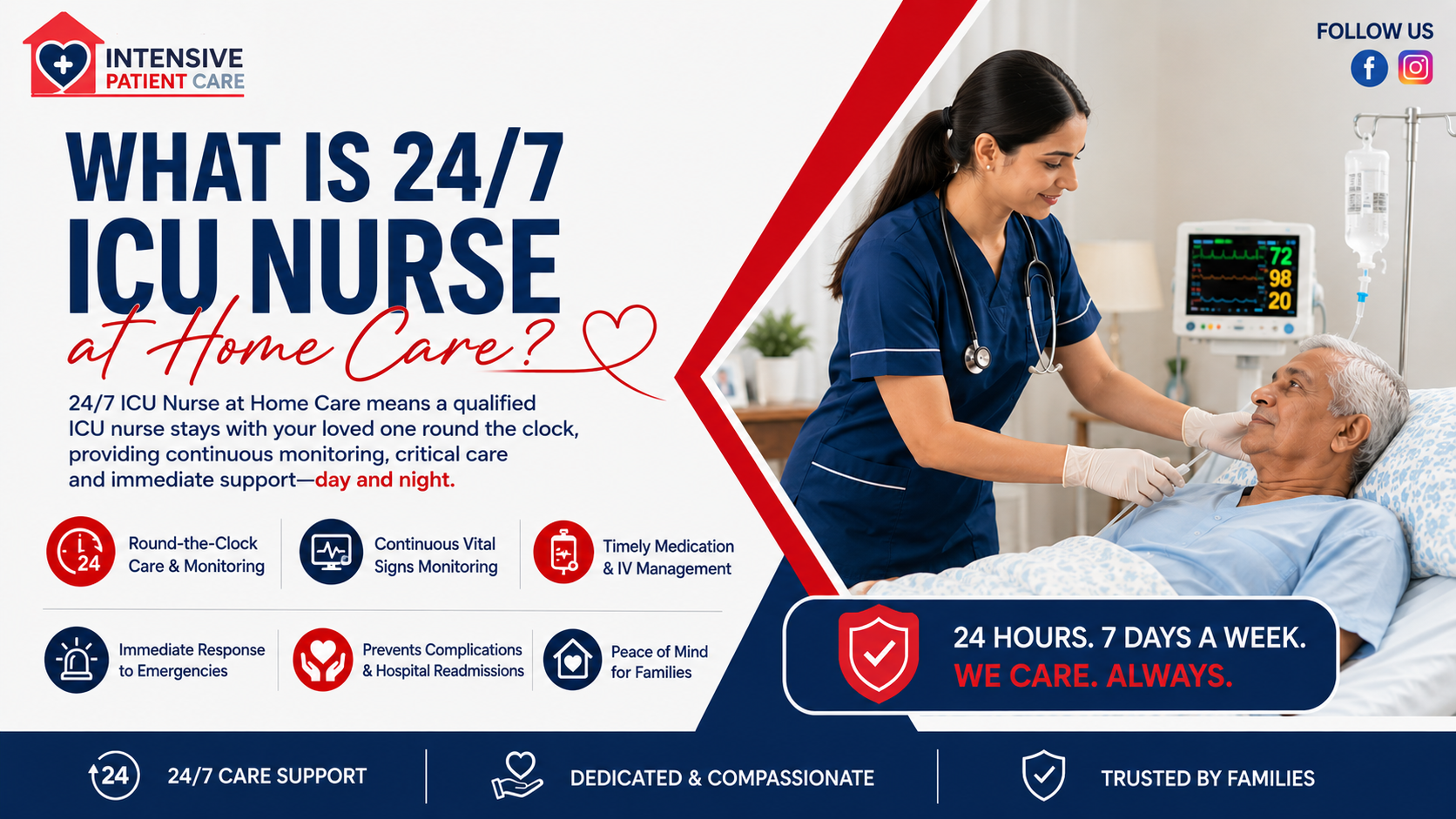
A 24/7 ICU Nurse at Home arrangement generally means nursing coverage is organized around the clock so that the patient has continuous professional nursing supervision.
This does not necessarily mean that one nurse works continuously for 24 hours. A provider may arrange shifts involving multiple nurses to maintain coverage while allowing appropriate rest periods.
Before arranging round-the-clock care, families should clarify:
- Number and length of nursing shifts
- Nurse qualifications and registration
- Whether critical care experience is required for the case
- What happens if a nurse is unavailable
- Who supervises the nursing team
- How changes in the patient’s condition are escalated
- Whether a physician is available for medical decisions
- What equipment is supplied, and what the family must arrange
- How emergency transfers will be handled
Continuous nursing supervision can be useful for patients who require frequent observation, but it does not eliminate the need for an emergency plan.
ICU Nurse at Home vs General Home Nurse
Not every patient receiving home nursing needs critical care expertise. The correct level of care depends on the patient’s clinical condition.
|
Factor |
General Home Nursing |
Critical Care Nursing at Home |
|
Typical need |
Routine or moderate nursing support |
Complex or high-risk patient care |
|
Monitoring |
Based on the care plan |
Often requires closer clinical observation |
|
Patient condition |
Usually stable |
May have a higher risk of deterioration |
|
Equipment |
Basic or condition-specific |
May involve more complex medical equipment |
|
Clinical expertise |
General nursing skills |
Critical care knowledge and relevant experience |
|
Care intensity |
Low to moderate |
Moderate to high, depending on the case |
|
Physician involvement |
As required |
Often important for complex cases |
|
Emergency planning |
Recommended |
Particularly important |
The terminology used by providers can differ, so families should ask what qualifications and clinical experience a particular nurse actually has rather than relying only on the service title.
What Are the Benefits of Critical Care Nursing Services at Home?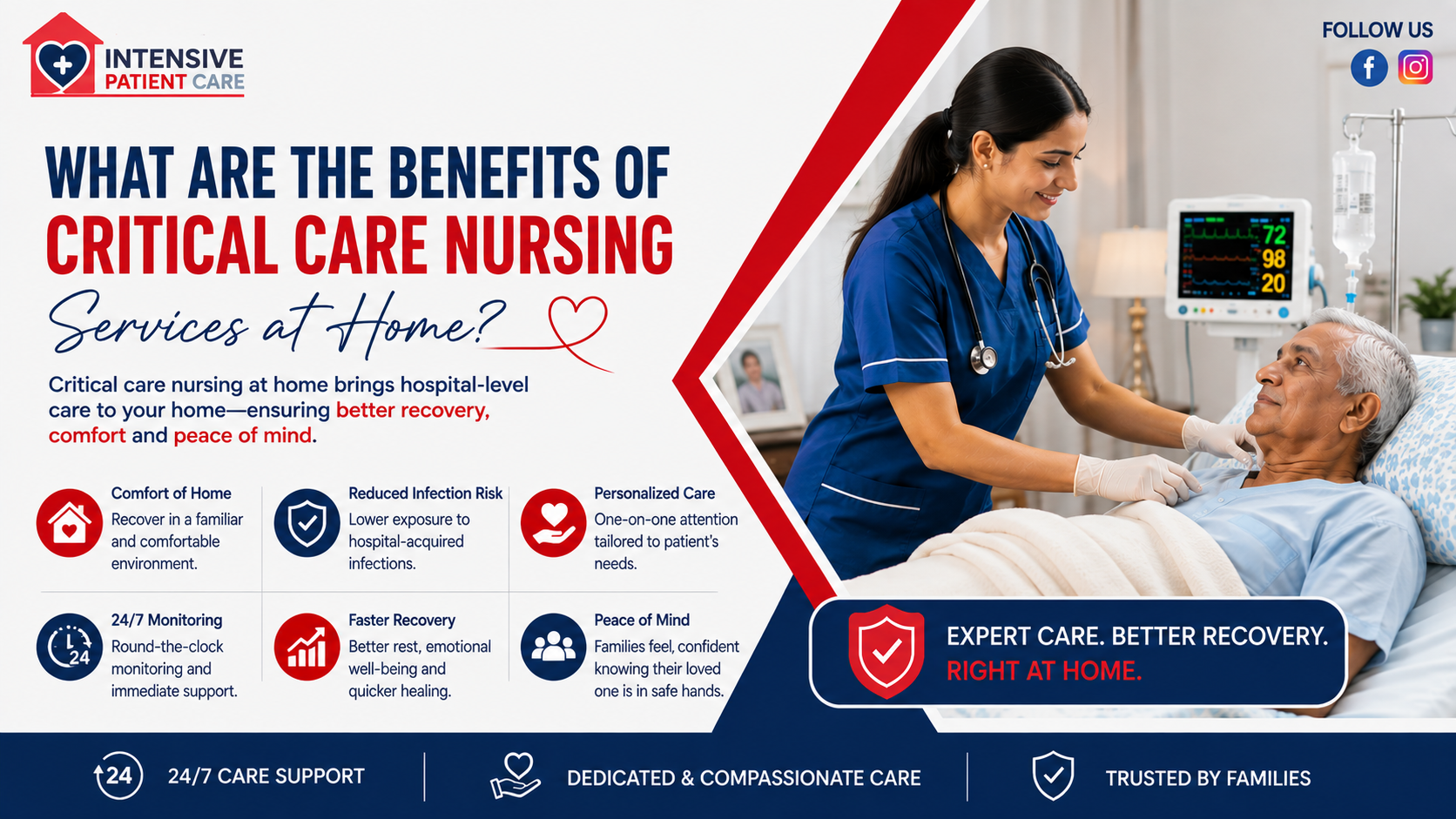
Home nursing can offer several practical advantages when a patient’s condition is appropriate for home based care.
Familiar Environment
Being cared for at home can allow patients to remain in a familiar environment surrounded by family members. This may be particularly valuable during longer recovery periods.
Continuous Nursing Observation
For patients who need frequent observation, having a nurse present can help the family manage routine nursing responsibilities and identify changes that should be reported to the medical team.
Support for Family Caregivers
Caring for a medically complex patient can be demanding. Professional nursing support can reduce the amount of skilled clinical care that family members must attempt to provide themselves.
Better Care Coordination
A home nurse can document observations and communicate relevant changes to the treating healthcare team according to the care plan.
Support After Hospital Discharge
Some patients remain medically complex even after they no longer require inpatient hospital treatment. Home nursing can help continue prescribed care during the recovery period.
Home based care is also recognized as one setting in which formal long term care can be delivered, although the exact services and level of medical support vary by patient and healthcare system.
What Should Families Check Before Hiring an ICU Nurse at Home?
Choosing a home nurse for a critically ill patient requires more than checking availability and price. The patient’s condition should determine the qualifications and level of support needed.
In Pakistan, the Pakistan Nursing and Midwifery Council (PNMC) is responsible for nursing registration and licensing and maintains standards relating to nursing education and professional practice.
Families can therefore ask to verify a nurse’s professional registration and relevant credentials.
Before hiring a provider, ask about:
- Nursing registration: Can the nurse’s current professional registration be verified?
- Clinical experience: Does the nurse have experience relevant to the patient’s condition?
- Critical care background: If the patient requires complex care, does the assigned nurse have appropriate critical care experience?
- Care plan: Is the service based on documented physician or healthcare team instructions?
- Supervision: Who supervises the nurse and handles clinical concerns?
- Equipment: Which medical devices and supplies are available?
- Shift coverage: What happens when the assigned nurse is off duty?
- Emergency response: What should the family do if the patient suddenly deteriorates?
- Documentation: Are nursing observations and procedures recorded?
- Communication: How does the provider communicate with the patient’s doctor or hospital?
For patients in Karachi, these checks are particularly useful when comparing Critical Care Nursing Services at Home.
How Does ICU Nursing at Home Work?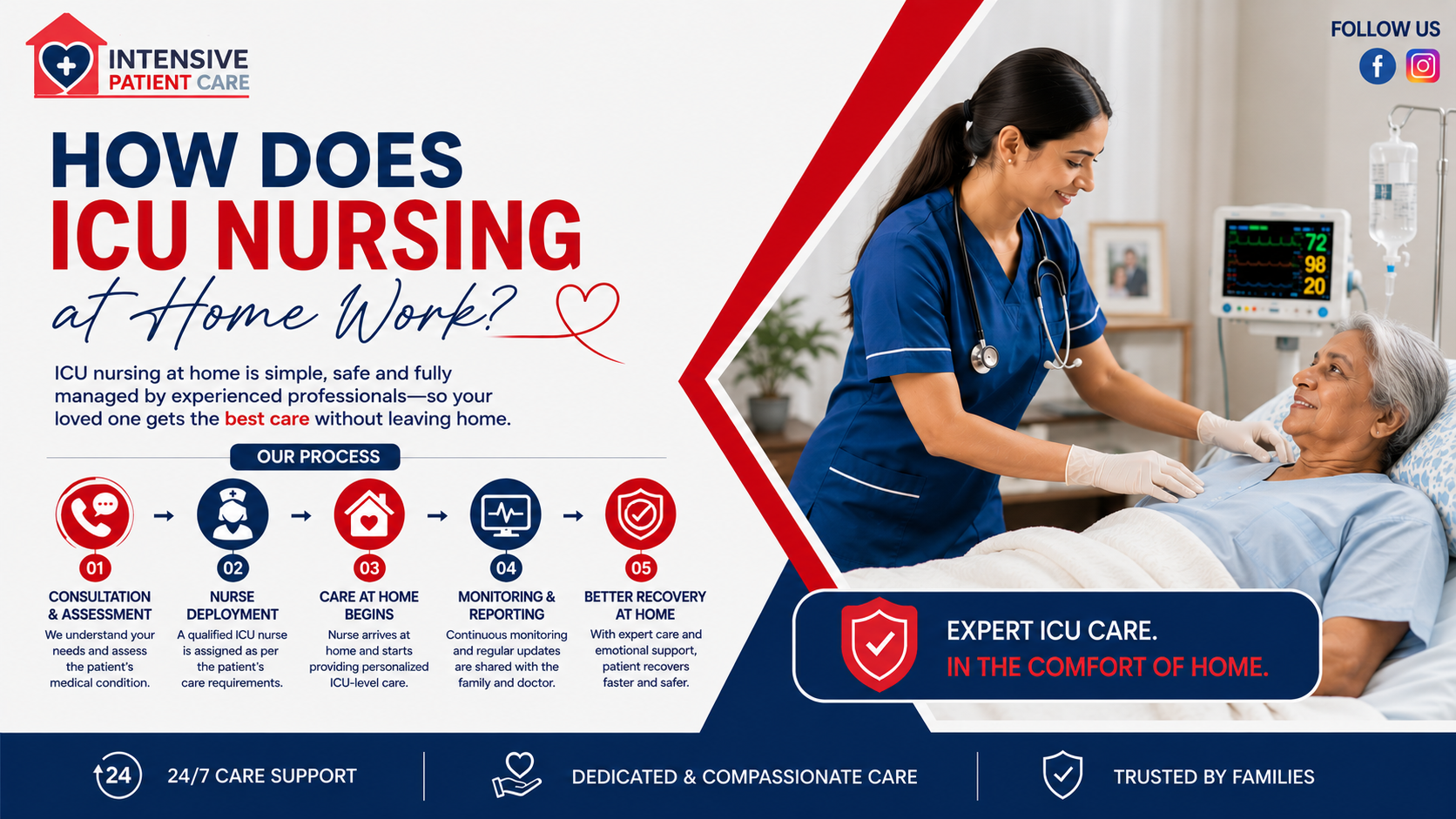
The process usually begins with an assessment of the patient’s condition and care requirements.
Step 1: Review the Patient’s Medical Condition
The family should provide relevant hospital discharge documents, prescriptions, diagnoses, current treatment instructions, and information about medical equipment.
Step 2: Determine the Required Nursing Level
The provider should assess whether the patient needs a general home nurse, specialized nurse, critical care nurse, or another form of professional support.
Step 3: Create a Care Plan
The nursing schedule and responsibilities should be based on the patient’s medical needs and the healthcare team’s instructions.
Step 4: Prepare the Home Environment
Depending on the patient’s condition, the home may need a suitable bed, oxygen equipment, monitoring devices, suction equipment, feeding supplies, wound care materials, or other prescribed items.
Equipment should be selected according to professional advice rather than purchased simply because it is commonly associated with ICU care.
Step 5: Begin Nursing Care
The nurse follows the care plan, monitors relevant observations, performs permitted nursing procedures, documents care, and reports important changes.
Step 6: Review the Care Plan
As the patient’s condition changes, the healthcare team may adjust the level of nursing support. Some patients may eventually require fewer nursing hours, while others may need continued intensive support.
Important Limitations of Home ICU Nursing
Home nursing has advantages, but it is not suitable for every critically ill patient.
A hospital ICU has access to specialized equipment, multiple healthcare professionals, laboratory testing, imaging, emergency procedures, and rapid escalation of treatment. A home environment cannot reproduce all of these resources.
A patient who requires hospital-level intensive care may need to remain in or return to a hospital.
Families should also remember that an ICU Nurse at Home does not replace a physician, emergency department, intensive care unit, or ambulance service.
When Should a Patient Be Taken for Emergency Care?
A home nurse or family caregiver should follow the patient’s individualized emergency plan. Sudden or severe deterioration can require immediate medical attention rather than waiting for a routine nursing visit.
Urgent assessment may be needed for signs such as:
- Severe difficulty breathing
- Sudden loss of consciousness
- New severe confusion or markedly reduced responsiveness
- Seizures
- Sudden chest pain or severe symptoms
- Significant bleeding
- Rapid deterioration in the patient’s overall condition
- Any emergency warning specifically identified by the treating physician
Do not attempt to manage a medical emergency solely through home nursing. If the patient’s condition appears life threatening, activate the appropriate local emergency response and follow the medical team’s emergency instructions.
Common Mistakes Families Should Avoid
Hiring home nursing without first establishing the patient’s actual clinical needs can create unnecessary risk.
Common mistakes include:
- Choosing a nurse only because the service is inexpensive
- Assuming every home nurse has ICU level experience
- Failing to verify nursing registration
- Not providing the nurse with current medical instructions
- Using medical equipment without proper professional guidance
- Asking the nurse to independently alter prescriptions
- Having no backup nurse for a 24 hour arrangement
- Not preparing an emergency transfer plan
- Failing to document changes in the patient’s condition
- Treating home nursing as a substitute for hospital treatment when the patient needs acute intensive care
The safest approach is to match the patient’s needs with the appropriate level of professional nursing support.
Is ICU Nurse at Home Available in Karachi?
Families looking for ICU Nurse at Home in Karachi should compare providers based on clinical suitability, nurse qualifications, availability, supervision, equipment, communication, and emergency arrangements.
A service such as intensive patient care may be considered when a family needs organized nursing support for a medically complex patient at home.
However, families should evaluate the actual care plan and credentials of the assigned nursing professional rather than relying on promotional descriptions.
For a critically ill patient, ask the provider directly whether the assigned nurse has experience with the specific condition or equipment involved. The answer should be based on the patient’s individual needs.
Questions to Ask a Home Nursing Provider
Before starting care, families can ask:
- Is the assigned nurse registered with the relevant Pakistani nursing authority?
- Does the nurse have critical care experience?
- Can the nurse manage the patient’s specific medical equipment?
- Is nursing care available during the required hours?
- Can the provider arrange 24 hour shift coverage?
- Who will supervise the care?
- How are clinical changes reported to the doctor?
- What equipment is included?
- What supplies must the family purchase?
- What is the plan if the assigned nurse cannot attend?
- What should the family do during an emergency?
- Can the service be adjusted as the patient’s condition improves?
These questions can make it easier to compare Home ICU Nursing Care providers objectively.
Frequently Asked Questions
What is an ICU nurse at home?
An ICU nurse at home provides professional nursing care to a medically complex or critically ill patient in a home setting. Care may include monitoring, prescribed treatments, wound care, device management, documentation, and communication with the healthcare team, depending on the patient’s individualized care plan.
Who needs a critical care nurse at home?
Patients who remain medically complex after hospital discharge may need critical care nursing at home. Examples can include patients requiring close observation, complex wound care, prescribed respiratory support, feeding tube care, catheter care, or other skilled nursing interventions. A healthcare professional should determine the appropriate level of care.
Can an ICU nurse provide 24/7 care at home?
Yes, a provider may organize round-the-clock nursing coverage through multiple shifts. Continuous coverage does not mean one nurse should work continuously for 24 hours. Families should confirm how shifts, replacements, supervision, and emergency escalation are handled.
Is home ICU nursing the same as hospital ICU care?
No. Home nursing can provide skilled professional support, but a home setting does not have all the equipment, specialists, diagnostic services, and emergency resources of a hospital ICU. Some patients are therefore not suitable for home-based critical care.
How can I choose an ICU nurse at home in Karachi?
Check the nurse’s registration, relevant clinical and critical care experience, availability, supervision, care documentation, equipment knowledge, and emergency procedures. Also, confirm that the service matches the patient’s physician-directed care plan.
How do I verify a nurse in Pakistan?
The Pakistan Nursing and Midwifery Council provides registration and license-related services for nursing professionals in Pakistan. Families can use the council’s available professional verification resources when checking nursing credentials.
Does home nursing replace a doctor?
No. A home nurse provides nursing care within their professional scope and according to the patient’s care plan. Medical diagnosis, treatment decisions, and changes to a physician’s treatment plan should involve the appropriate healthcare professional.
What equipment may be required for home critical care?
Equipment depends entirely on the patient’s condition. It may include monitoring devices, an appropriate medical bed, oxygen equipment, suction equipment, feeding equipment, or other prescribed devices. The healthcare team should determine what is necessary rather than families purchasing equipment without professional advice.
Conclusion
ICU Nurse at Home can provide valuable professional nursing support for selected patients who need continued monitoring or complex care outside the hospital.
The appropriate level of care depends on the patient’s diagnosis, stability, prescribed treatments, equipment requirements, and the medical team’s recommendations.
For families seeking ICU Nurse at Home in Karachi, the priority should be qualified nursing staff, appropriate critical care experience, verified professional registration, clear documentation, reliable shift coverage, and a practical emergency plan.
Organizations such as intensive patient care can be considered when exploring home nursing options, but families should always assess whether the proposed service matches the patient’s actual clinical requirements.
Home nursing should complement professional medical care, not replace hospital treatment when a patient requires intensive inpatient management.