


What Is IV Drip Administration?
Medication administered through a drip that is inserted into a vein.
A small catheter, usually in the arm or hand, is inserted into an appropriate vein by a healthcare provider and attached to an infusion bag or device.
Treatment is administered in a gradual fashion over a period of time that is dependent on the prescribed treatment.
In contrast to ingested medicines, intravenous treatment does not have to move through the digestive system prior to coming into circulation.
This is useful in clinical situations where either fluids or medication must be administered quickly and efficiently or where the patient is unable to take treatment by mouth.
The specific infusion, drug, dosage, and rate of infusion will be determined by the patient’s clinical needs.
Just because the IV drip enters the bloodstream does not make it safer or more effective.
Why Is IV Drip Administration Used?

There are known medical indications for 3IV therapy. The type of infusion and the reason will dictate the type of solution or medicine that’s administered and how the patient must be monitored.
Fluid replacement
For those who have serious fluid loss, IV fluids may be needed. Some illnesses, like severe vomiting, diarrhoea, bleeding, or other diseases, can cause fluid loss. The fluid used is dependent on the patient’s condition and clinical assessment.
Medication delivery
Other medications are administered intravenously because the medication is suitable for this method of administration. If clinically necessary, an IV line can be used for the delivery of antibiotics, some pain medications, medications for hospital care, and other treatments.
Treatment if eating is hard.
If someone cannot swallow food or liquids safely or if they cannot swallow their medicines, then they may need a different way to take their medicine. Sometimes, IV treatment is recommended.
Hospital and critical care
In emergency departments, hospitals and intensive care units, IV access is particularly significant. It could enable healthcare professionals to give fluids, medicines, blood products, or other medications prescribed and monitored the patient.
How Does an IV Drip Work?
While the procedure might seem straightforward, it is important to be well-trained and properly monitored.
Assesses the patient’s condition and verifies the treatment prescribed by a healthcare professional.
They will review vital signs, allergies, medical history, current medications, and other factors that might impact care.
An appropriate vein is then chosen. The site is cleaned, and a sterile IV is inserted into the vein. When the catheter is in place, it is linked to the IV tubing and the prescribed.
The infusion is infused at a proper rate. The patient may have symptoms, vital signs, or signs of an adverse reaction monitored during the infusion, depending on the treatment.
What Can Be Given Through an IV?
Once prescribed treatment has been finished, IV catheter is removed unless medically necessary to leave IV in place.
The ingredients in an IV infusion are determined solely by the medical reason for giving the infusion. Common categories include:
Intravenous fluids for fluid and electrolyte replacement/rehydration.
- Prescribed medicines
- Certain antibiotics
- Medicines for pain or nausea as needed
- In appropriate clinical situations, blood or blood products
- Other specialist treatments given by a trained health professional
Symptoms of tiredness or weakness are not sufficient to determine the correct solution.
The underlying cause and patient’s condition should be taken into account by a healthcare professional.
IV Drip Administration vs Oral Medication
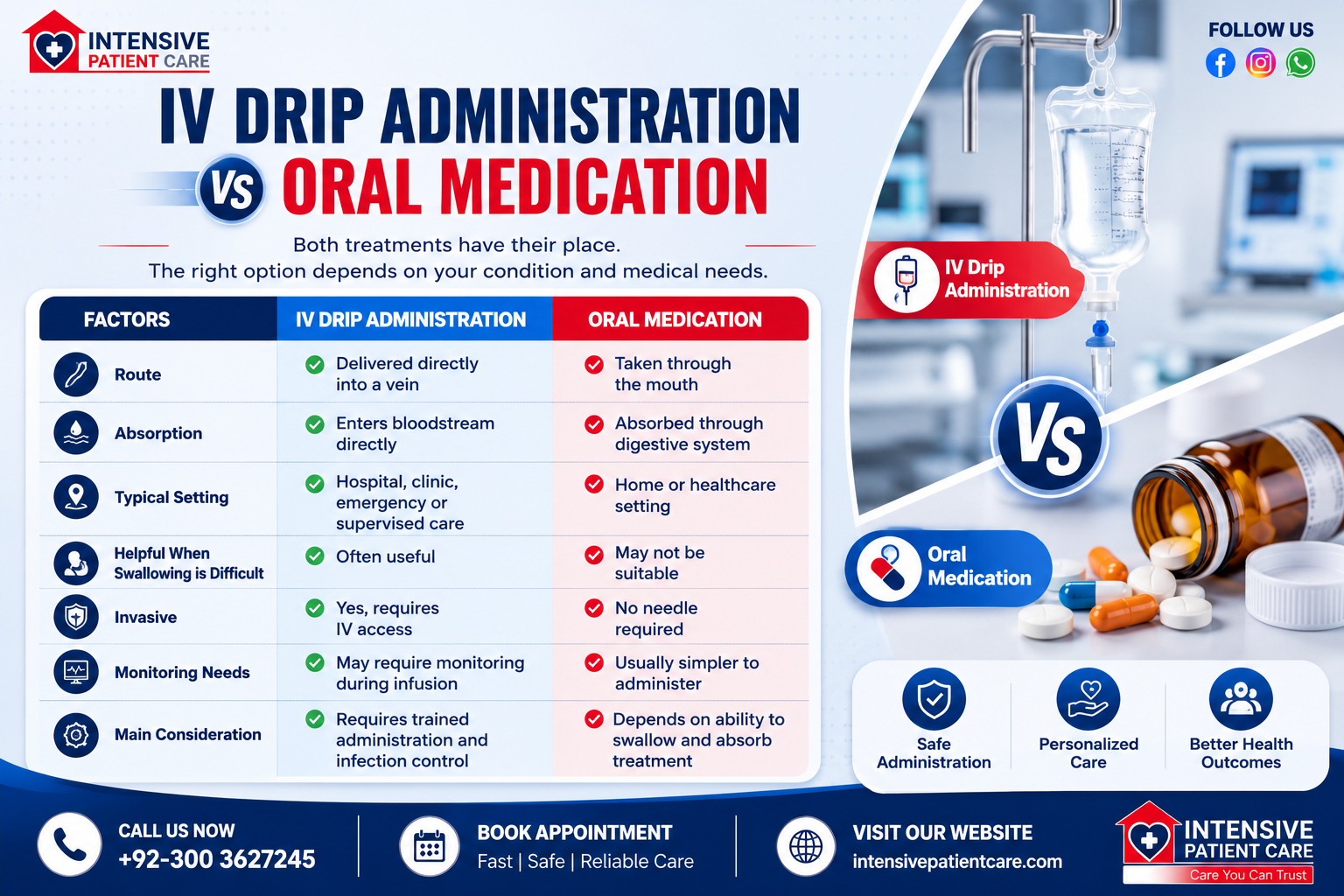
Both oral and intravenous treatment have appropriate roles. The better option depends on the patient’s condition rather than on the idea that one route is always superior.
Factor | IV Administration | Oral Medication |
Route | Directly into a vein | Taken through the mouth |
Absorption | Enters circulation directly | Absorbed through the digestive system |
Typical setting | Hospital, clinic, emergency or supervised care | Home or healthcare setting |
Useful when swallowing is difficult | Often useful | May not be suitable |
Invasive | Yes, requires IV access | No needle required |
Monitoring needs | May require monitoring during infusion | Usually simpler to administer |
Main consideration | Requires trained administration and infection control | Depends on ability to swallow and absorb treatment |
The decision should be based on the prescribed treatment and the patient’s clinical needs.
What Are the Benefits of IV Drip Administration?
The choice should depend on the treatment recommended and the clinical needs of the patient.
The greatest advantage of intravenous treatment is the direct access to the bloodstream.
This may be beneficial if a medicine or fluid must be given into a vein or if the medicine cannot be taken by mouth.
The other good thing is controlled administration. Depending on the treatment and the patient’s condition, a healthcare professional will be able to control the delivery rate of a prescribed infusion.
It is also useful for patients receiving hospital care if they require the administration of repeated medicines or fluids.
But these benefits don’t imply that all people should have an IV drip administered.
What Are the Risks and Possible Side Effects?

IV administration is an everyday medical procedure; however, it is still intrusive. Problems may arise if a catheter is not properly inserted, handled, or monitored.
Irritation or bruising around the insertion site, pain, swelling, leakage of fluid into the surrounding tissue, inflammation of the vein, infection.
Allergic or other reactions to some medicines or IV fluids also can occur.
Furthermore, administering inappropriate fluids can cause health issues, especially in individuals with specific heart, kidney, or other health diseases.
A factor of this is that IV should not be self-selected, but rather based on clinical assessment.
When is urgent help needed?
If you have a significant amount of discomfort, swelling, burning, difficulty breathing, chest discomfort, severe dizziness, sudden weakness, or other troublesome symptoms during or after infusion, you should tell the healthcare professional right away.
It will require emergency treatment if a serious allergic reaction occurs.
Who May Need IV Drip Administration?
If a patient has a medical need for IV medications or intravenous fluids, they could receive IV therapy.
This can be for individuals who must receive fluid replacement, medications intravenously, or those who are unable to take needed medications orally.
But no one can base on the symptoms alone determine whether or not an IV drip is needed.
For instance, there are many possible causes of fatigue, and the IV infusion is not a substitute for solving the problem.
The doctor or other health care practitioner will assess the patient’s symptoms and medical history to determine if IV treatment is indicated.
How Should Patients Prepare for an IV Infusion?
Preparation is dependent on the treatment being administered. Inform the health care provider of any known allergies, medications, previous reactions to IVs, and medical conditions prior to the procedure.
You should also let the provider know if you’ve had trouble getting IVs in the past.
Use comfortable clothing that will permit easy access to the arm for IV insertion.
What Happens During the Procedure?
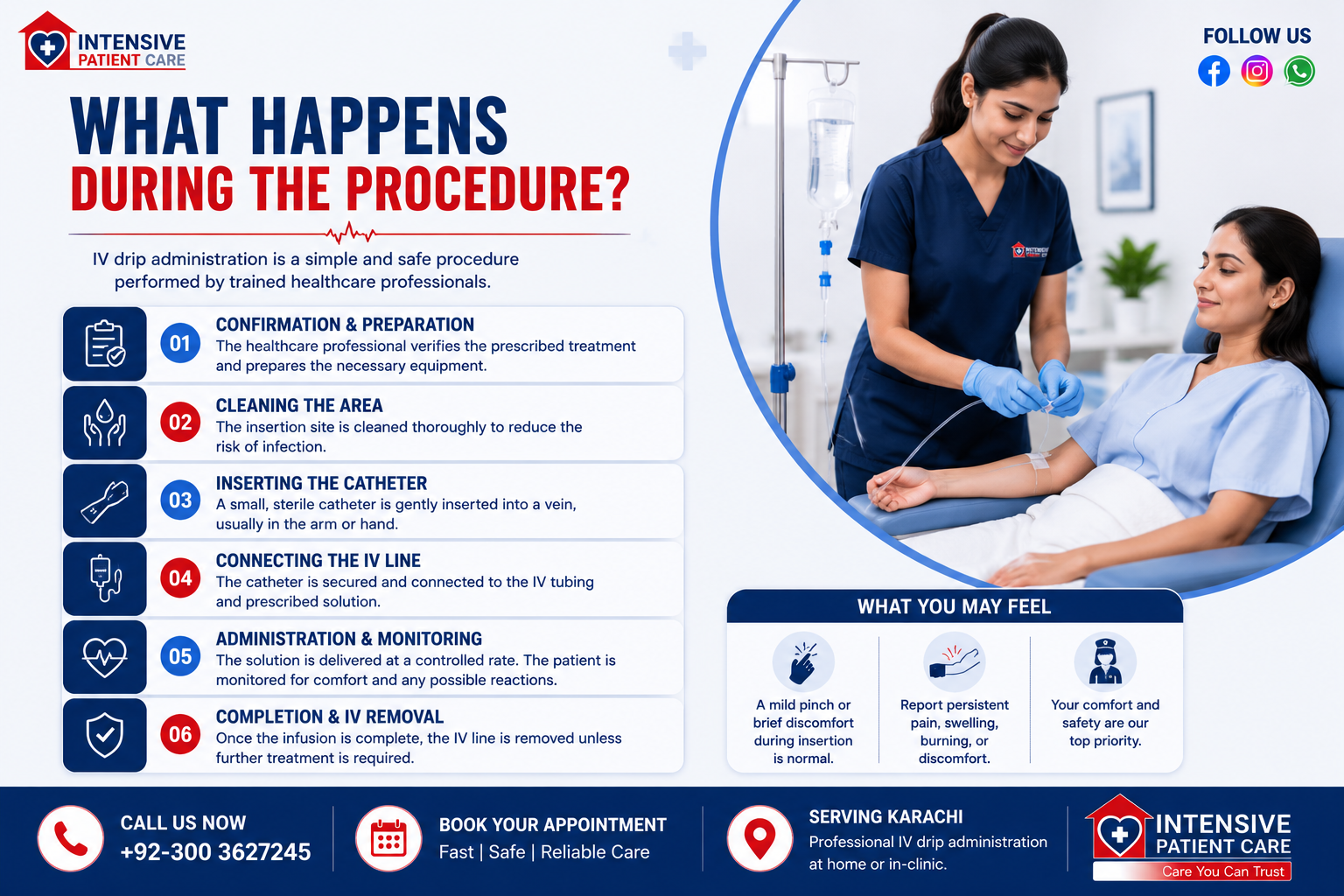
Never assume that one must drink a lot of water or take supplements prior to an infusion. Do as directed by your healthcare provider(s).
For many patients, it is a series of simple steps.
First, the health care provider verifies the treatment plan and sets up the equipment. The area of insertion to minimize the risk of infection.
A small tube, called a catheter, is placed in a vein. The catheter is then fastened and attached to the assigned infusion.
The healthcare professional may inspect the insertion site and keep an eye on the patient depending on the treatment and clinical situation during administration.
After the prescribed infusion, the IV line is removed after treatment unless it is needed for additional treatment.
Mild pinch or temporary discomfort may be experienced during insertion. If the pain persists, the swelling gets worse, or the pain is considerable, it should be reported, not ignored.
Each IV infusion has a different length of time. The duration will vary depending on the treatment, the amount of infusion, the rate of infusion prescribed and the patient’s condition.
How Long Does IV Drip Administration Take?
Some infusions could be short-term and others longer-term. Some drugs need to be given at a controlled rate to minimise risk of side effects.
However, patients should not select an IV treatment based on the timeliness of the treatment. Clinically, the correct administration rate is a decision that must be made.
Is IV Drip Therapy Safe?
5IV therapy is safe when there is a medical indication, trained health care professionals practice proper infection control, medication safety, and monitoring.
Another factor in safety is the choice of the right treatment for the individual patient. The right drip for one person isn’t necessarily suitable for another, especially if there are other medical conditions or drugs involved.
It is, therefore, important for the patient to inquire what treatment is given, why it is recommended, and what monitoring is needed.
When considering IV treatment in Karachi, it’s important to take into account the quality and safety of the healthcare environment.
Venous access, the use of prescribed medicines or fluids, and possible complications should not be confused with an ordinary wellness service.
Patients need to think about the clinical process and not marketing claims when they’re looking at a provider like Intensive Patient Care.
Ask who will be observing you, who will be administering the IV, the treatment that is being recommended, and if there is a problem, what will be monitored.
Choosing a Provider for IV Drip Administration in Karachi
It’s also fair to question what the provider does to prevent the spread of infection, how the provider deals with allergies, adverse reactions, and emergencies.
A good medical provider will be able to give you a clear description of the treatment without guaranteeing outcomes.
Common Mistakes Patients Should Avoid
Some patients think that the IV drip is more effective than a pill or medicine and that it will magically cure tiredness that’s for no apparent reason.
These assumptions can result in unwarranted treatment. Don’t select the infusion just because it is touted as a quick energy or wellness shot.
Medicines, fluids, or food supplements that are not necessary can pose risks when they are given through an IV.
Patients should not be given IV treatment by anyone who is not trained, or in an environment where sterile equipment, trained staff, correct assessment of the patient, and emergency support are uncertain.
Questions to Ask Before an IV Infusion
Before taking medicine, you might want to ask yourself:
- Why has this IV treatment been recommended for me?
- What fluids/medicines will be given?
- Who will put in and care for the IV?
- Are my medical conditions or current medications a problem for this treatment?
- Are there any side effects or warning signs to be aware of?
- If I feel unwell while having the infusion, what should I do?
These questions can help you make a decision and share pertinent information with your healthcare provider.
When Professional Medical Evaluation Is More Important Than an IV Drip
An IV infusion is a treatment intervention for a specific treatment need, not a diagnosis.
When vomiting persists, is severe, and causes dehydration, if there is any concern of unexplained weakness, dyspnea, chest pain, confusion, fainting, severe infection symptoms, or a serious concern, medical evaluation should be the priority.
Avoid using an IV drip service alone – seek appropriate emergency medical care in an emergency.
Treatment will vary based on the cause, but may include an exam, lab tests, imaging, medications, oxygen, hospitalization, or other treatments.