


What Is a Male Patient Attendant?
A male patient attendant is a trained or experienced attendant who can help a man with his daily needs and basic care.
Responsibilities can vary from assisting with mobility, bathing, dressing, feeding, positioning, company, and routine care.
Duties are dependent upon the patient’s condition and the level of care needed.
For some patients, the help may only be needed a few hours a day, and for others, longer.
An attendant should exercise discretion in their work and should not carry out medical tasks without proper training, authorization, and supervision.
Who May Need a Male Patient Attendant?

Patient attendants have their uses in various circumstances.
The need typically does not come down to just age or diagnosis, but how the patient can safely take care of their daily activities.
A male attendant may be considered for a patient who:
- Lacks the ability to move about, stand, or shift positions easily
- Needs help with bathing, dressing, or grooming
- Is recovering from hospital or surgery
- Needs help when injured
- Has limited mobility because of age or physical weakness
- Requires assistance to transfer from a bed to a chair and chair to a wheelchair
- Requires supervision for normal activities
- Needs assistance with eating and drinking
- Would like company and some family support
- Has a family caregiver who can’t provide round-the-clock care
An attendant can be used in conjunction with other healthcare workers such as nurses, medical doctors, physiotherapists, etc. for patients who have complex medical requirements.
What Does a Male Patient Attendant Do?
Daily tasks are based on the care plan of the patient.
Before care is provided, a family should agree with the service provider on the work to be carried out to ensure that they have a shared understanding of the care that is required.
Personal Care Assistance
An assistant can provide a patient with routine personal care.
This may involve bathing, changing clothes, grooming, using the toilet, and cleaning up personal hygiene.
These activities may be challenging for someone that is weak, recovering from an illness, or lacks independence in moving around.
Support can also decrease the stress on family members providing care.
Mobility and Positioning Support
If you are affected and have limited mobility, assistance may be required to get out of bed, sit in a chair, or move around in the house.
An attendant may offer some physical support as needed by the patient and as directed by the healthcare team.
Changes in positions can also be significant for patients who stay in bed for long periods.
But for patients who are at risk of developing a pressure injury, a care plan designed by trained health care providers may be necessary.
Catering and Drinking Water Support
An attendant can assist in providing meals or serving meals, with regard to the patient’s seating, and provide water or other allowed fluids.
In the case of any patient with swallowing difficulties, any dietary restrictions, tube feeding, or other special nutritional needs, the family should ensure that the assigned caregiver has the required training.
This can sometimes call for medical or nursing intervention.
Companionship and Supervision
If a patient cannot move about independently or if they are ill, they may be isolated. An attendant can offer conversation, companionship and overall supervision when going through day to day tasks.
This support can be helpful when family members are at work or have other commitments and are not able to be with the person throughout the day.
Support With Routine Activities
An attendant can assist the patient with basic daily tasks, such as moving in the home, personal care, or preparation for appointments, as agreed upon for the service.
The care responsibilities must be distinguished from medical responsibilities by the family. This avoids error as to the kind of service the attendant is expected and qualified to render.
Male Patient Attendant vs Home Nurse
A patient attendant and a home nurse provide different levels of support. Understanding the difference helps families arrange the right type of care.
Factor | Male Patient Attendant | Home Nurse |
Main role | Daily personal and practical assistance | Nursing and clinical care |
Personal hygiene | May assist | May assist when appropriate |
Mobility support | Common responsibility | May provide support as part of nursing care |
Medication support | Depends on training and provider policy | Can administer medications within professional scope |
Clinical monitoring | Limited | Part of nursing responsibilities |
Medical procedures | Generally outside basic attendant duties | May perform procedures within professional scope |
Best suited for | Patients needing everyday assistance | Patients requiring nursing care |
These roles can also work together. For example, a patient recovering at home may have a nurse handle clinical needs while an attendant assists with mobility, meals, hygiene, and daily routines.
Male Attendant for Elderly Patients
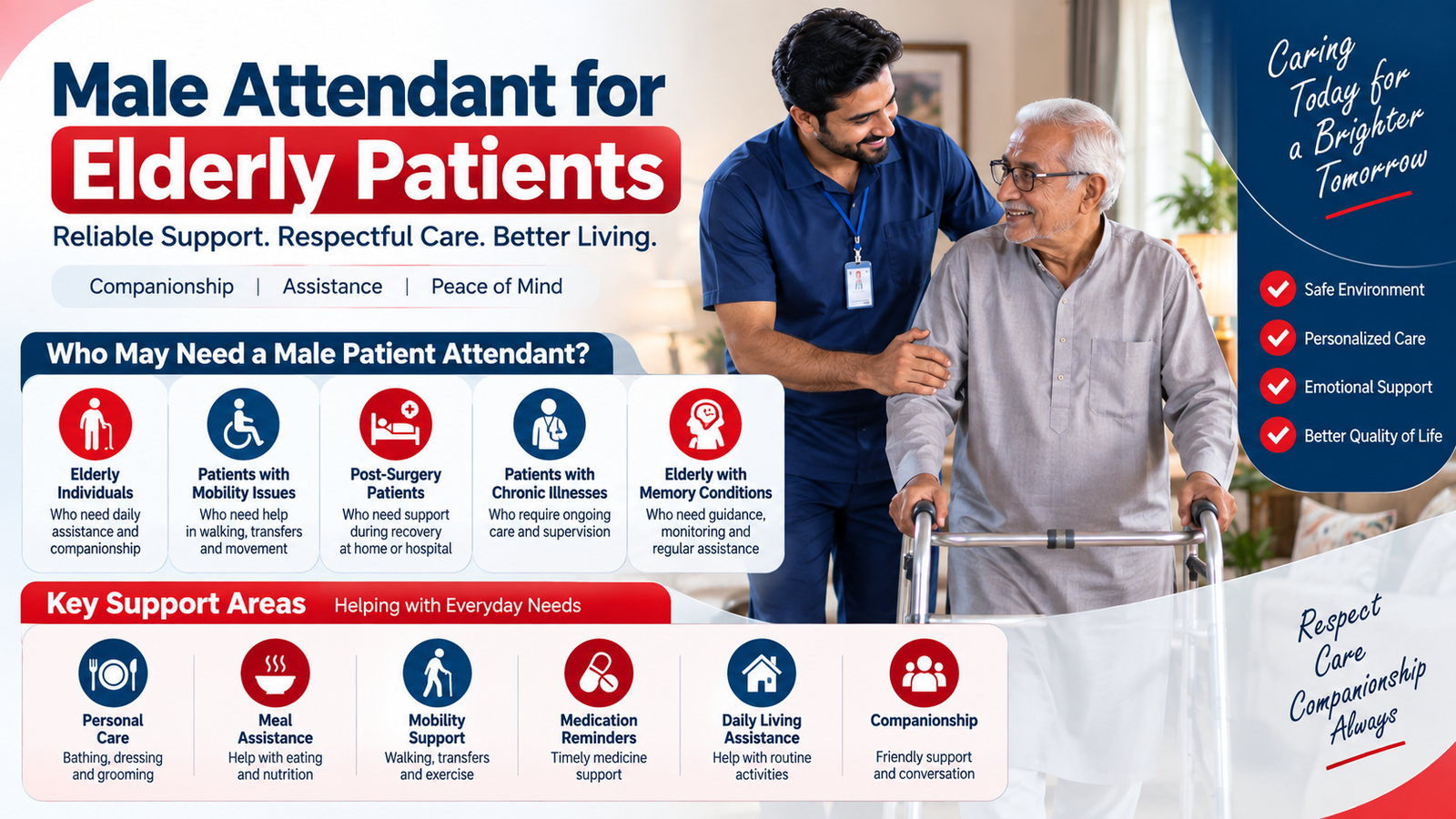
Aged persons might need more assistance if strength, balance or mobility is reduced. When home care is appropriate, a male attendant may assist with household duties and be able to keep the person in a comfortable setting.
But age does not dictate the level of care needed. An older individual who is mobile and independent may require occasional help, while an older individual who has severe mobility deficits may require more frequent supervision and professional evaluation.
It is the family’s responsibility to take into account the actual functional needs of the person and not just their age when selecting a service.
Male Attendant for Patients Recovering at Home
Post hospital discharge, a patient might not be able to regain the level of independence they had before the stay. Help may be required for mobility, bathing, dressing, feeding, and other normal living tasks.
Families should review discharge instructions before arranging for an attendant. This can be things like movement guidelines, wound care directions, diet recommendations, follow-up visits or any other instructions.
Should the patient get a new or worsening symptom, the family should contact the healthcare professional for whom the attendant is working, not expect the attendant to diagnose and treat that symptom.
Male Attendant for Bedridden Patients
If a bedridden patient needs considerable assistance in daily activities. If these tasks are within the scope of its responsibilities, an attendant may help reposition, with regard to hygiene, with meals, with regard to comfort, and with other day-to-day activities.
Bedridden patients can also be at risk for the development of pressure injuries, dehydration, falls during transfers, and decreased mobility. Their care might need to be coordinated with the nurses, doctors, physiotherapists, or others.
The family should inquire who will be accountable for clinical surveillance and specialized procedures. It is not reasonable to expect an attendant to provide skilled nursing care in the event of a patient’s need.
How Home Patient Attendant Services Work in Karachi
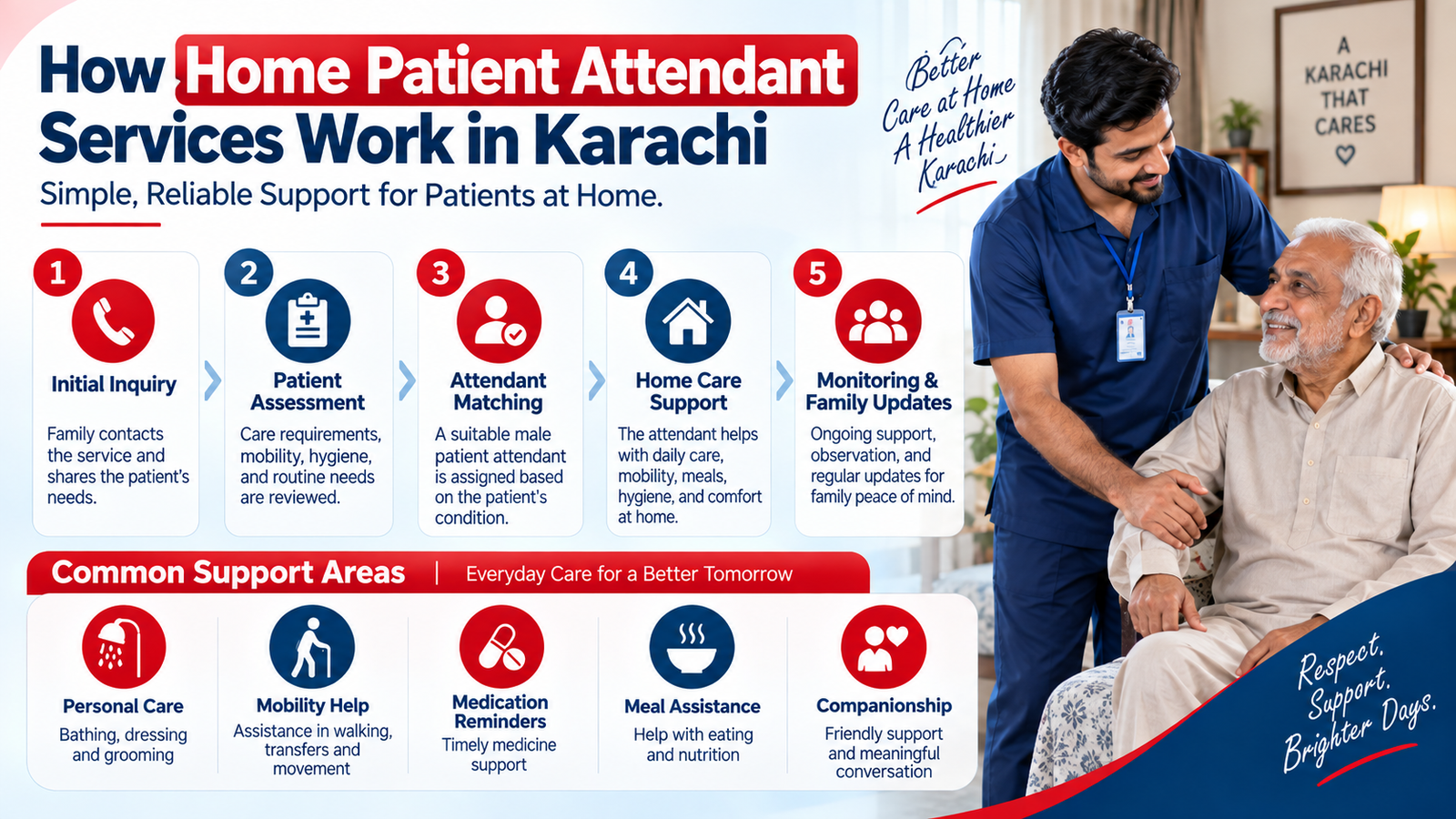
Different types of Home Care Service providers might have different ways of providing it. As a general rule, it starts with a conversation with the patient regarding their requirements, the timetable, and the location.
The family can indicate if assistance is required during the day, night, or for a certain amount of time. They also need to document restrictions in movement and any appropriate care instructions.
Then, the provider can decide what kind of worker it should be, depending on the service. In the case of Intensive Patient Care, families can chat to the staff about their home care needs and understand what kind of patient assistance is required prior to arranging home care.
In patients with complex needs, it is particularly important that the communication be clear.
The family should give the necessary directions and ensure the understanding of the attendant about what the arrangement involves.
What Should Families Check Before Hiring an Attendant?
When selecting a caregiver, it’s not as simple as just finding someone available.
Patient safety, privacy, comfort, and certain care needs should be taken into consideration.
Prior to hiring a male patient attendant in Karachi, inquire about:
- Identification and screening of caregivers
- Relevant caregiving experience
- Training and skills
- Clear scope of work, what is included in the service
- Working hours and shift working arrangements
- What to do in case of absence of the assigned carer
- Supervision and communication with the families.
- The option to nurse or otherwise professionally care for when needed
- Emergency escalation procedures
- The contract and funding details of the service.
Before the first shift, it’s helpful to summarize the patient’s daily schedule. Information on mobility, food preferences, sleeping positions, bathroom support, and other daily requirements will help prevent miscommunication.
What Should a Patient Attendant Not Do?
Caregiving and clinical care are clearly separated to safeguard the patient.
A basic patient attendant should not be expected to make a diagnosis, alter a doctor’s treatment plan, give the patient his/her own prescriptions or undertake any specialized medical procedure without appropriate training and authorisation.
For instance, if a patient suddenly becomes very breathless, has chest pain, collapses or begins to bleed profusely, or has an emergency symptom, it is appropriate to seek urgent medical assistance and leave any attendant to deal with the situation.
The attendant can alert relatives and/or ensure safety until professional help arrives.
How to Make Home Care Safer
Ensuring a well-organized patient support system at home can be achieved through good communication.
Families should ensure that vital medical information is readily available to the relevant person(s), and they should be clear about the patient’s routine.
The house should also be planned to prevent unnecessary hazards to falling. Commonly used products may be stored at convenient heights, walkways may be kept clear, and mobility aids may be used as recommended by the professional.
If the patient requires a transfer from bed to wheelchair or chair, families should ensure that the caregiver is knowledgeable in the proper technique for the transfer.
If patients have a pronounced weakness or have complex mobility issues, then they should see a physiotherapist or other suitably trained person as to their needs.
Common Mistakes Families Should Avoid
A frequent error is having an attendant to care for the patient without understanding what the patient truly needs. Someone who requires skilled nursing care may not be able to be cared for by a caregiver who is suitable for basic companionship.
One error is to believe a patient attendant is capable of performing all medical duties. Work within training and assigned responsibilities.
Families should also refrain from providing vague directions. If multiple family members are involved, it’s best to have a single consistent schedule for eating, moving, appointments, and talking.
Last but not least, do not underestimate the patient’s condition. An attendant may make observations, but medical decision-making should be done by an appropriate healthcare professional.
When Should You Consider Professional Medical Support?
While an attendant can offer much help on a day-to-day basis, other situations call for a qualified medical response.
Professional evaluation may be warranted if a patient has a new or worsening medical issue, requires wound care, is a candidate for injections or IV medications, suffers from extensive swallowing issues, has a need for complex medicines, or has a need for frequent clinical monitoring.
If there are emergencies symptoms, they should be attended to immediately. This can range from calling the patient’s physician or an emergency service to heading to the right medical facility.
People’s needs for care may change over time, too, depending on the care arrangement. Initially, a nursing service might be needed following discharge; then as patient independence increases, an attendant may be needed.
Male Patient Attendant in Karachi: Questions to Ask
Families may want to ask the provider a few questions before beginning home care.
What will the attendant do?
Request a detailed explanation of personal care, mobility, meals, companionship, and other services being provided.
Is the person taking care of the patient appropriate to the patient’s condition?
Describe the patient’s mobility and any care needs prior to the assignment of the caregiver.
Are there other shifts that can be offered?
If the patient needs day/night or extended support, ask about the schedules offered.
If the assigned attendant(s) are not available, what then?
A replacement process can be significant, especially to those who require frequent assistance.
Are there nursing or special health care needs that can also be met?
If any medical needs exist other than the basic care, ask if the provider can provide or if qualified health care providers must be arranged.