


What Is Physiotherapy Home Care?
Physiotherapy home care is a rehabilitation service where the patient is evaluated and treated by the physiotherapist in their residence.
The therapist could focus on issues related to movement, strength, balance, flexibility, mobility, physical function and may address issues that impact functional performance and the activities of daily living.
The primary goal is not to just exercise. The first step is for a physiotherapist to consider a patient’s functional limitations, and then a strategy to address them that is suited to the patient’s condition.
The overall goal of rehabilitation is to restore, preserve, or enhance functioning and independence.
Home visits can also enable the therapist to see the practicalities that might be presenting themselves in the home setting that would not be visible in clinic.
A patient could experience problems getting out of bed, walking to the bathroom, using stairs or transferring from a chair.
Who May Need Physiotherapy at Home?

Home physiotherapy can be used when travelling to a clinic is difficult or when a patient is requiring physiotherapy within their normal home environment.
It could be beneficial for those recovering from:
- A stroke or other neurological disease.
- Fractures, injuries, or orthopedic procedure.
- Joint replacement or other surgery
- Pain in the back, neck, shoulders, or joints
- Limited mobility due to long hospitalization or illness.
- Maintain balance and walking ability.Maintain balance and walking ability.
- A decline in physical function that is associated with ageing.Physiological decline with ageing.
- Some neurological disorders, like Parkinson disease,
- Muscle weakness and lower levels of physical functioning.
Rehabilitation is a need identified by the World Health Organization for stroke, Parkinson disease, musculoskeletal conditions, fractures, spinal cord injuries and many other conditions.
But not all patients would need home physiotherapy. Physiotherapy may be used in isolation or along with assessment by a doctor, hospital-based rehabilitation, diagnostic testing, or a multidisciplinary team before and/or in addition to physiotherapy in some instances.
How Does Home Physiotherapy Work?
The home physiotherapy program usually begins with an evaluation, not with a typical program of exercises.
Discussing medical history, symptoms, previous treatment, mobility, daily activities, and rehabilitation goals with the physiotherapist.
They can also evaluate strength, range of motion, balance, walking, posture, transfers, and functional limitations (if applicable).
The results provide a guide to the therapist on what interventions should be used and the level of support that the patient may require.
What Can Happen During a Home Session?
Depending on the patient’s condition, exercises for therapy, mobility training, balance activities, stretching, strengthening exercises, movement practice, position advice, or teaching about a safe activity are included in a session.
In neurological rehabilitation, the focus could be on enhancing movement, balance, walking, transfers, and independent functioning in daily life. Physical exercise training is part of the WHO rehabilitation resources targeting stroke and Parkinson’s disease.
Rehabilitation can involve teaching patients how to improve their lower back pain, reduce the effects of osteoarthritis, manage rheumatoid arthritis, prevent fractures and muscle wasting.
The programme should be tailored, not copied, from another person’s treatment programme.
What Are the Benefits of Physiotherapy Home Care?

A significant benefit of home-based rehab is that the patient receives treatment in their setting where they engage in daily activities.
A therapist can look at issues that may be possible from the perspective of beds, chairs, stairs, walking paths, bathroom access, or transfers. This can help make rehabilitation more meaningful for the patient’s daily life.
Home care can also alleviate the stress placed on a person with limited mobility who must travel to get their care. A home visit may be more feasible for a patient needing help to get out of the house for the rehabilitation services.
If this is included in the rehabilitation plan, another potential benefit is that family members or caregivers learn how to support mobility and activities appropriately.
In the appropriate context, WHO rehabilitation guidance acknowledges the role of family and caregiver support in rehabilitation.
The objective should not be to do a set number of exercises, but to improve function and participate safely in activities.
Home Physiotherapy vs Clinic Physiotherapy
Both settings can provide rehabilitation, but the appropriate choice depends on the patient’s needs.
Factor | Physiotherapy at Home | Physiotherapy at a Clinic |
Location | Patient’s home | Rehabilitation or physiotherapy facility |
Travel | Usually no clinic travel required | Patient travels to the facility |
Home environment | Therapist can assess everyday surroundings | Home environment is not directly observed |
Mobility needs | Useful when travelling is difficult | May suit patients who can travel safely |
Equipment | Usually relies on portable or available equipment | May provide access to more clinic equipment |
Daily activities | Can practise movements in the home setting | May require transfer of skills to the home |
Treatment choice | Depends on assessment and available resources | Depends on assessment and clinic resources |
Neither setting is automatically appropriate for every patient. A physiotherapist or treating doctor can help determine whether home, clinic, hospital, or another rehabilitation setting is suitable.
What Conditions Can Home Physiotherapy Help With?
The kind of physiotherapy will rely on the cause of the disorder.
Musculoskeletal Problems
Exercises and movement based rehabilitation may be given to individuals who have some back, neck, shoulder, knee, or joint issues. WHO’s rehabilitation resources include information on low back pain, osteoarthritis, rheumatoid arthritis, fractures, and sarcopenia.
Evidence-based non surgical treatments are recommended by WHO to be used in primary and community care, with low back pain care using a physiotherapist included as a non surgical treatment.
Stroke Rehabilitation
Stroke may impair walking, balance, muscle control, coordination, strength, or ability to do everyday activities.
When suitable, home rehabilitation can be integrated into an overall stroke rehabilitation program. Specific exercises and/or support needed will vary based on impairments and function.
Recovery After Surgery
A rehabilitation program is needed for some patients following orthopedic or other surgeries. Physiotherapy can be directed to return to movement, strength, mobility and safe functioning as determined by the therapeutic team’s recommendations.
Patients should receive instructions on the postoperative rehabilitation protocol from the appropriate health professionals, as this can differ significantly among procedures and patients.
Older Adults with mobility issues.
Older people can have a loss of strength, mobility, balance or physical ability. Rehabilitation can help with the problems in function, and may also use strategies that are aimed at promoting independence that is safe.
The interventions of the WHO recommendations for older adults focus on interventions related to mobility, physical capacity and functional ability.
What Should Patients Expect From the First Home Visit?

Initial visit may be more assessment based than subsequent visits.
The physiotherapist may ask about current problem, history of previous therapy, medications or medical conditions, pain, mobility, activities of daily living (ADLs), and personal rehabilitation goals.
They then can explore movement and function within safe limits.The therapist might also look at the home environment, as well.
For instance, a patient who has a problem walking might be observed by the therapist while walking between the bed and the chair, the bathroom and the chair, or between the chair and the house.
Once assessed, the physiotherapist can outline the rehab approach and what they can realistically expect from the programme for the patient and family.
How Long Does Home Physiotherapy Take?
Treatment length varies from patient to patient.
Depending on the temporary injury, some may need a short period of rehabilitation, and other individuals who have been affected by neurological conditions, high disability or chronic issues might need support for the long-term. The number and frequency of sessions vary based upon the patient’s condition, goals, progress, safety, and response to treatment.
WHO reports rehabilitation usually begins with a series of sessions, and that the length of time depends upon individual needs.
Assessment of progress should be based on meaningful functional change, not necessarily a set number of sessions.
How Can Patients Choose Home Physiotherapy in Karachi?
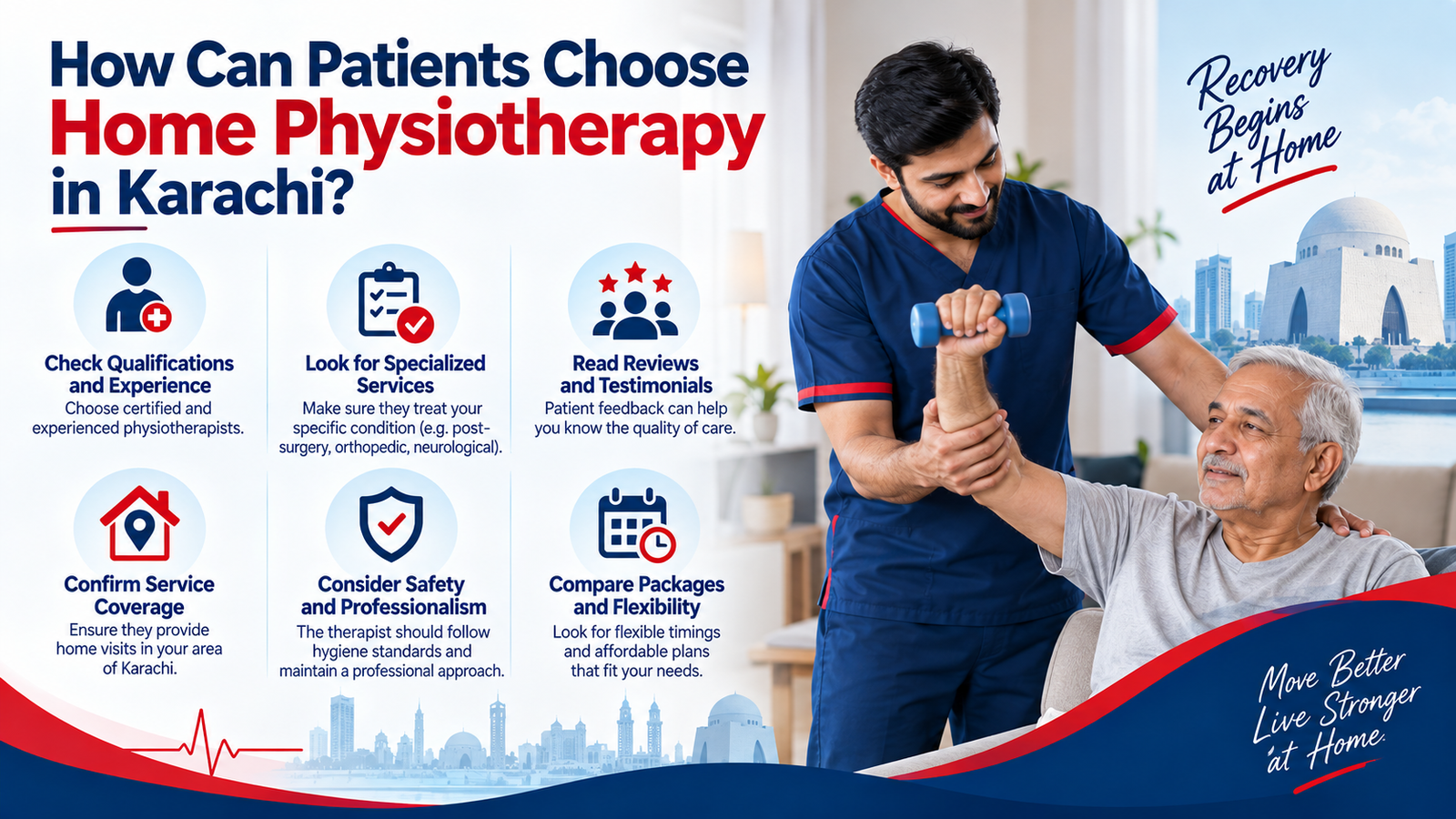
In the context of physiotherapy home care in Karachi, there are more factors to consider other than convenience.
Inquire about the person who will deliver the treatment and whether they are qualified and experienced in the patient’s specific rehabilitation requirements.
Some questions to ask include: how will the initial evaluation be done, and what will be done if the patient’s condition changes in the treatment plan?
If the patient has complex issues, inquire with the provider whether communication with the treating physician or other healthcare provider is possible as needed.
The patient may also need to discuss the length of time the session will take, how often they will be able to attend, the areas that will be covered, the equipment that will be used, what to do if the patient needs a more advanced level of medical care, and what the schedule for cancellations is.
Families who may require home-based patient support may want to consider a service like Intensive Patient Care, but the appropriateness of any physiotherapy service should be determined based on a unique patient’s clinical and rehabilitation needs.
Important Safety Considerations at Home
Home rehabilitation can still be done safely and properly, with professional evaluation. WHO stresses that rehabilitation interventions should be timely and chosen and delivered safely.
The home should allow sufficient room for the activities that are planned to take place, and avoid having unnecessary obstacles if they present a fall or movement hazard.
Patients should not use complex exercises on their own when they were prescribed to another patient. An appropriate exercise for one patient may not be appropriate for another patient.
Practical Safety Checklist
When looking at home physiotherapy before initiating or maintaining it, think:
- Remove all loose rugs, clutter, and other obvious obstacles from the exercise area.
- Follow therapist’s instructions for assistance and mobility devices.
- Let the therapist know if pain, dizziness, unusual weakness, difficulty breathing, or other alarming symptoms develop.
- Ensure prescribed walking aids/assistive devices are available as needed.
- Avoid dramatically changing the intensity or number of repetitions of exercises without proper instruction.
- If symptoms are sudden or severe, seek medical assistance and do not rely on routine physiotherapy to manage these symptoms.
Patient safety is an essential component of healthcare, and risks like falls may arise when someone is taking care of them, unless proper precautions are taken.
When Should a Patient Seek Medical Attention?
Physiotherapy is not a substitute for emergency medical care.
If a patient has serious and sudden signs or symptoms such as severe chest pain, significant breathlessness, sudden loss of consciousness, new severe neurological deficit, excessive bleeding, or other serious issues that could be life-threatening, they should seek urgent medical evaluation.
Emergency instructions from the surgeon or other healthcare team treating the patient also apply to patients who have been treated for surgery or severe illness.
If the symptoms are new or have worsened, or are significantly different from the problem being treated, it is advisable to notify the physiotherapist and further medical assessment may be warranted.
Common Mistakes to Avoid With Home Physiotherapy
A frequent error is to view home physiotherapy as a series of exercises and not a personalised rehabilitation program. Exercises must have a specific purpose that is related to the patient’s functional goals.
The other error is thinking that you’ll see results right away. Recovery depends on the underlying condition and its severity, health, and consistency in following the programme and other factors.
Also, don’t compare patients’ improvement with another patient’s recovery. Two people with the same diagnosis may have different rehabilitation requirements.
Last, caregivers should never physically move or support a patient they are not trained in. Transferring the patient in the wrong way can pose a risk to patient and caregiver.