


What Is Alzheimer’s Care?
Alzheimer’s care is the daily support given to a person who has Alzheimer’s disease.
This care may include help with personal hygiene, meals, medicines, walking, communication, household safety, appointments, and daily activities.
The amount of care a person needs depends on their symptoms and stage of the disease.
Someone in the early stage may only need reminders and some supervision. A person with more advanced symptoms may need close help for much of the day.
There is no known cure for Alzheimer’s disease at present. However, medical treatment can help manage symptoms and may slow the disease in some people.
Early medical evaluation can also help because memory and thinking problems may have other causes.
Why Does a Person With Alzheimer’s Need Special Care?

Alzheimer’s can affect memory, judgment, communication, behavior, movement, and daily tasks.
A person may forget where they are or ask the same question many times. They may also become confused about time or have trouble recognizing people.
These changes can make normal activities unsafe. For example, a person may forget how to use a kitchen appliance.
They may leave water running or take medicine more than once. Some people may also walk outside and become lost.
Care should change as the person’s needs change. The goal is to keep them safe while still allowing them to do things on their own when they can.
What Does Alzheimer’s Care Include?
Alzheimer’s care can cover many parts of daily life. Each person has different needs, so the care plan should be based on the patient rather than using the same routine for everyone.
Personal Hygiene and Grooming
A caregiver may help with bathing, brushing teeth, changing clothes, grooming, and using the bathroom. Some people with Alzheimer’s may not want to bathe. They may feel scared, uncomfortable, or embarrassed.
A calm approach can make these tasks easier. It can also help to prepare towels, clothes, and other items before starting. This can reduce confusion.
Bathroom safety is also important. A person with balance or judgment problems may have a higher risk of falling.
Eating and Drinking
Meals should be simple and familiar. Try to offer them at regular times when possible.
Some people with Alzheimer’s may forget to eat. Others may lose interest in food or have trouble using spoons and other utensils. They may also need reminders to drink enough water.
Caregivers should watch for changes in eating, swallowing, weight, and hydration. A sudden or major change should be discussed with a healthcare professional.
Medication Support
Memory problems can make medicines difficult to manage. A person may forget that they already took a medicine and take it again.
For this reason, medicines may need close supervision. A caregiver can keep an up-to-date list of all medicines and follow the schedule given by the healthcare professional.
Medicines should not be started, stopped, or changed without proper medical advice.
Mobility and Fall Prevention
Falls can become a serious concern. Balance problems, poor vision, confusion, clutter, and unsafe shoes can all increase the risk.
The home should be arranged so that common areas are easy to reach. Keep walking areas clear and remove things that could cause a fall.
Loose rugs, exposed wires, clutter, and unstable furniture can create safety risks. Bathrooms and stairs may also need extra safety measures.
Communication and Emotional Support
Communication can become harder as Alzheimer’s progresses. A person may struggle to find the right words or repeat the same question. They may also misunderstand a situation or become upset when someone corrects them.
Short and clear sentences are often easier to understand. Speak in a calm voice and give the person time to respond.
Arguing may not help when a person has a mistaken belief. Reassurance may work better.
When a person suddenly changes their behavior, caregivers should also think about other possible causes. Pain, illness, medicine effects, fear, tiredness, or an uncomfortable environment may play a role.
How Can You Keep Someone With Alzheimer’s Safe at Home?
Home safety becomes more important as Alzheimer’s progresses. Changes in memory, judgment, balance, vision, and awareness can create new risks.
Start by looking around the home from the patient’s point of view. Think about anything they could trip over, misuse, swallow, touch, or leave running.
Some useful safety steps include:
- Remove loose rugs, clutter, and extra electrical cords.
- Keep medicines and cleaning products out of reach.
- Store other dangerous items in a safe place.
- Check kitchen appliances and reduce the risk of unsafe stove use.
- Improve bathroom safety with suitable support equipment.
- Secure large furniture so it cannot easily fall over.
- Make sure smoke and carbon monoxide alarms work properly.
- Keep emergency contact details easy to find.
- Consider identification information if wandering is a concern.
Wandering can be a concern for some people with dementia. A safety plan may include supervision, secure exits, identification information, and a plan for what to do if the person goes missing.
Alzheimer’s Care at Home vs Family Only Care

Many families prefer to care for a loved one at home. Familiar surroundings can feel more comfortable for the patient. However, the workload can become difficult when the person needs help during much of the day or night.
Care approach | Suitable when | Main consideration |
Family caregiving | Family members can provide regular support | It can become physically and emotionally demanding |
Home caregiver support | The patient needs help with daily activities or supervision | Caregiver duties should be clearly defined |
Skilled healthcare support | The patient has medical or nursing needs | Care should match the patient’s needs |
Residential care | Home care is no longer practical or safe | The facility and care plan need careful review |
There is no single care plan that works for every family. Some families use both family support and professional caregivers. The amount of help may also change as Alzheimer’s progresses.
Home care aides may help with tasks such as bathing, dressing, companionship, light housekeeping, transportation, and errands. Nonmedical home care is different from skilled medical care.
When Is Intensive Patient Care Needed?
Intensive patient care may be needed when a person requires frequent supervision or help with several daily tasks. This can happen when Alzheimer’s symptoms become more advanced or when other health problems develop.
A family may need extra support if the patient:
- Has frequent falls
- Wanders from home
- Has major problems with personal care
- Has trouble taking medicines safely
- Has serious communication problems
- Needs help for much of the day
The type of care should match the patient’s condition. A caregiver who helps with daily tasks has a different role from a trained healthcare professional who provides nursing or medical care.
Before arranging intensive patient care in Karachi, families should make a clear list of the patient’s needs. They should also identify which tasks require professional medical skills.
How Do You Choose Alzheimer’s Care in Karachi?

Choosing care should start with the patient’s needs. First, make a simple list of what the person can do alone, what they need reminders for, and what tasks require hands on help.
For example, a patient may be able to eat without help but need assistance with bathing, medicines, walking, and care at night.
Another patient may need much more support.
When talking to a care provider, ask about the caregiver’s duties and availability. Ask how the provider handles emergencies and how they communicate with family members.
It is also useful to ask how they deal with changes in behavior, wandering, falls, refusal of care, and situations that may need urgent medical attention.
What Should Families Expect as Alzheimer’s Progresses?
Alzheimer’s is a progressive disease. This means care needs can change over time.
In the early stage, a person may mainly need reminders, help with daily plans, and supervision for safety.
As symptoms become more advanced, they may need more help with bathing, dressing, eating, using the bathroom, walking, and communication.
Some people may also experience wandering, agitation, sleep problems, hallucinations, or other behavior changes.
For this reason, a care plan should not stay the same forever. Families should review the plan when the person’s abilities, behavior, health, or safety needs change.
How Can Caregivers Manage Difficult Behavior?
Behavior changes can be one of the hardest parts of Alzheimer’s care. A person may become angry, worried, suspicious, restless, or fearful. They may also ask the same questions again and again.
Arguing usually does not solve the problem. Instead, try to understand what may have caused the behavior.
A calm response can help. A regular daily routine may also make the person feel more comfortable.
Familiar activities, less noise, enough rest, and simple communication can help reduce confusion.
If a new behavior appears suddenly or becomes severe, contact the patient’s healthcare professional. Pain, illness, medicine effects, or other health problems may be involved.
When Should a Doctor Be Contacted?
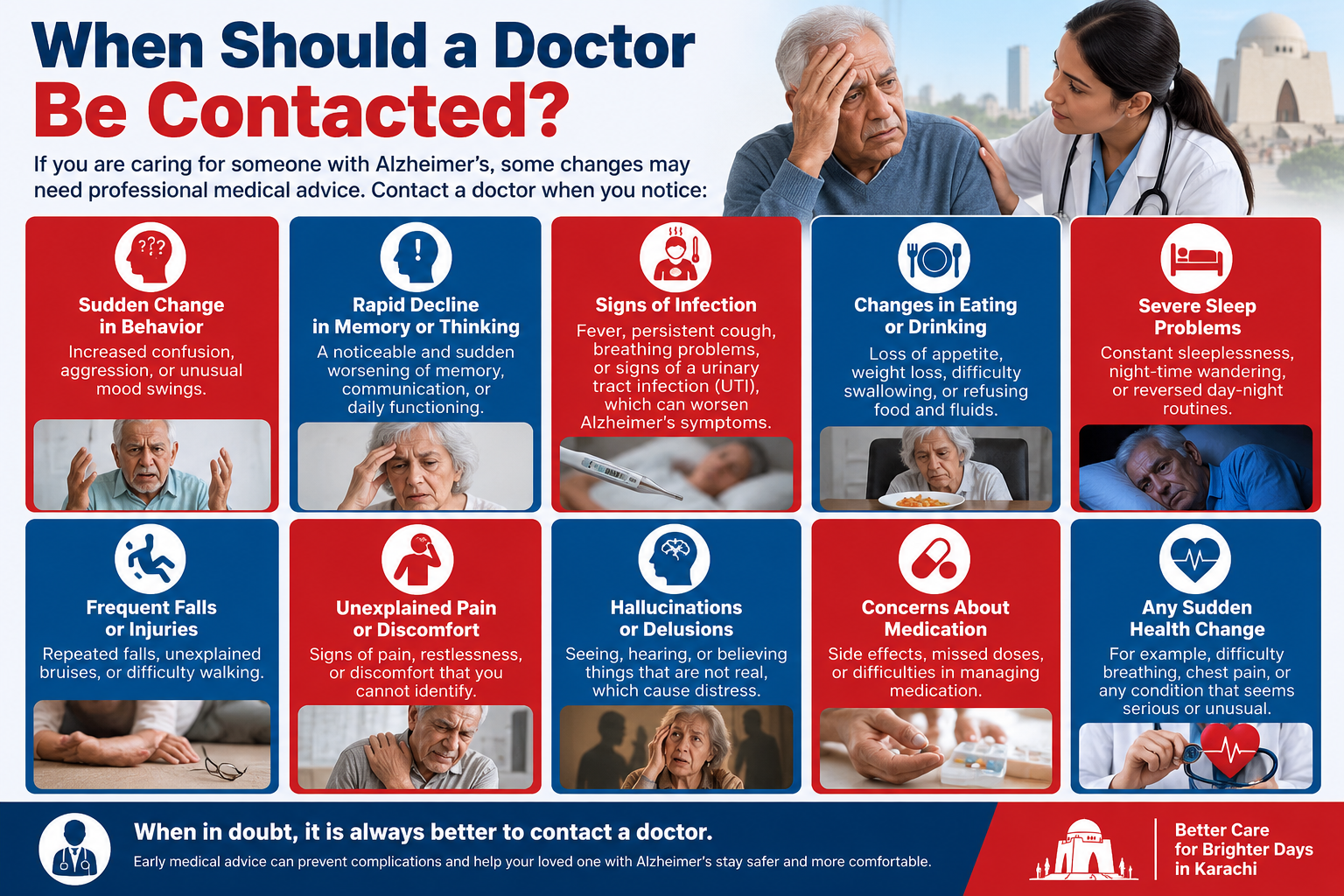
Alzheimer’s care does not replace medical care. The patient should continue to receive proper medical follow up, especially when their symptoms or abilities change.
Contact a healthcare professional if there is a new or quickly worsening change in:
- Memory
- Behavior
- Walking
- Eating
- Sleep
- Communication
A medical check can help find out if another health problem or medicine issue is causing the change.
Urgent medical care may be needed for serious symptoms such as sudden severe confusion, trouble breathing, chest pain, loss of consciousness, a serious fall, signs of a stroke, severe dehydration, or another emergency.
A sudden change should not always be blamed on Alzheimer’s.
How Can Families Support the Caregiver?
Caring for someone with Alzheimer’s can be hard for the whole family. It can create physical, emotional, and financial stress.
One family member may try to handle everything alone. Over time, this can become too difficult.
Sharing responsibilities can make care easier. Family members can divide tasks such as appointments, meals, shopping, supervision, and communication with healthcare providers.
Professional support can also give the main caregiver time to rest.
Asking for help does not mean the family is failing. It can help create a safer and more manageable care plan.
Practical Tips for Alzheimer’s Care at Home
A regular routine can make daily care easier. Try to keep important activities around the same time each day. At the same time, allow some flexibility when the person’s needs change.
Some useful habits include:
- Keep common items in familiar places.
- Use simple reminders when needed.
- Give one instruction at a time.
- Allow extra time for bathing, dressing, and meals.
- Keep walkways clear.
- Watch changes in eating, drinking, sleep, and movement.
- Keep important medical information ready for emergencies.
- Encourage safe activities that match the person’s abilities.
- Give the person choices when possible.
The goal is to support the person without making them feel that every part of their day is controlled by someone else.
Common Mistakes in Alzheimer’s Care
One common mistake is arguing with a person about something they believe is true. Changes in memory and thinking can make logical explanations difficult to follow. Repeated correction may also increase stress.
Another mistake is doing everything for the patient too soon. If the person can safely complete part of a task, let them take part. This can help them keep some independence.
Ignoring caregiver stress is another problem. When a family member becomes very tired, the quality and safety of care can suffer.
Building a support system early can make future changes easier.
Families should also avoid assuming that every new symptom is caused by Alzheimer’s. New health problems can happen at the same time and may need medical evaluation.