


What Is Daily Living Assistance?
Daily living assistance means help with everyday personal and household tasks that a person cannot manage independently because of illness, injury, age, or disability.
Clinicians group these tasks into two categories: activities of daily living (ADLs) and instrumental activities of daily living (IADLs).
ADLs cover basic self-care: bathing, dressing, grooming, eating, toileting, continence care, and mobility.
IADLs are more complex tasks that support independent living, such as preparing meals, managing medication schedules, shopping, and handling money.
For most intensive care patients, ADL support is the priority. IADLs usually fall to the family or a caregiver.
Why It Matters More in Intensive Patient Care

Patients with serious illness face risks that healthier people with disabilities do not. Long periods in bed can cause pressure injuries, muscle loss, stiff joints, chest infections, and blood clots.
A missed turn, a poorly cleaned catheter site, or a rushed meal can lead to a setback.
Daily assistance in this setting is therefore preventive care. It also protects a patient’s sense of self. Being washed, groomed, and spoken to respectfully affects comfort, mood, and cooperation with treatment.
What Does Intensive Patient Care Mean at Home?
Intensive patient care at home usually means ongoing, high-dependency support for someone bedridden, recovering from critical illness, or living with a condition that needs close monitoring.
Examples include stroke recovery, spinal injury, advanced neurological disease, post-surgical recovery, and long-term ventilator or oxygen dependence.
This is different from routine elderly care. The patient may have feeding tubes, urinary catheters, tracheostomy tubes, wound dressings, or monitoring equipment.
Care must follow the treating doctor’s instructions, and some tasks need a trained nurse rather than a general attendant.
Many families in Karachi arrange this after discharge, when the patient is stable enough to leave the hospital but still needs round-the-clock support.
Core Daily Living Tasks and What Good Care Looks Like
Bathing and Personal Hygiene
For bedridden patients, a full bed bath is common. A caregiver cleans one body area at a time, keeps the patient covered for warmth and privacy, and dries skin thoroughly, especially in folds. Mouth care matters just as much.
Poor oral hygiene is linked to chest infections in patients who cannot clear their throats well.
Repositioning and Skin Protection
Patients who cannot move on their own generally need to be repositioned on a schedule set by their care team. This reduces pressure on the heels, hips, tailbone, and shoulder blades.
Caregivers should check skin daily for redness that does not fade, blisters, or open areas, and report changes to a nurse or doctor quickly.
Feeding and Hydration
Eating support ranges from helping someone sit upright and use utensils to managing tube feeding.
Posture is critical. Patients with swallowing difficulty may be at risk of choking or aspiration, so a doctor or speech and swallowing specialist should guide food textures. Caregivers should never change feeding methods on their own.
Toileting and Continence Care
This includes bedpan use, assisted commode transfers, diaper changes, and catheter hygiene.
Prompt cleaning prevents skin breakdown and urinary infections. Privacy and a calm manner make this task far less distressing for the patient.
Mobility, Transfers, and Gentle Exercise
Moving a patient from bed to chair requires proper technique to avoid injuring either person. Physiotherapists can teach safe transfers and prescribe simple range-of-motion exercises that keep joints from stiffening.
Medication Reminders and Monitoring
Caregivers often help keep the medication schedule on time and record vital signs, fluid intake, or symptoms. Any medication administration, injections, or equipment settings should follow the doctor’s or nurse’s instructions.
Who Provides Daily Living Assistance?
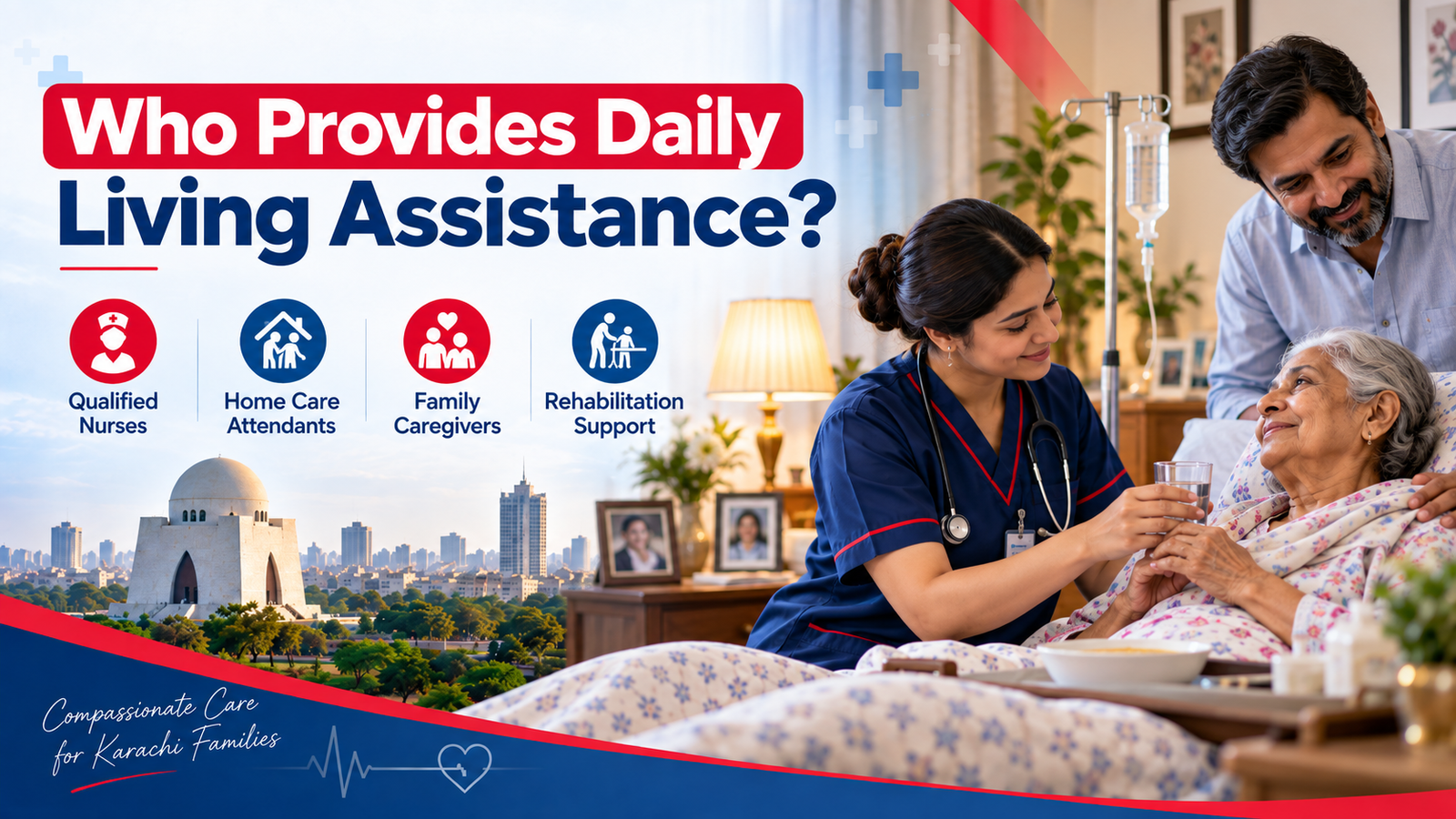
The right type of helper depends on the patient’s medical complexity. A comparison helps clarify this.
Factor | Family Caregiver | Trained Attendant / Caregiver | Registered Nurse |
Typical role | Emotional support, basic help, supervision | Bathing, feeding, repositioning, toileting, companionship | Clinical care, wound care, tubes, medication, monitoring |
Best suited for | Mild dependency or supplementing professional care | Stable patients needing daily personal care | Patients with complex or unstable medical needs |
Main advantage | Familiarity and trust | Affordable, consistent hands-on support | Clinical judgment and skills |
Limitation | Fatigue, limited training | Cannot replace nursing for clinical tasks | Higher cost; may not cover non-clinical chores |
Key consideration | Needs rest and training to avoid burnout | Needs supervision and clear written instructions | Verify registration and relevant experience |
Many families combine them. A nurse handles clinical tasks and oversees the plan, while a trained attendant provides routine personal care across shifts.
Daily Living Assistance in Karachi: Local Considerations
Karachi’s conditions shape home care in practical ways, and good planning accounts for them.
Heat and humidity. Long summers increase the risk of dehydration, heat rash, and skin irritation in bedridden patients. Rooms need ventilation and temperature control, and clothing and bedding should be breathable.
Power interruptions. If a patient depends on an oxygen concentrator, suction machine, or air mattress pump, a power cut is a real risk. Families should discuss backup options, such as a UPS or generator, with the treating team.
Apartment living and access. Many homes are in buildings where elevators may not work during outages, and narrow stairwells complicate emergency transport. Know your fastest route to a hospital and keep a transfer plan ready.
Traffic and emergency response. Travel times across the city can be long. Keep a written emergency sheet with the patient’s diagnosis, medications, allergies, and doctor and hospital contacts.
Provider regulation. In Sindh, healthcare establishments fall under the oversight of the Sindh Healthcare Commission, and nurses are registered with the Pakistan Nursing and Midwifery Council. Families can ask any agency or nurse about registration and credentials before hiring.
How to Choose a Daily Living Assistance Provider
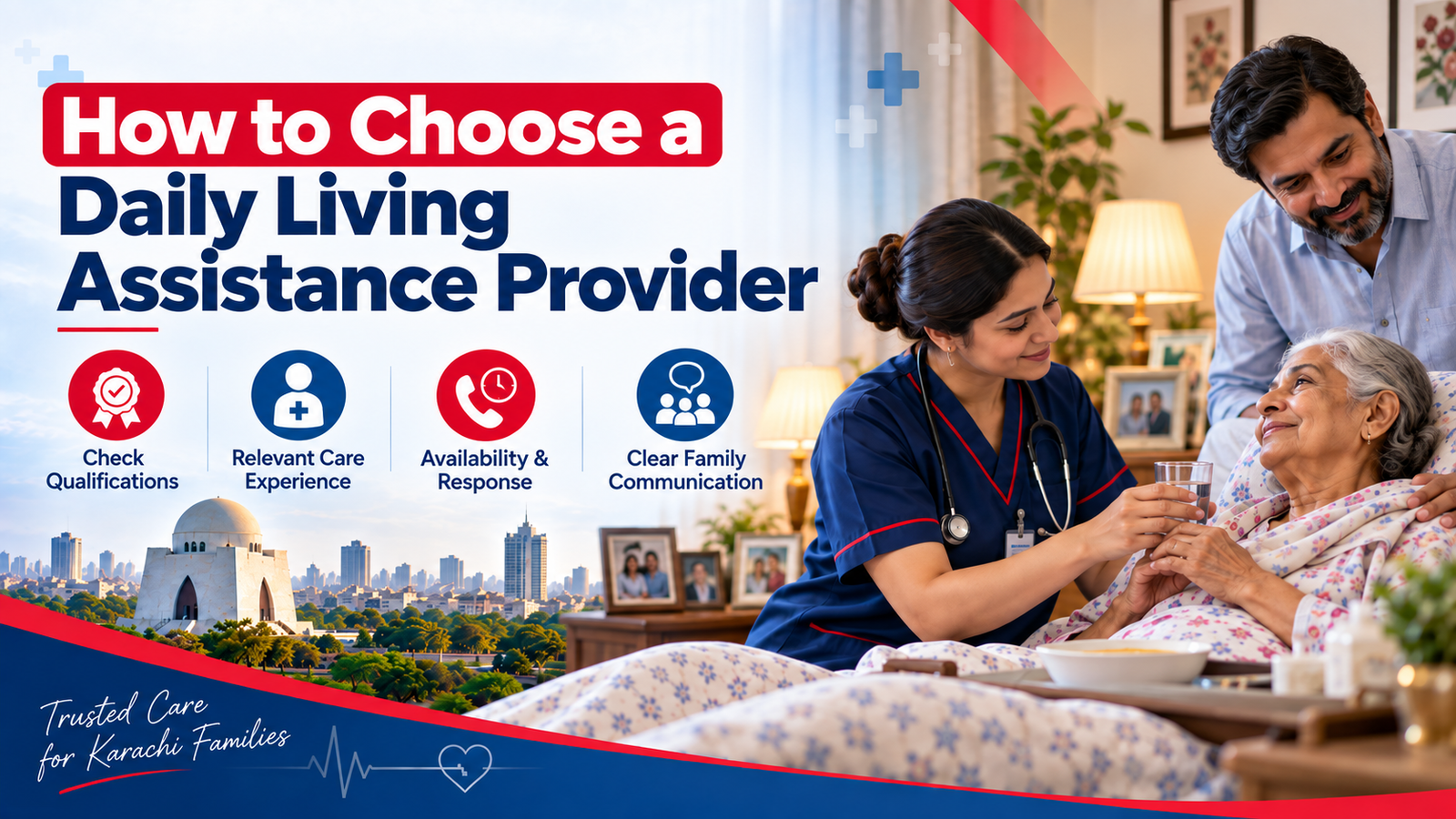
A good provider should be able to explain clearly what they will and will not do. Before you commit, consider the following checklist:
- Credentials: Ask for nursing registration where clinical care is involved, plus identity verification for every caregiver.
- Training and experience: Ask specifically about experience with bedridden, post-stroke, or tube-dependent patients.
- Written care plan: The plan should cover turning schedules, feeding methods, hygiene routines, and emergency steps.
- Doctor coordination: The provider should follow your physician’s instructions and know when to escalate.
- Backup staffing: Ask what happens if a caregiver is absent or unwell.
- Hygiene practices: Look for hand hygiene, glove use, and proper disposal of waste.
- Clear terms: Confirm working hours, shift coverage, fees, and the notice period in writing.
- Trial period: A short initial period lets you observe how the caregiver treats the patient.
Costs vary widely by patient needs, hours, and caregiver qualifications, so request a written quote based on an actual assessment rather than a general estimate.
Common Mistakes Families Make

Many problems come from good intentions without proper guidance.One common mistake is hiring a general attendant for tasks that need a nurse, such as managing a tracheostomy or complex wounds.
Another is skipping documentation. Without a simple daily log of feeding, turning, bowel and bladder output, and observations, small changes go unnoticed.
Families also often neglect their own wellbeing. Caregiver exhaustion leads to errors. Rotating shifts, accepting help from relatives, and taking real breaks make care safer for everyone.
Finally, some families delay mobility and physiotherapy to “let the patient rest.” Prolonged immobility can cause avoidable complications, so ask the doctor or physiotherapist for a safe activity plan.
When to Contact a Doctor or Emergency Services
A healthcare professional should evaluate the patient promptly if you notice any of the following. Do not wait for the next scheduled visit.
- Difficulty breathing, blue or grey lips, or sudden changes in breathing pattern
- Choking, coughing during meals, or vomiting after tube feeds
- New or worsening skin redness, open sores, or foul-smelling wounds
- Fever, chills, or unusual drowsiness or confusion
- Blood in urine or stool, or no urine output for many hours
- Swelling, pain, or warmth in one leg
- Tubes that are blocked, displaced, or leaking
In a life-threatening situation, call emergency services or go to the nearest hospital without delay.
Building a Realistic Daily Care Routine
A predictable routine reduces stress for both patient and caregiver. A typical day might start with oral care, hygiene, and repositioning in the morning, followed by breakfast or tube feeding and medications.
Midday usually includes exercises, skin checks, and rest. Evening care repeats hygiene and feeding, and night shifts focus on scheduled turning and monitoring.
Your doctor or nurse should customize the timings. Place the written schedule where every caregiver can see it, and update it whenever the patient’s condition changes.