


What Are Home Nursing Services?
Home nursing services karachi are services provided by a qualified nursing practitioner in patients’ homes.
They provide care for patients who require nursing care but may not need to stay in the hospital.
The home nurse can check on the patient’s condition, implement the treatment plan, help with dressing wounds, help with the medication schedule, and report health changes to the prescribing physician or nurse practitioner.
The role responsibilities vary depending on the nurse’s training, the patient’s needs, and the service agreement.
Some hospital care is not suitable for home nursing and vice versa. For the patient who requires advanced monitoring, emergency procedures, or immediate medical intervention, hospital facilities will likely still be needed.
Who May Need Home Nursing Services in Karachi?
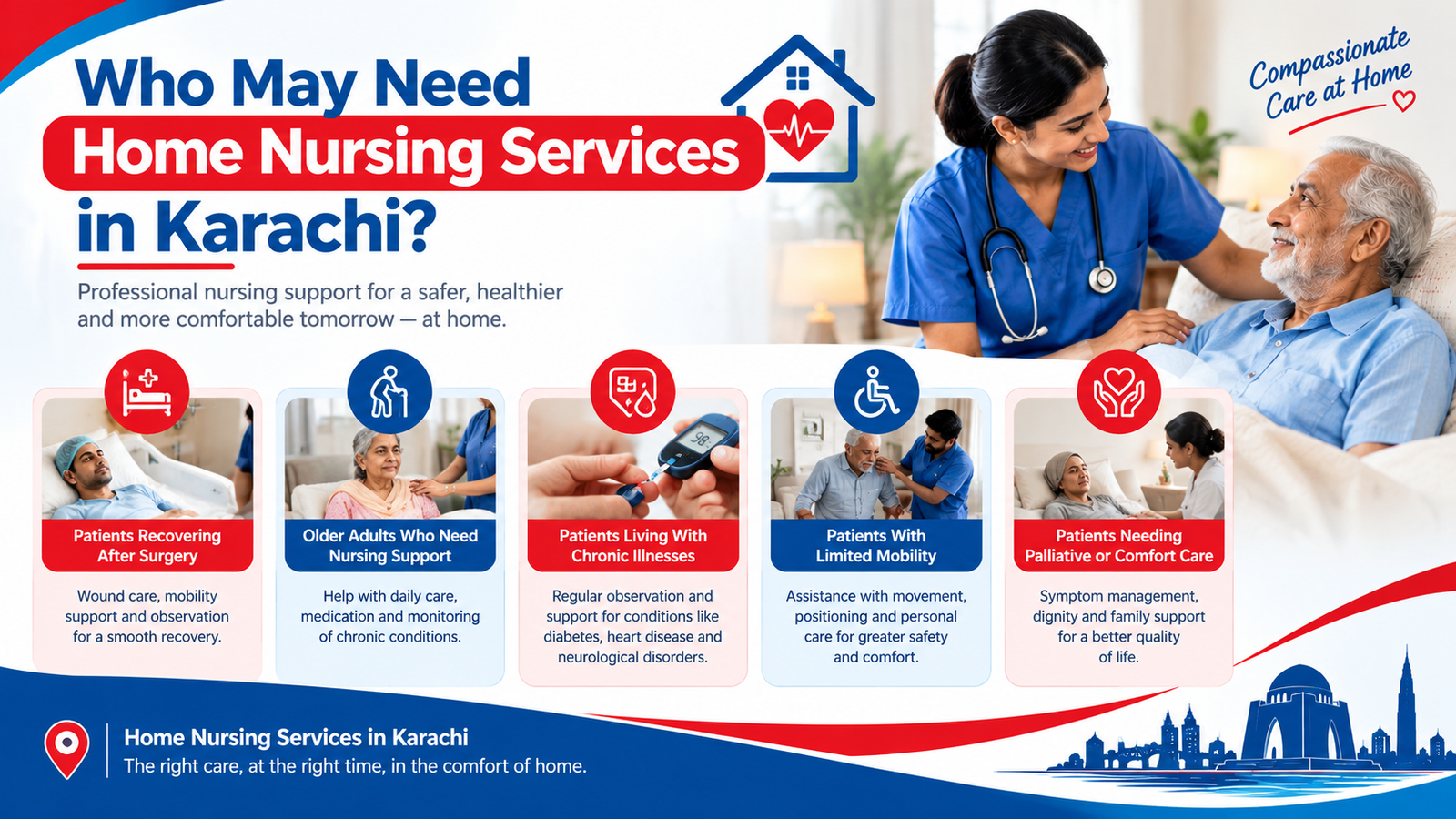
For those who require professional assistance in recovery and/or the maintenance of an existing health condition, home nursing care may be a suitable option. A doctor or a healthcare professional will be able to work out the level of care that the person needs.
Patients who have recovered from surgery.
Some patients require wound care, mobility assistance, monitoring for complications, and/or post-discharge support.
A nurse can help the person recover as directed by the surgeon and/or notify the surgeon of concerns that need medical review.
A patient recovering from an abdominal surgery, for instance, might want to be checked for abnormal redness, swelling, discharge, and fever and have his or her dressing changed as needed.
The nurse is not to add other treatments that are not approved by the wound care plan.
People over 60 years of age who use nursing services.
Elderly individuals may require help with activities of daily living, mobility, medication adherence, and/or management of chronic conditions.
Home nursing may be able to help the family arrange for professional care while the patient continues to live in his/her own home.
The care plan should include the care person’s independence, medical needs, preferences, and risks.
Not all elderly people need a nurse and some may need a caregiver for daily activities instead of skilled nursing.
Patients with chronic diseases
Those with diabetes, heart disease, or neurological diseases may need frequent monitoring or assistance to perform individual nursing activities.
When the patient is not markedly unstable, and the treating clinician believes home care is appropriate, these can be addressed by home-based care.
Nursing support should be in addition to regular medical visits. If any other clinical signs occur or get worse, this should be assessed clinically, not just through home visits.
Patients with limited mobility.
Individuals with impaired mobility, ability to turn, and/or self-care may require more support.
The nurse may provide assistance to monitor the skin, facilitate safe mobility, and administer nursing care procedures as required by the care plan.
Before care is started, families should discuss pressure injury prevention, fall risks, and transfer techniques.
The nurse/family should also make sure to explain what activities will/ will not need trained help and what activities are safe for relatives to perform.
Patients in need of palliative/comfort care focus
For those who are seriously ill, care is needed for comfort, symptom management, dignity, and support for the family.
Home nursing can be part of a broader palliative care plan agreed to by the medical team involved in the patient’s care.
Depending on symptoms and patient preference, the appropriate service will be provided. If breathing is very difficult, uncontrolled, or suddenly becomes more difficult, then it is an emergency.
What Do Home Nursing Services Include?
Some services are offered in different ways by different providers. Families need to verify what services are provided, what skills are needed, and if the service is appropriate for the patient’s care plan.
Monitoring Vital Signs
A nurse can take the patient’s blood pressure, pulse, temperature, respiratory rate or oxygen saturation as appropriate.
These observations will help determine if changes are occurring that should be medically addressed.
Monitoring is best used when the care team is aware of the readings that are significant for the specific patient and knows what to do when the readings are outside the range.
The treatment of wounds and post-surgical care.
A registered nurse can take care of wounds under the direction of the treating doctor.
This could involve changing clothes, monitoring for infection, and advising on how to maintain a clean and covered wound.
Don’t dismiss the sensation of spreading redness, worsening pain, pus, fever, or other signs of possible complications. This should be brought to the attention of health care as soon as possible.
Medication Support
Home nurses can help with the administration of medications within their scope of practice and within the agreed care plan. They can also assist families to stick to the plan and ask questions that should be asked of the doctor.
No patient or relative should alter dose levels, stop taking prescribed medication, or take new medication without consulting the doctor who prescribed them. Changing medication should be checked with the prescribing clinician.
Personal Care and Mobility Assistance:
Some care options assist with bathing, dressing, positioning, and/or moving safely around the house.
The level of support will vary according to the patient’s mobility and the service which has been agreed for them.
Any history of falls, mobility issues, or special transfer needs should be shared with the family prior to the first visit. Patients at risk of weakness or after surgery need to move safely.
Treatment for patients who need more advanced care
Care for those requiring more intensive treatment.Patients with complex needs may need regular checks, specialist nursing care, or may need to be seen by doctors and other health care professionals.
Families should find out whether the home nursing service will be able to provide advanced care, as not all service providers will provide it.
Home nursing may not be an alternative to hospital treatment if the patient requires hospital-level monitoring or quick access to hospital emergency interventions.
Types of Home Nursing Services
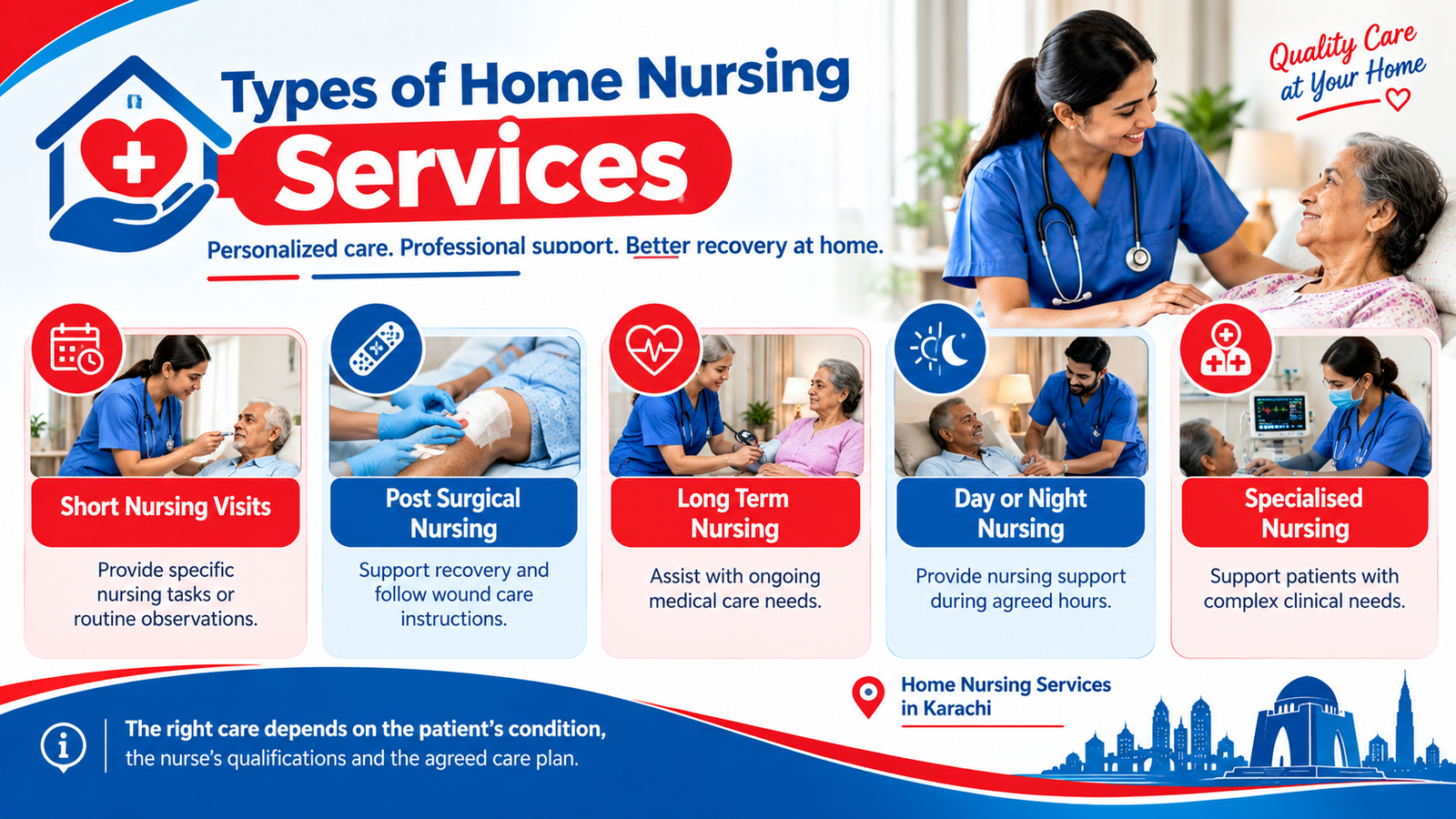
Home nursing arrangements can differ in duration, complexity, and the skills required.
The following comparison can help families identify what to discuss with a provider.
Type of care | Main purpose | Important consideration |
Short nursing visits | Provide specific nursing tasks or routine observations | Confirm the duration and tasks included in each visit |
Post-surgical nursing | Support recovery and follow wound care instructions | Follow the surgeon’s discharge plan |
Long-term nursing | Assist with ongoing medical care needs | Review the care plan as the condition changes |
Day or night nursing | Provide nursing support during agreed hours | Confirm shift length, handovers, and coverage arrangements |
Specialised nursing | Support patients with complex clinical needs | Verify relevant training, equipment, and clinical oversight |
These are general care categories, not a confirmation that every option is available from every provider. Ask Intensive Patient Care directly about its current services, staffing, and coverage before making arrangements.
Benefits of Receiving Nursing Care at Home
Many patients and families may find it easier to have care provided in the home when the home environment is appropriate, and care services are appropriate to the patient’s medical needs.
Convenience is one of the potential benefits. Patients might have to avoid some unnecessary travel to be cared for when the care can be safely given at home.
This may be especially beneficial for those who have mobility issues or who are not comfortable traveling while recuperating.
Continuity is another advantage. A well-planned care programme, combined with clear communication with the clinician being treated, will enable families to appreciate the patient’s needs throughout the day and identify changes in the patient.
Familiarity and privacy can also be good advantages of home care. Patients continue to live their normal lives and might be more comfortable following their preferred habits.
But home nursing does not always mean quicker healing or that all complications will be avoided.
Families should also take into account the practical requirements of home care. A room, clean surroundings, access, communication, and appropriate equipment may be required. The house needs to be capable of providing the level of care needed.
How to Choose Home Nursing Services in Karachi
When you’re comparing nursing providers, price and availability are not the only considerations. The first requirement is to locate a service able to reliably address the patient’s clinical needs.
Check Nursing Qualifications
Inquire about the nurse assigned to the patient’s care, his or her qualifications, his or her registration (if applicable), and his or her experience.
Ensure nursing procedures are appropriate if they are specialised; confirm the nurse’s training.
Be sure not to assume that all home care providers have the qualifications to perform clinical nursing skills. The roles of a caregiver and a trained nurse can be different.
Talk about the Patient’s Care Plan
Describe the diagnosis, discharge teaching, mobility restrictions, allergies, current medications, and any special nursing needs. Send pertinent medical paperwork to the medical team and provider as needed.
Request the names of those to be notified in the event of a change in the patient’s condition and the way the nurse will share information with the physician. Defining roles can help to prevent confusion in care.
Verify Service Hours and Staffing
Determine the type of support required before booking – short visit, fixed shift, overnight, or extended support.
Review and agree upon the agreed dates, staff outage plans, and whether replacements are available.
Where more than one nurse is caring for the family, it is important for families to know how handovers are managed.
Events can be canceled by the host or the guest. The host or the guest may cancel the event.
The price of home nursing in Karachi
may differ based on the patient’s condition, skills of the nurse, the time that they spend at the patient’s home, the length of their shift, and the procedures that are required.
Ask for a definite estimate and a detailed explanation of the fee. Inquire about any extra fees for evening hours, special equipment, materials, transportation, or modifications to care plans.
Don’t assume that all prices are inclusive of all the services.
Check Communication and Emergency arrangements
Choices of reliable care arrangements should include a description of how family members can voice concerns and who is responsible for clinical decisions. Make sure that the provider has a system in place for reporting changes in the patient’s condition.
Home nursing should not replace emergency services. Ensure relatives are aware of the need to seek immediate assistance if the patient becomes very ill.
How Does Home Nursing Usually Work?
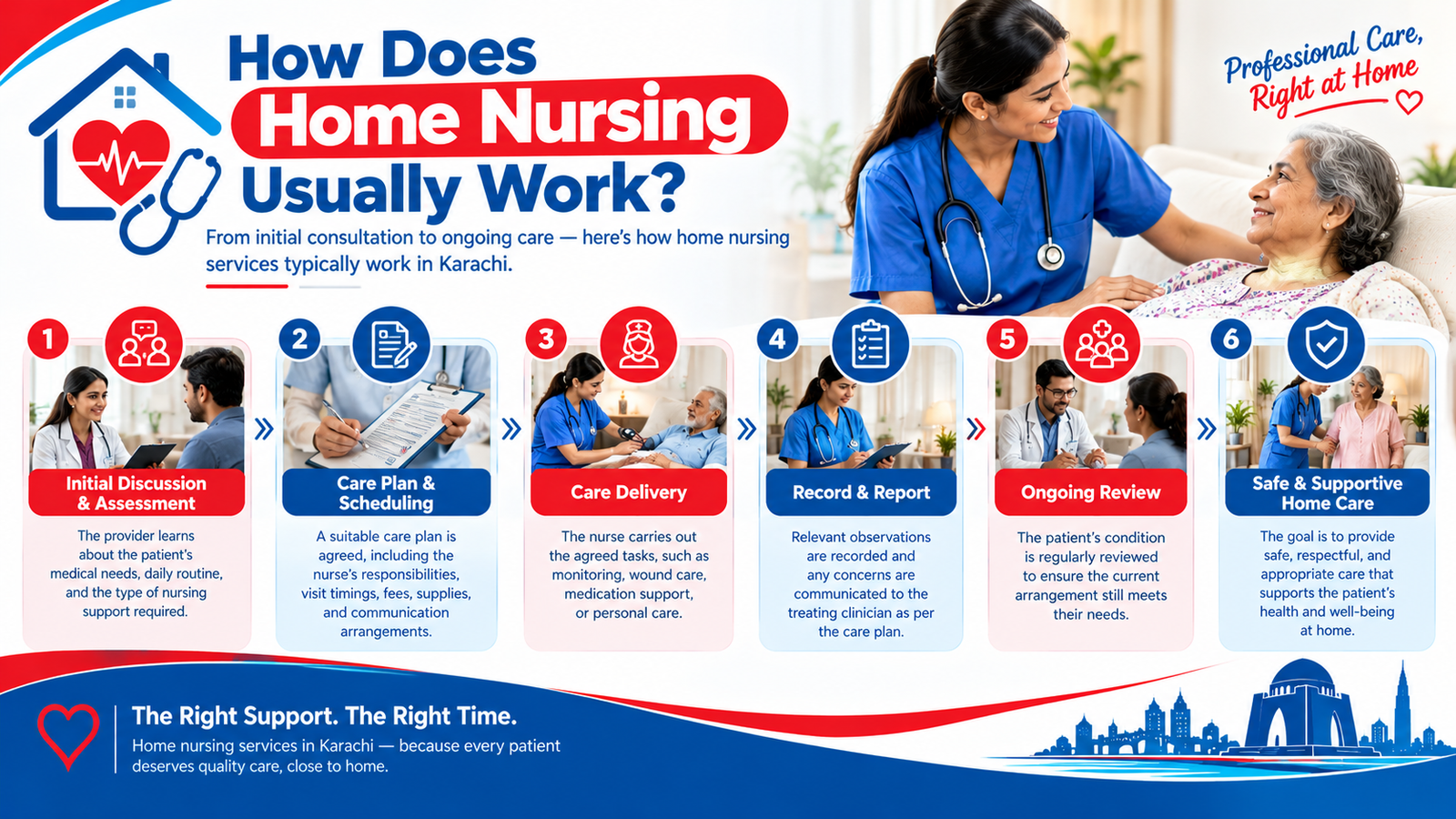
It can start with a conversation regarding medical needs and the sort of help that is required.
The provider might inquire about the patient’s condition, daily routine, discharge instructions, and the amount of nursing care recommended by the doctor.
The next step is to agree on the care plan and schedule. The family should verify the nurse’s duties, hours of work, cost, equipment, and communication with the family before the nurse services begin.
In care, the nurse implements the agreed activities, makes notes if needed for the specific care plan, and raises any concerns as per the care plan.The nurse makes no medical decisions outside the scope of her/his authority.
Requirements may vary with time. Regular reviews enable families and health and care professionals to determine if the existing arrangement is suitable or if the level of support is inadequate for the patient.
Preparing Your Home for a Nursing Visit
It can be easier for everyone if a safe and organised setting is provided for nursing care.
Families do not have to have a specially equipped room for each service; however, they should plan accordingly with the patient’s condition and the procedures planned.
Before the first visit, the following should be taken into account:
- Maintain an uncluttered, well-lit, and readily accessible patient space.
- Have medicines and medical records safely stored and provide the nurse with pertinent information.
- Ensure a stable bed or appropriate resting place according to the patient’s mobility.
- Avoid having pets or household items in clinical procedure areas.
- Have emergency contact information and information of the treating doctor readily available.
- Describe the patient’s allergies, mobility limitations, and recent changes in the patient’s condition to the nurse.
Check with the provider if the family is responsible for providing dressings, protection, monitoring devices or other equipment. Different services have different requirements.
Common Mistakes to Avoid When Arranging Home Nursing
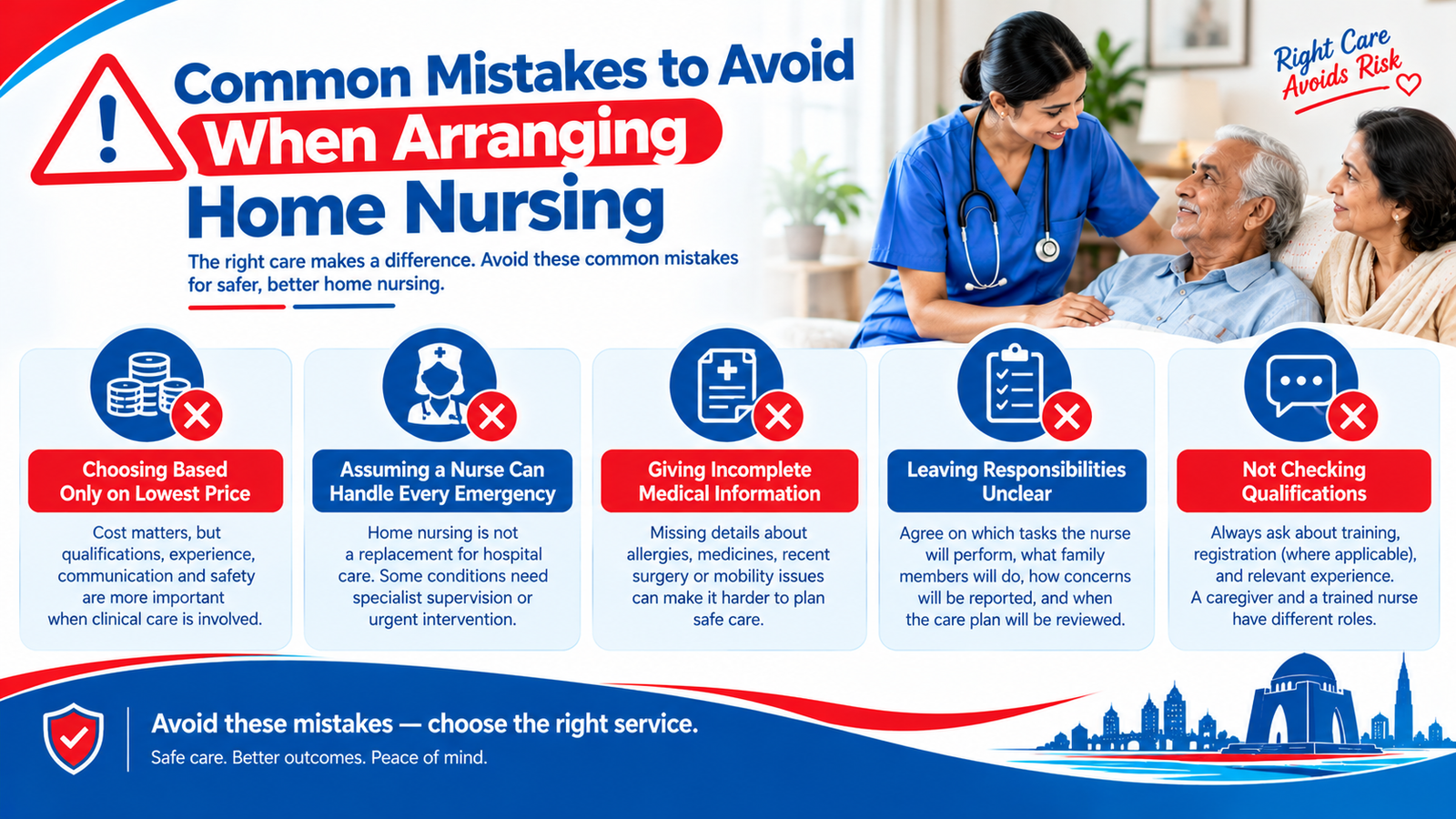
A frequent error is picking the one that is the cheapest. Qualifications, suitability, communication, and safe working practices are more important when it comes to clinical care, and cost is not.
One of the other errors is believing that home nursing is synonymous with a nurse being able to handle every medical emergency.
In some patients, hospital facilities or specialist supervision are necessary, or interventions must be made urgently that cannot be done safely at home.
Families should also refrain from providing partial medical details. Failure to provide information about allergies, prescription medications, recent surgery, or physical limitations will make it more difficult to provide safe care.
Last but not least, avoid ambiguity in responsibilities. Discuss who will be doing what, what family members will do, how concerns will be shared and when the care plan will be reviewed.
When Does a Patient Need Urgent Medical Attention?
Home nursing can help maintain routine and planned care; however, some symptoms require immediate evaluation.
If a patient becomes very short of breath, has chest pain, stroke symptoms, heavy bleeding that will not stop, sudden loss of consciousness or other life-threatening symptoms, call the local emergency services or seek immediate medical attention.
Don’t postpone the next nursing visit in case of a serious emergency. Utilize the patient’s current emergency plan if available, and share pertinent medical information with emergency personnel.
However, less urgent but concerning changes, like a new fever after surgery, redness of the wound, a new degree of confusion, or a noticeably poorer general condition, should be reported to the treating clinician immediately.