

Choosing care for an aging parent, recovering patient, or loved one with chronic illness is never easy.
Families often feel overwhelmed, especially when hospital visits become frequent or daily support becomes necessary at home.
This is where a home care agency becomes a life-changing solution.
Instead of shifting a loved one into a facility, families can access professional caregivers, nurses, and support staff right at home.
This approach preserves dignity, comfort, and independence while ensuring safety and medical supervision.
Across the world, demand for in-home care services is rising rapidly due to aging populations and chronic health conditions.
According to public health data from organizations like the World Health Organization, the number of people aged 60+ is expected to double by 2050, increasing the need for structured home-based care.
In this guide, you’ll learn how home care works, what services are available, how to choose providers, and what mistakes to avoid when selecting care for your family.
What is a home care agency, and how does it work?
A home care agency is a licensed organization that provides trained caregivers, nurses, or health aides to support individuals in their homes.
Services range from basic daily assistance to advanced medical care depending on patient needs.
A typical process includes:
- Initial home assessment by a care coordinator
- Customized care plan based on medical and personal needs
- Assignment of caregivers or nurses
- Scheduled visits (hourly, daily, or live-in care)
- Regular monitoring and updates to family members
For example, an elderly patient recovering from hip surgery may receive personal care assistance at home, such as bathing, mobility support, and medication reminders.
Meanwhile, a chronic illness patient may need skilled nursing care at home, including wound dressing and vital monitoring.
A professional home care agency ensures continuity, meaning the same caregiver or team often supports the patient to build trust and comfort.
Who benefits most from in-home care services?
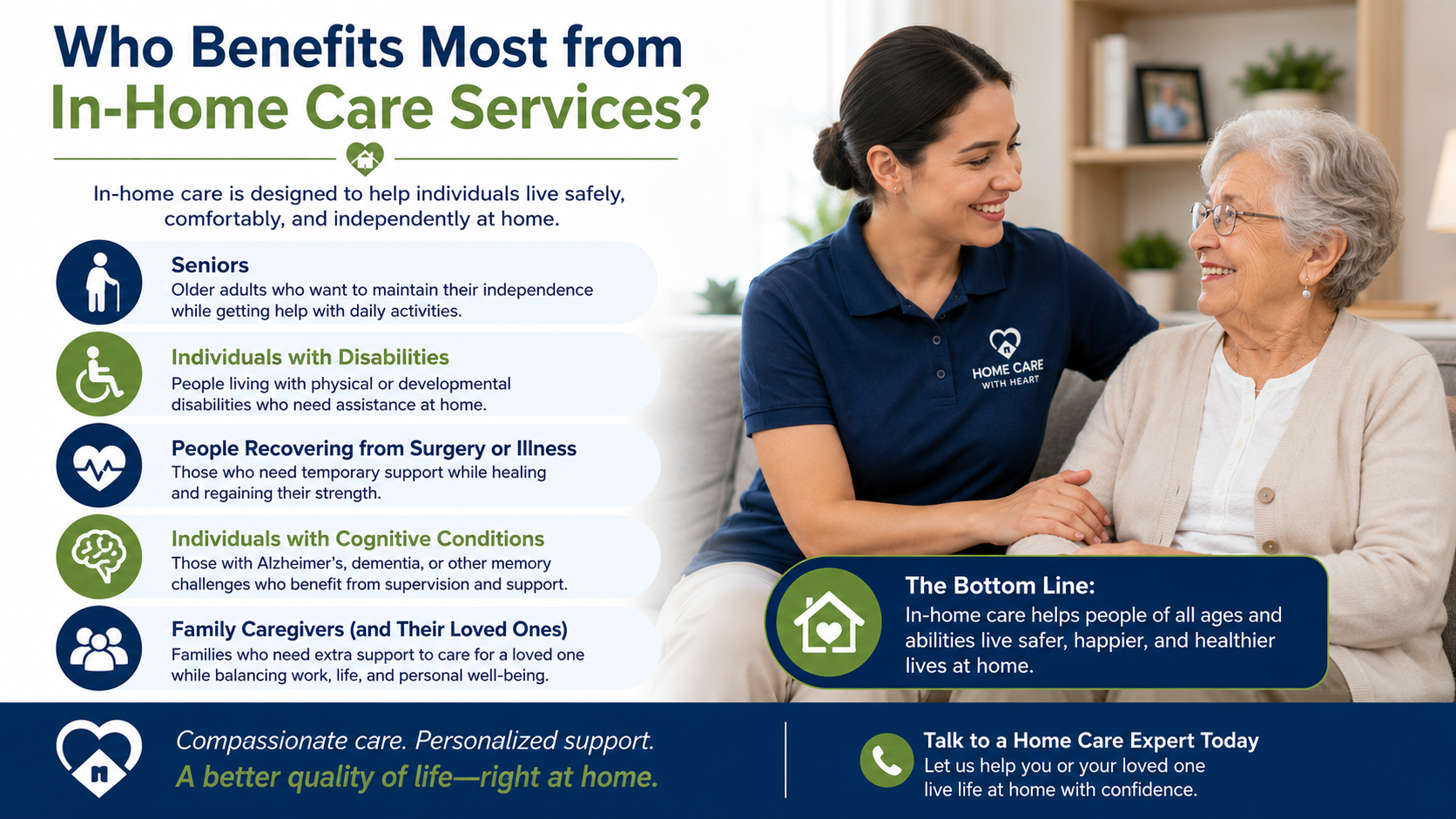
In-home care is not limited to seniors. Many people benefit from these services, including:
- Elderly individuals needing daily support
- Patients recovering after surgery
- People with disabilities
- Individuals with chronic illnesses like diabetes or heart disease
- Patients needing palliative or end-of-life care
Family caregivers also benefit significantly. Many experience burnout when trying to manage full-time care alone.
Hiring a professional caregiver reduces stress and improves overall quality of life for both patients and families.
In urban areas, many families search for a home care agency near me because quick access to trained caregivers can make a major difference during emergencies.
What services do home healthcare agencies provide?
A modern home healthcare agency offers a wide range of medical and non-medical services tailored to individual needs.
Key services include:
- Personal hygiene and grooming assistance
- Meal preparation and feeding support
- Medication reminders and management
- Skilled nursing care at home
- Physiotherapy and rehabilitation support
- Vital sign monitoring
- Wound care and post-surgical recovery
- Companionship and emotional support
Example scenario:
A stroke patient may require physiotherapy sessions at home along with speech therapy, while also needing daily assistance with mobility and feeding.
Types of care:
Type of Care | Description | Example |
Personal Care | Non-medical daily assistance | Bathing, dressing |
Companion Care | Emotional and social support | Conversation, errands |
Skilled Nursing | Medical care by licensed nurses | Injections, wound care |
Therapy Services | Rehabilitation support | Physical therapy |
This combination of services makes home care highly flexible compared to hospital stays or assisted living facilities.
How do you choose the best home care agency near you?
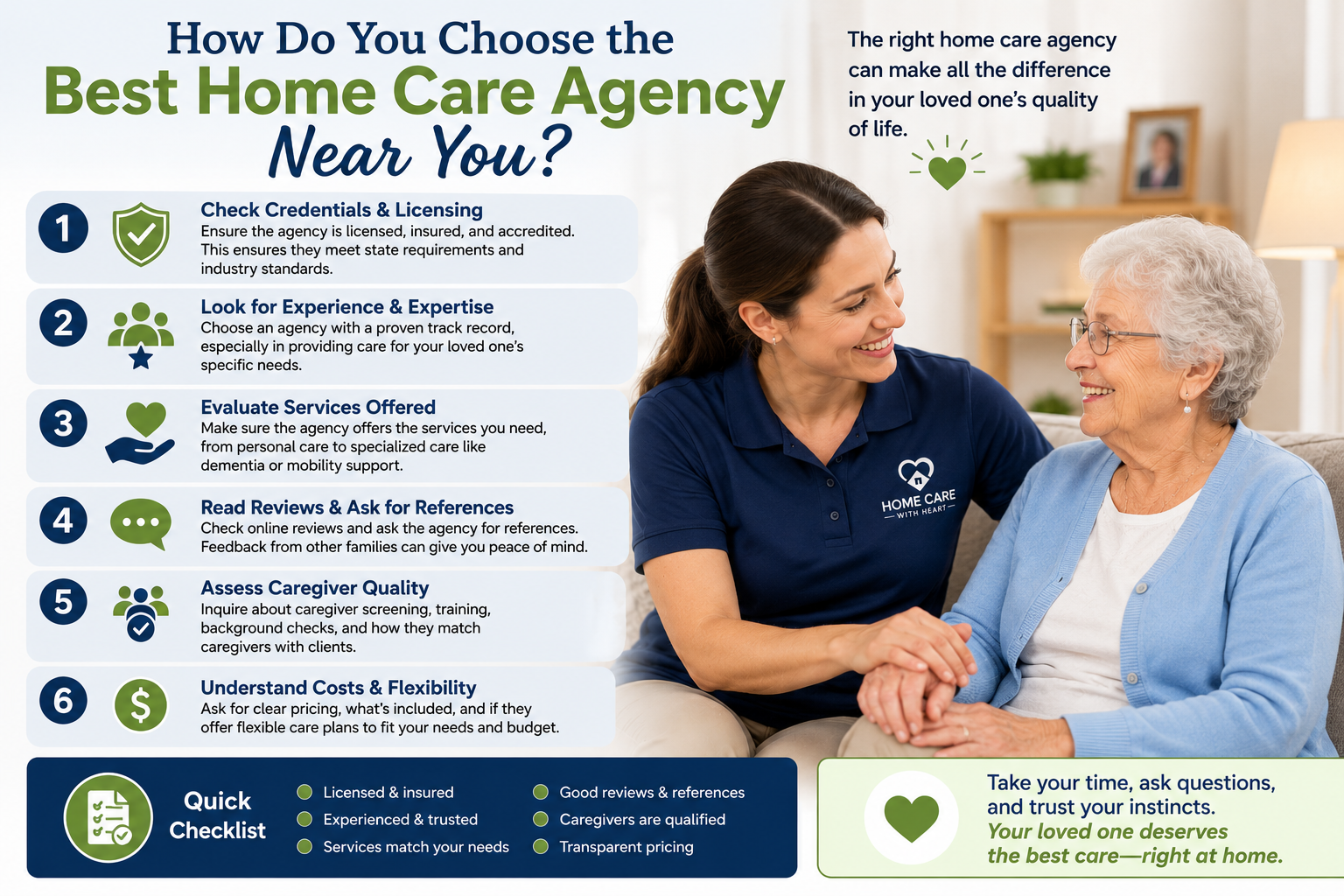
Selecting the right provider is crucial for safety and peace of mind. Families often search for the best home care agency, but may struggle to evaluate quality.
Key factors to consider:
- Licensing and accreditation
- Qualified and background-checked caregivers
- Experience in senior home care services
- Availability of emergency support
- Transparent pricing structure
- Positive client reviews and testimonials
Expert tips:
- Always request a care plan before starting services
- Ask about caregiver replacement policies
- Check if the agency offers 24/7 support
- Evaluate communication between the agency and the family
A reliable home care agency near me should feel responsive, transparent, and flexible. If communication feels unclear, it’s often a red flag.
Families can also consult healthcare professionals or hospitals for referrals, as many doctors collaborate with trusted providers.
What is the difference between home health care providers and personal care assistants at home?
Many people confuse medical care with non-medical support. However, both serve different purposes.
Key differences:
- Home health care providers focus on medical services such as nursing, therapy, and clinical monitoring.
- Personal care assistance at home focuses on daily living support like bathing, cooking, and companionship.
Simple breakdown:
- Medical needs → Skilled nurses and therapists
- Daily living needs → Caregivers and aides
A professional home healthcare agency often provides both services under one coordinated plan, ensuring seamless care.
For instance, a cancer patient may need nursing care for treatment management and also require emotional support and meal assistance at home.
How much do senior home care services cost?
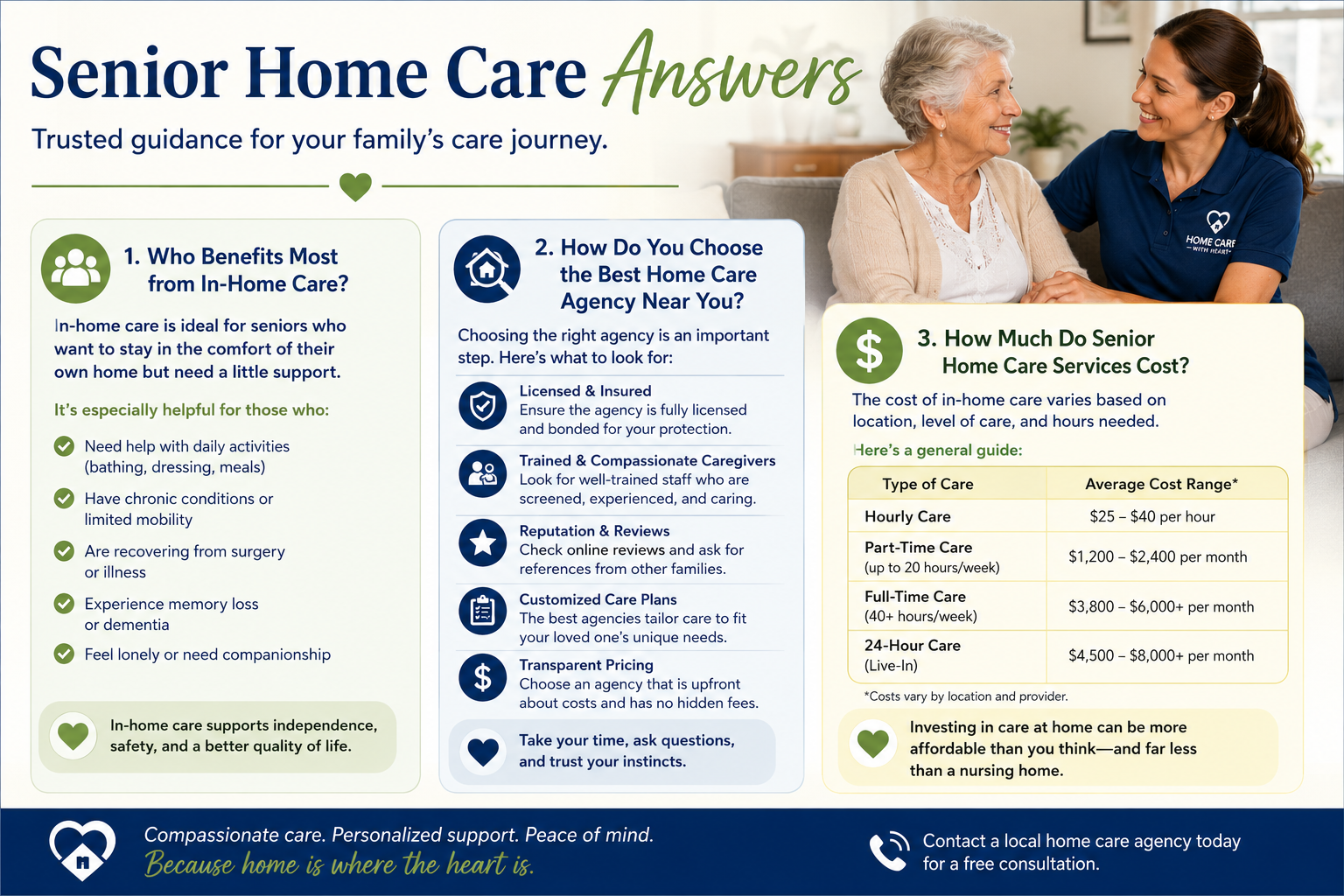
Costs vary depending on location, level of care, and number of hours required.
Common pricing factors:
- Hourly vs live-in care
- Medical vs non-medical support
- Experience level of caregiver
- Specialized care requirements
Average cost structure (general estimate):
- Basic companion care: Lower cost range
- Personal care assistance: Moderate cost range
- Skilled nursing care: Higher cost range
While home care may seem expensive initially, it is often more cost-effective than hospital stays or long-term facility care.
Insurance coverage and government support programs may reduce expenses in some regions.
Families should always request a detailed breakdown before signing contracts with any provider.
What are the key benefits and risks of professional home care services?
A professional home care agency offers significant benefits, but families should also be aware of potential challenges.
Benefits:
- Comfort of staying at home
- Personalized care plans
- Faster recovery from illness or surgery
- Reduced hospital readmissions
- Emotional well-being and independence
Risks or challenges:
- Quality differences between agencies
- Miscommunication in care plans
- Scheduling inconsistencies
- Privacy concerns if caregivers change frequently
Best practices to reduce risks:
- Choose licensed agencies only
- Maintain regular communication
- Keep written care plans updated
- Monitor caregiver performance
When chosen carefully, home care becomes a safer and more comforting alternative to institutional care.
When should skilled nursing care at home be considered?
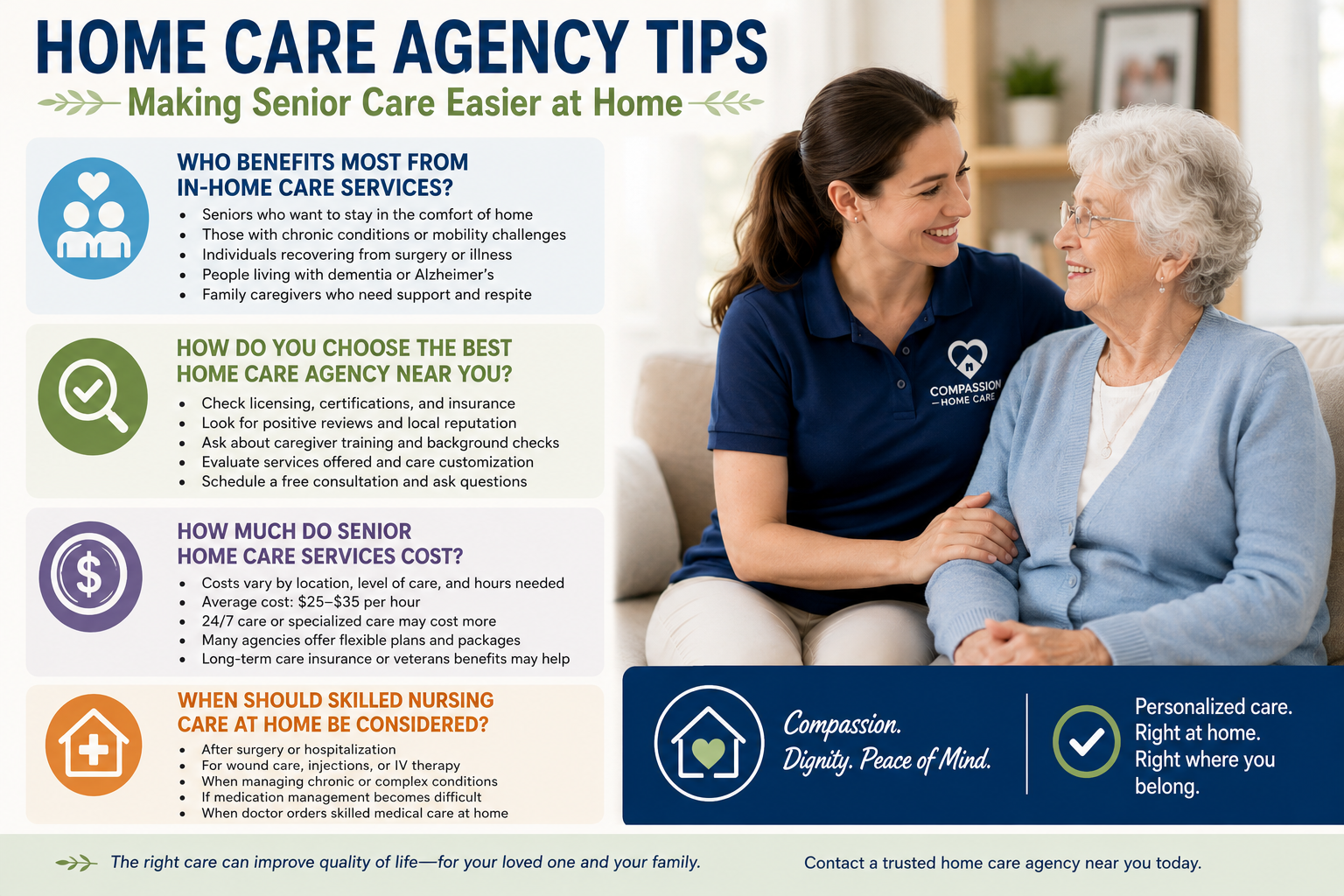
Skilled nursing is necessary when medical attention is required outside a hospital setting. A home care agency usually recommends it in the following cases:
- Post-surgery recovery requiring wound care
- Chronic illnesses need regular monitoring
- Stroke or neurological conditions
- Cancer treatment support
- IV therapy or injections at home
For example, a diabetic patient with complications may need regular insulin administration and foot care from a trained nurse.
Doctors often recommend skilled nursing when hospital discharge is possible but medical supervision is still required at home.
FAQs
What does a home care agency do?
A home care agency provides trained caregivers and nurses who assist with daily living activities, medical care, and recovery support at home.
How do I find the best home care agency near me?
Check licensing, caregiver experience, reviews, and service flexibility. Always request a care plan before hiring.
Are home healthcare agencies expensive?
Costs vary based on care level, but many families find it more affordable than hospital or long-term facility care.
What services are included in senior home care services?
They include personal care, companionship, medication support, skilled nursing, and rehabilitation services.
Can home care replace hospital care completely?
Not always. Home care supports recovery and chronic conditions, but severe emergencies still require hospital treatment.
Conclusion
A home care agency plays a vital role in modern healthcare by bringing professional support directly into the home environment.
It allows patients to recover with dignity while giving families peace of mind and relief from caregiving stress.
From personal assistance to advanced nursing care, these services are designed to improve quality of life and ensure safety at every stage of recovery or aging.
If you are searching for reliable care, take time to compare providers, review credentials, and choose a service that aligns with your loved one’s needs. The right decision can transform daily life in a meaningful way.