

When a loved one becomes ill, recovering from surgery, or needs long term support, families often face a difficult decision.
Should they choose hospital care or arrange professional medical assistance at home? For many families in Karachi, receiving quality care in a familiar environment offers comfort, convenience, and peace of mind.
In home patient care karachi allows patients to receive professional medical and personal assistance without leaving their homes.
Whether someone requires nursing care after surgery, support for a chronic illness, elderly care, or rehabilitation, qualified caregivers and registered nurses can provide personalized services tailored to individual needs.
Today, home healthcare has become an important part of modern medical care.
Families can access skilled nurses, patient attendants, physiotherapists, doctor home visits, medication management, and even advanced home ICU services.
This guide explains everything you need to know, helping you choose the right service while avoiding common mistakes.
What is in-home patient care in Karachi?
Featured Snippet Answer
In-home patient care is a healthcare service where trained medical professionals and caregivers provide
nursing, personal assistance, rehabilitation, and medical monitoring in a patient’s home.
Services may include medication administration, wound care, elderly support, physiotherapy, post-operative care, chronic disease management, and daily living assistance.
Unlike hospital stays, home care focuses on personalized treatment plans while allowing patients to remain in familiar surroundings.
This approach often reduces stress and improves emotional wellbeing.
Home patient care services may include:
- Home nursing services
- Registered nurse visits
- Patient attendants
- Elderly patient care
- Bedridden patient care
- Post surgery recovery
- Stroke rehabilitation
- Cancer patient support
- Palliative care
- Home physiotherapy
- Medication management
- Doctor home visits
- Medical equipment setup
- Home ICU care
- Vital sign monitoring
Each care plan is customized according to the patient’s medical condition and physician’s recommendations.
Who Can Benefit from Home Patient Care Services?
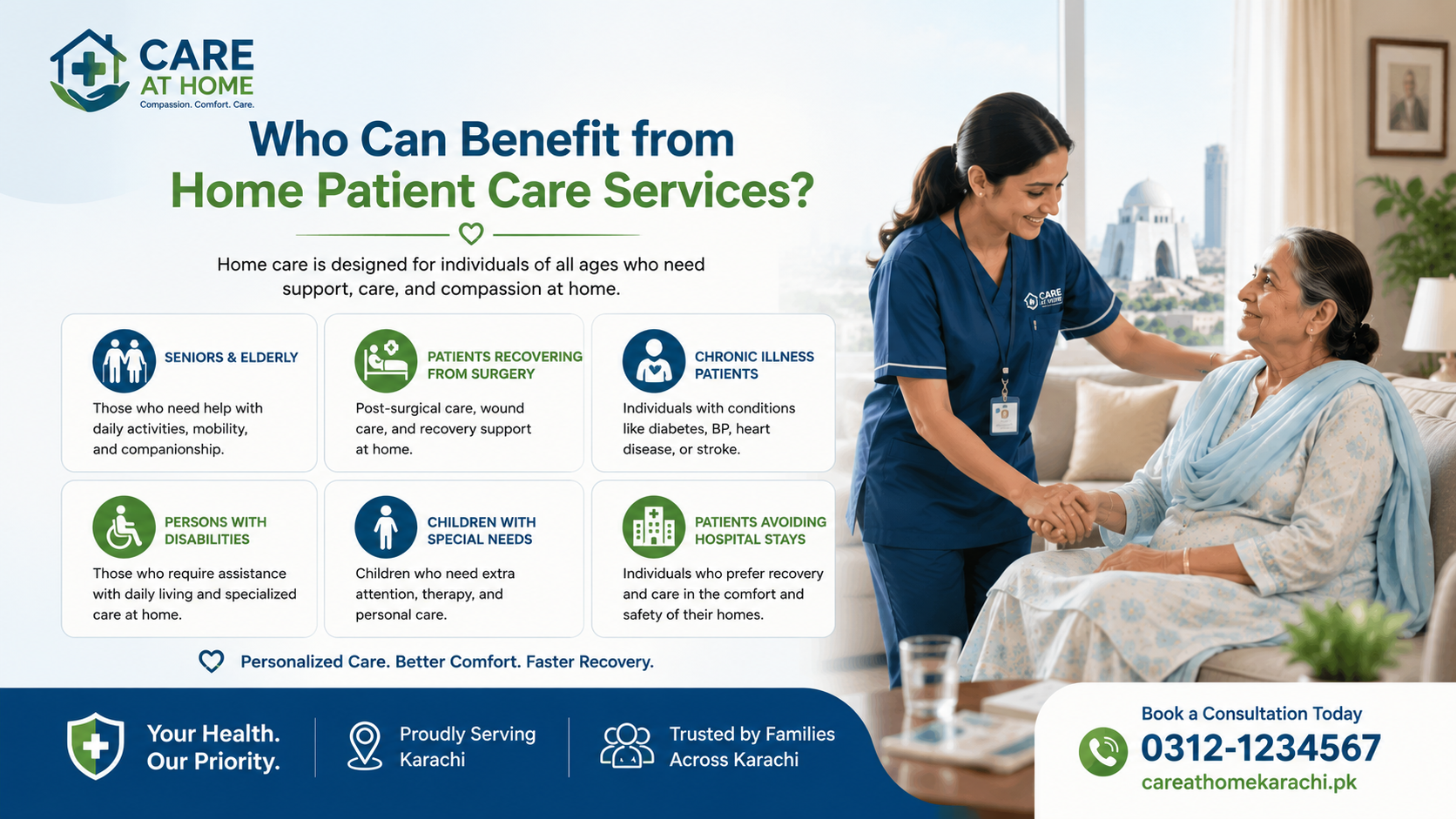
Home healthcare is not limited to senior citizens. Patients of all ages can benefit from professional support at home.
Common patients include:
Elderly Individuals
Older adults often require assistance with mobility, bathing, dressing, meals, medication reminders, and companionship.
Professional caregivers help seniors maintain dignity while improving their quality of life.
Patients Recovering After Surgery
Following orthopedic surgery, heart surgery, abdominal procedures, or joint replacement, patients usually recover better when proper nursing care is available at home.
Services may include:
- Dressing changes
- Pain monitoring
- Infection prevention
- Mobility assistance
- Medication administration
Bedridden Patients
Patients confined to bed require continuous monitoring to reduce complications such as:
- Pressure ulcers
- Muscle weakness
- Respiratory infections
- Poor circulation
Experienced caregivers regularly reposition patients and maintain proper hygiene.
Stroke Patients
Stroke survivors often need:
- Physiotherapy
- Speech therapy coordination
- Mobility support
- Feeding assistance
- Daily exercise supervision
Early rehabilitation significantly improves recovery outcomes.
Cancer Patients
Cancer treatment can leave patients weak and vulnerable. Home caregivers assist with:
- Nutrition
- Medication schedules
- Pain management support
- Hygiene
- Emotional encouragement
Patients with Chronic Diseases
Many people living with diabetes, heart disease, kidney disease, COPD, or neurological disorders benefit from ongoing home medical care that reduces unnecessary hospital visits.
What Services Are Included in Home Patient Care?
Professional home healthcare agencies usually offer a wide range of medical and non medical services.
Nursing Care
Qualified home nurses perform clinical tasks such as:
- Blood pressure monitoring
- Blood sugar testing
- IV medication administration
- Injection services
- Catheter care
- Wound dressing
- Oxygen therapy
- Feeding tube management
- Tracheostomy care
These services follow physician instructions and accepted medical standards.
Personal Care Assistance
Caregivers help patients with daily activities including:
- Bathing
- Grooming
- Dressing
- Toileting
- Walking assistance
- Meal preparation
- Light mobility exercises
This support promotes comfort while reducing family stress.
Medication Management
Missing medication doses can delay recovery.
Professional caregivers:
- Organize medicines
- Follow prescribed schedules
- Monitor side effects
- Report concerns to physicians
- Maintain medication records
Patient Monitoring
Routine monitoring may include:
- Blood pressure
- Heart rate
- Oxygen saturation
- Blood glucose
- Temperature
- Respiratory rate
Any unusual changes are reported promptly, helping physicians make timely decisions.
Physiotherapy at Home
Home physiotherapists create individualized rehabilitation programs that improve:
- Muscle strength
- Joint flexibility
- Balance
- Walking ability
- Recovery after fractures
- Stroke rehabilitation
Patients often recover more confidently when therapy takes place in familiar surroundings.
Doctor Home Visits
Some healthcare providers arrange doctor visits for patients who have difficulty traveling.
Doctors can:
- Assess recovery
- Adjust medications
- Review treatment plans
- Recommend diagnostic tests
- Coordinate specialist referrals
What Is the Difference Between a Caregiver and a Home Nurse?
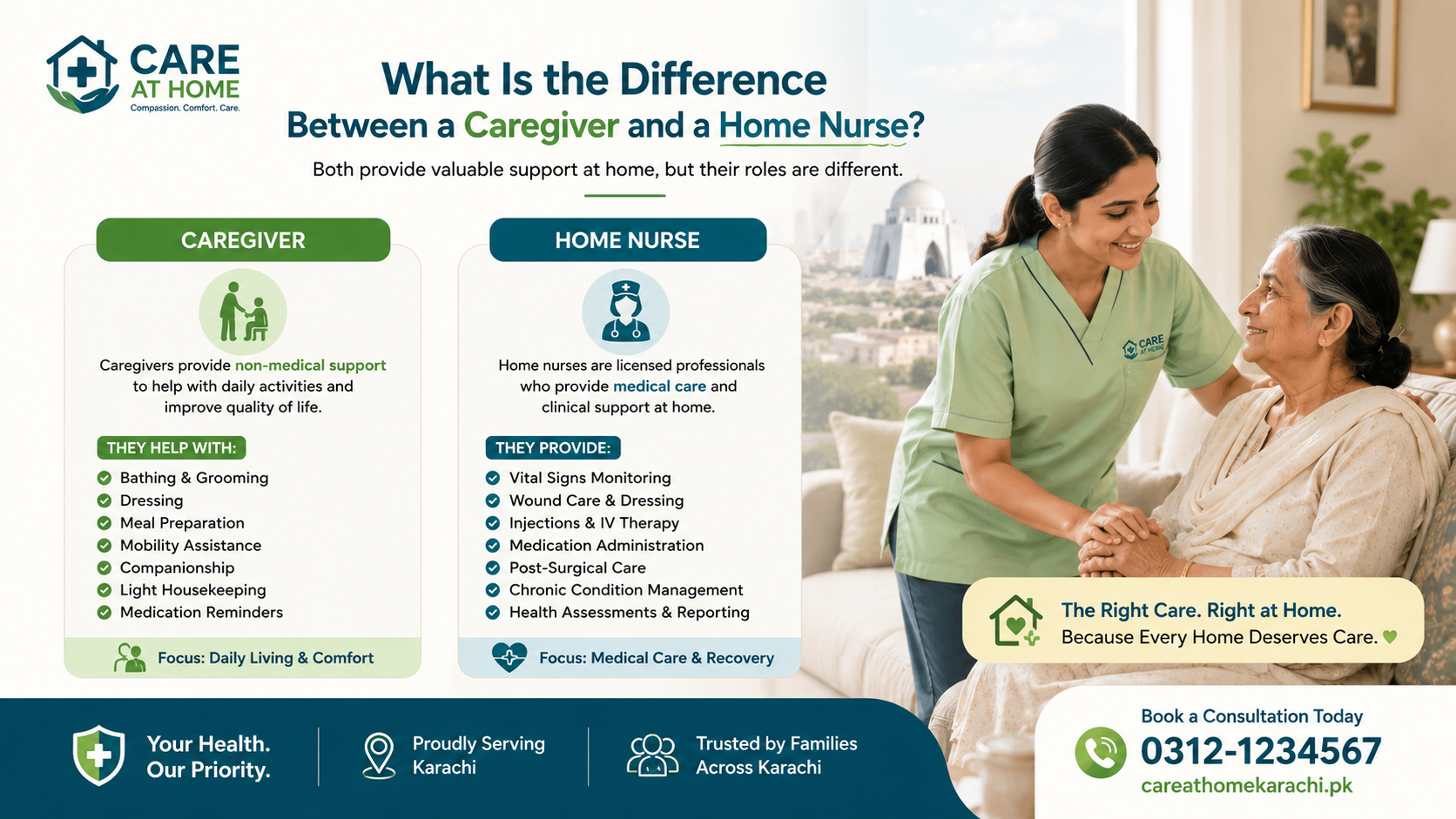
Many families assume these roles are the same, but they serve different purposes.
Feature | Caregiver | Home Nurse |
Personal assistance | ✔ | ✔ |
Bathing and grooming | ✔ | ✔ |
Meal assistance | ✔ | ✔ |
Medication reminders | ✔ | ✔ |
Clinical procedures | ✘ | ✔ |
IV medications | ✘ | ✔ |
Wound dressing | ✘ | ✔ |
Catheter care | ✘ | ✔ |
Medical monitoring | Limited | Comprehensive |
Professional nursing license | No | Yes |
Choosing the right professional depends on the patient’s medical condition.
Why Are More Families Choosing Home Healthcare in Karachi?
Several factors have contributed to the growing demand for home healthcare across Karachi.
Families appreciate that patients remain in familiar surroundings while receiving personalized attention.
Some key advantages include:
- Lower stress compared to prolonged hospitalization
- Individualized care plans
- Better family involvement
- Reduced travel for appointments
- Flexible care schedules
- Improved comfort
- Lower risk of certain hospital-acquired infections
- Faster recovery for many postoperative patients
For elderly family members, remaining at home often supports emotional wellbeing and independence.
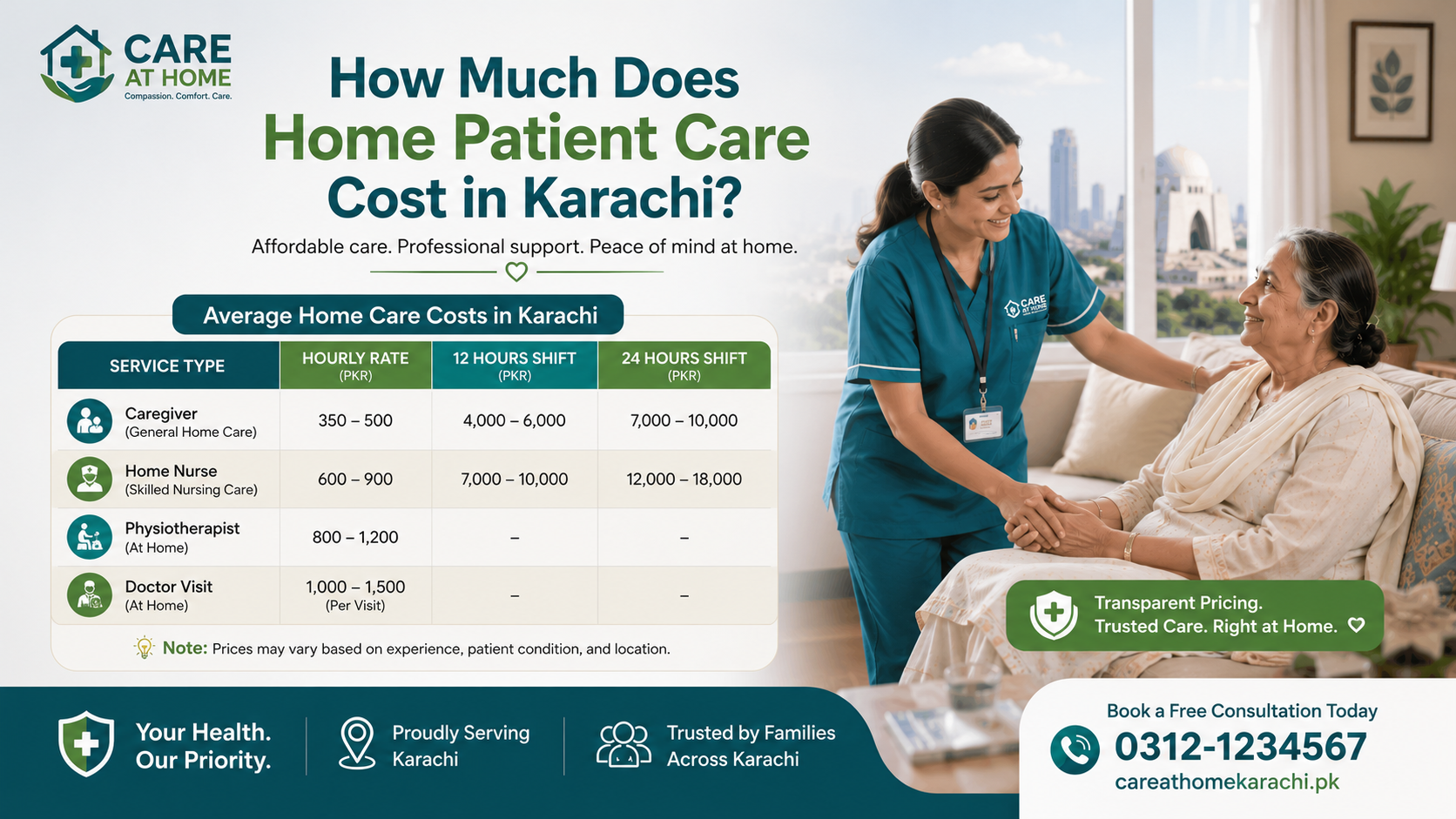
How Much Does Home Patient Care Cost in Karachi?
Featured Snippet Answer
The cost of home patient care depends on several factors, including the patient’s condition, the level of medical care required, the caregiver’s qualifications, service hours, and specialized equipment.
Basic caregiver services generally cost less than skilled nursing or home ICU care.
Factors that influence pricing include:
- Duration of care (hourly, daily, weekly, or monthly)
- Registered nurse versus patient attendant
- Daytime or 24 hour coverage
- Medical procedures required
- Home physiotherapy sessions
- Doctor home visits
- Medical equipment rental
- Emergency support availability
Rather than choosing the lowest-priced provider, compare qualifications, service quality, and emergency response.
High-quality care often leads to better patient outcomes and greater peace of mind for families.
How Do You Choose the Best Home Patient Care Provider?
Selecting a reliable home healthcare provider is one of the most important decisions a family can make.
A trusted agency offers qualified professionals, clear communication, and personalized care plans.
Check Professional Qualifications
Ensure nurses hold valid professional credentials and have experience caring for patients with conditions similar to your loved one’s needs.
Look for professionals experienced in:
- Elderly care
- Postoperative recovery
- Stroke rehabilitation
- Chronic disease management
- Cancer care
- Critical care nursing
Verify Background Checks
A reputable home nursing agency should conduct background verification for caregivers and patient attendants. This provides additional confidence and safety for families.
Ask whether staff members receive ongoing training in:
- Infection prevention
- Patient safety
- Emergency response
- First aid
- Medication handling
Ask About Personalized Care Plans
Every patient has unique medical and personal needs. Avoid providers that offer identical care packages for everyone.
A personalized care plan should include:
- Medical history review
- Daily care routine
- Medication schedule
- Nutrition guidance
- Mobility assistance
- Rehabilitation goals
- Emergency contacts
- Regular progress reports
Confirm 24/7 Support
Medical emergencies do not follow office hours.
Choose a provider that offers:
- Emergency response
- On call nurses
- Replacement caregivers when needed
- Physician coordination
- Continuous communication with family members
Is 24/7 Home Patient Care Available in Karachi?
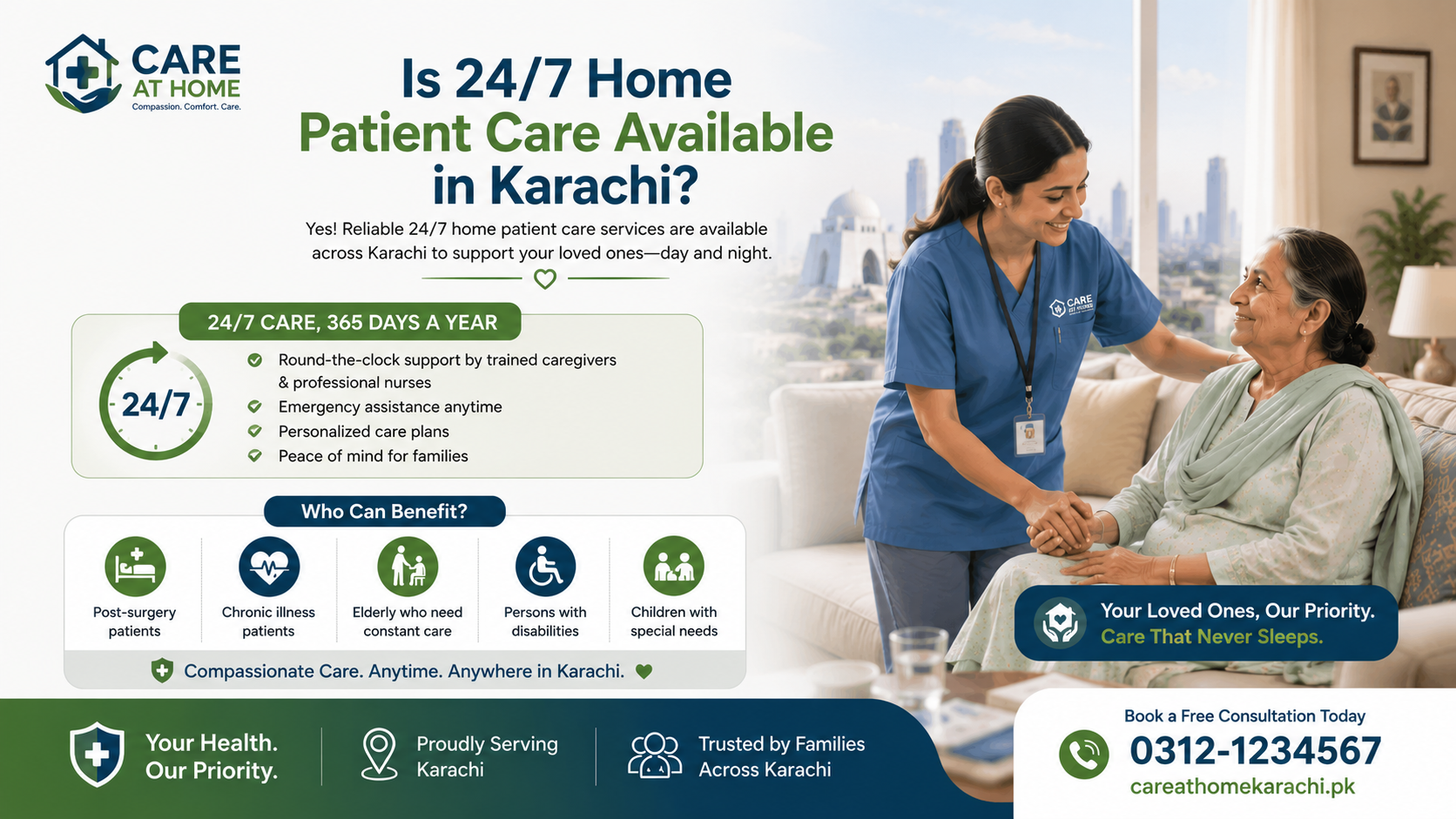
Yes. Many home healthcare providers offer round-the-clock services for patients who require constant supervision.
This option is especially helpful for:
- Bedridden patients
- Elderly individuals living alone
- Patients recovering from major surgery
- Stroke survivors
- Individuals with advanced neurological disorders
- Patients receiving palliative care
- Home ICU patients
Twenty four hour care may involve rotating shifts of nurses or caregivers to ensure continuous support without compromising patient safety.
What Medical Services Can Be Provided at Home?
Home healthcare has expanded significantly over the last decade. Today, many treatments once limited to hospitals can be safely delivered at home under medical supervision.
Common services include:
Skilled Nursing Care
Registered nurses can provide:
- IV therapy
- Injection administration
- Catheter care
- Wound dressing
- Tracheostomy care
- Feeding tube management
- Blood sample collection
- Oxygen therapy
Home Physiotherapy
Physiotherapists help patients regain strength and mobility after:
- Stroke
- Fractures
- Joint replacement
- Back injuries
- Neurological conditions
Regular therapy sessions improve independence and reduce recovery time.
Patient Monitoring
Ongoing health monitoring helps detect problems before they become emergencies.
Monitoring may include:
- Blood pressure
- Blood sugar
- Heart rate
- Oxygen levels
- Temperature
- Pain assessment
- Fluid intake and output
Detailed records also help physicians adjust treatment plans when necessary.
Medication Management
Medication errors are a common cause of preventable hospital admissions.
Professional nurses ensure:
- Correct dosage
- Timely administration
- Safe storage
- Monitoring for adverse reactions
- Communication with treating physicians
Can Critical Patients Receive Care at Home?
Many people assume critically ill patients must remain in a hospital.
While some conditions require hospitalization, selected patients can safely receive advanced medical care at home when supervised by experienced healthcare professionals.
Examples include:
- Home ICU care
- Ventilator support
- Oxygen therapy
- Cardiac monitoring
- Post ICU recovery
- Advanced wound care
- Palliative care
These services often require specialized equipment and close coordination between doctors, nurses, and family members.
What Medical Equipment May Be Needed at Home?
Depending on the patient’s condition, healthcare providers may recommend specific medical equipment.
Common equipment includes:
Equipment | Purpose |
Hospital bed | Comfortable positioning |
Wheelchair | Safe mobility |
Walker | Walking assistance |
Oxygen concentrator | Respiratory support |
Suction machine | Airway management |
Nebulizer | Medication delivery |
Patient lift | Safe transfers |
Blood pressure monitor | Vital sign monitoring |
Pulse oximeter | Oxygen level monitoring |
Glucometer | Blood sugar testing |
Proper instruction on equipment use is essential for both caregivers and family members.
What Is the Difference Between Short Term and Long Term Home Care?
Choosing the right type of care depends on the patient’s health condition and recovery goals.
Short Term Care | Long Term Care |
Surgery recovery | Chronic illness support |
Temporary injuries | Dementia care |
Rehabilitation | Elderly assistance |
Hospital discharge | Disability support |
Usually lasts days or weeks | May continue for months or years |
Healthcare professionals regularly reassess patients to determine whether care plans should be adjusted as recovery progresses.
What Mistakes Should Families Avoid?
Families often make avoidable mistakes when arranging home healthcare.
Common mistakes include:
- Choosing providers based only on price
- Hiring untrained caregivers
- Ignoring professional qualifications
- Failing to create a written care plan
- Delaying medical attention when symptoms worsen
- Poor communication with healthcare providers
- Not involving the patient’s physician
- Skipping follow-up appointments
- Inadequate infection control at home
Avoiding these issues improves patient safety and supports better recovery outcomes.
What Do Healthcare Experts Recommend?
Leading healthcare organizations consistently emphasize the importance of patient-centered care.
A coordinated approach involving physicians, registered nurses, physiotherapists, caregivers, and family members often leads to better health outcomes.
Experts recommend:
- Encouraging safe physical activity when appropriate
- Maintaining proper nutrition and hydration
- Following medication schedules carefully
- Monitoring for changes in symptoms
- Keeping regular communication with healthcare providers
- Creating a safe home environment to reduce fall risks
- Supporting the patient’s emotional well-being alongside physical recovery
A collaborative care plan helps patients recover with greater comfort while giving families confidence that their loved one is receiving appropriate support.
How Can Families Support Recovery at Home?
Professional healthcare providers play a vital role, but family involvement can significantly improve a patient’s recovery and emotional well-being.
A positive home environment often helps patients feel more comfortable and motivated during treatment.
Here are practical ways families can help:
- Encourage patients to follow their treatment plan.
- Assist with doctor appointments and follow-up visits.
- Keep the home clean and free from infection risks.
- Remove obstacles that could cause falls.
- Prepare nutritious meals based on medical advice.
- Encourage gentle movement or physiotherapy exercises when approved.
- Provide emotional support through regular conversation and companionship.
- Keep emergency contact numbers readily available.
Even small daily efforts can make a meaningful difference in a patient’s recovery journey.
How Can You Tell If Home Patient Care Is the Right Choice?
Featured Snippet Answer
Home patient care is often the right option when a patient is medically stable but still requires ongoing nursing support, personal care, rehabilitation, or regular health monitoring.
It allows patients to recover in familiar surroundings while receiving personalized healthcare services.
It may be suitable for patients who:
- Need assistance with daily activities
- Are you recovering after surgery
- Have chronic medical conditions
- Require elderly or senior care
- Need physiotherapy at home
- Require medication management
- Need regular monitoring of vital signs
- Prefer home-based recovery instead of extended hospitalization
However, patients with life-threatening emergencies or conditions requiring continuous hospital intervention should remain under hospital care until their physician recommends home treatment.
Why Is Personalized Home Healthcare Becoming More Popular?
Healthcare is moving toward individualized treatment rather than a one-size-fits-all approach.
Every patient has different medical needs, recovery goals, and family circumstances.
Personalized care plans can include:
- Customized nursing schedules
- Individual rehabilitation goals
- Nutritional support
- Pain management strategies
- Mobility assistance
- Regular progress evaluations
- Coordination between doctors, nurses, physiotherapists, and caregivers
This approach improves communication, enhances patient comfort, and helps families stay actively involved in the recovery process.
Frequently Asked Questions
What is included in home patient care services?
Home patient care services typically include nursing care, medication management, personal hygiene assistance, physiotherapy, vital sign monitoring, wound care, elderly support, post operative care, doctor home visits, and rehabilitation based on the patient’s condition.
Can I hire a private nurse for home care in Karachi?
Yes. Many licensed home healthcare agencies provide qualified registered nurses for short term and long term medical care at home.
These nurses can perform clinical procedures, monitor patient health, and coordinate with treating physicians.
Is home patient care suitable for elderly patients?
Yes. Elderly patients often benefit from personalized care at home, including assistance with daily activities, medication reminders, mobility support, fall prevention, nutrition, and companionship.
Home care also helps seniors remain in a familiar and comfortable environment.
What is the difference between a patient attendant and a registered nurse?
A patient attendant primarily helps with personal care such as bathing, dressing, feeding, and mobility assistance.
A registered nurse is trained to provide medical services, including injections, wound care, IV therapy, catheter care, medication administration, and health monitoring.
How do I choose the best home healthcare provider in Karachi?
Choose a provider that employs qualified nurses and trained caregivers, conducts background checks, offers personalized care plans, provides 24/7 support when needed, maintains transparent pricing, and has positive patient reviews. It is also advisable to consult your physician before selecting a home healthcare service.
Conclusion
Choosing in home patient care karachi is about more than convenience—it’s about providing safe, compassionate, and personalized healthcare in the place where patients often feel most comfortable: their own home.
Whether your loved one requires elderly care, post surgery recovery, chronic disease management, rehabilitation, or skilled nursing services, professional home healthcare can improve comfort, promote independence, and support better recovery outcomes.
The key is selecting a trusted provider with qualified nurses, experienced caregivers, transparent care plans, and a commitment to patient safety.
Before making a decision, compare providers carefully, ask about staff qualifications, review available services, and ensure the care plan matches the patient’s medical needs.
With the right support, families can enjoy greater peace of mind while patients receive high-quality care without leaving home.
If you’re considering home healthcare, consult your physician first and choose a reputable home nursing provider that prioritizes safety, professionalism, and compassionate care.