

What Are Medication Reminders?
Medication reminders are messages to assist patients in remembering to take their medicines when and how they were prescribed.
These reminders might be digital, written, in a pill organizer, a phone call, or a reminder from a caregiver.
These aids are particularly helpful to those taking multiple medications daily, the elderly, recovering patients, and those requiring extended medication.
A reminder, however, cannot be a substitute for medical advice. Each medicine should be given as directed by the patient’s doctor, with instructions on dosage, timing, and amount of the medicine.
The useful reminder system should be able to answer three questions: What medicine needs to be taken, when is it due, and was it already taken?
Why Do Patients Need Medication Reminders?
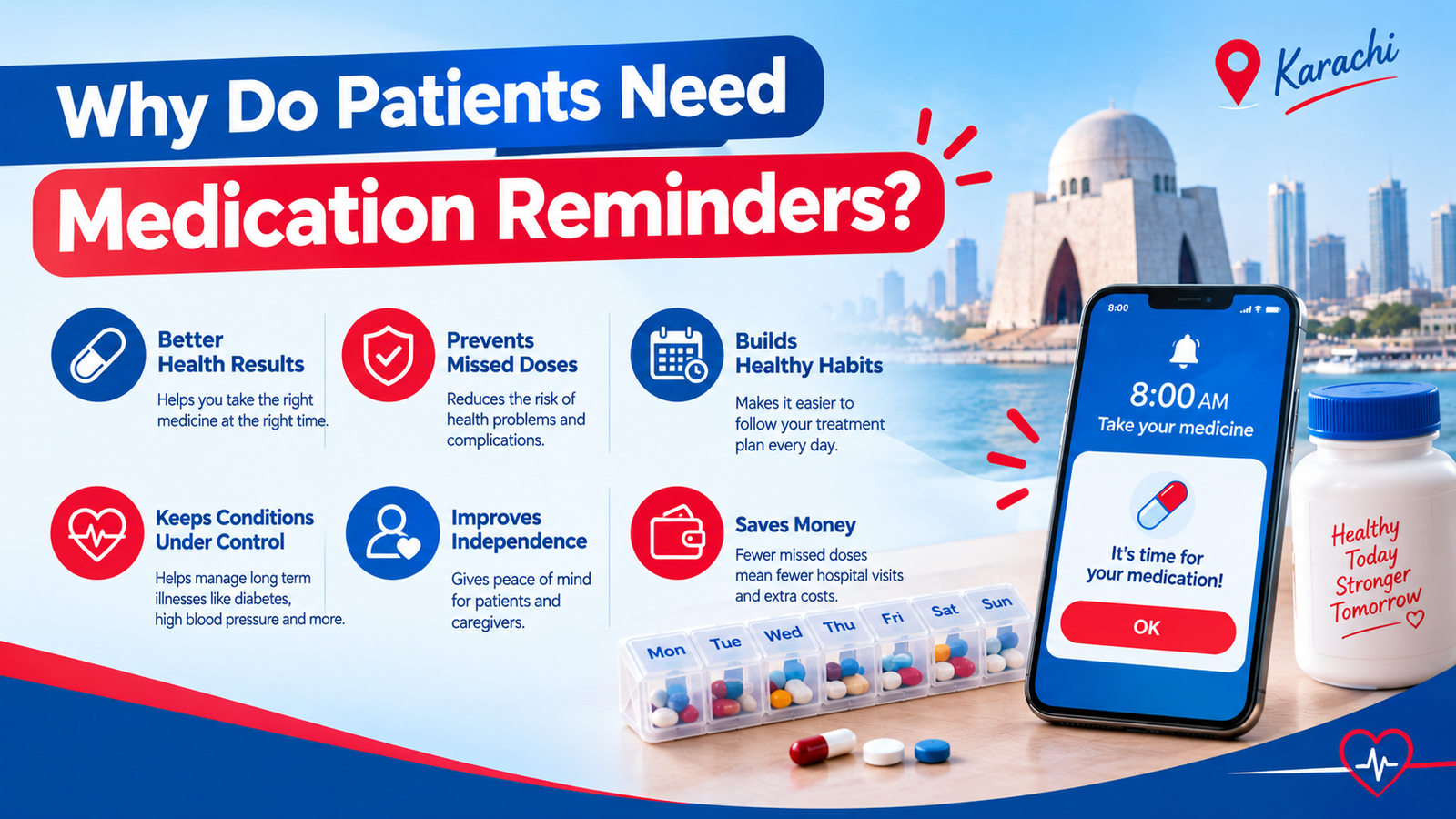
One patient may have multiple prescriptions or require medications at various times, making it difficult to keep up with the medication schedule.
A person might remember to take the morning dose, but not the afternoon dose. A second dose might be administered by mistake due to forgetfulness of the person taking the medication.
Medication reminders are a practical solution to organise these responsibilities. They can also assist carers to coordinate support without having to rely solely on their memory.
The benefit of the benefits are dependent upon patient needs and the effectiveness of the reminder system.
Reminders can be used to help overcome forgetfulness where evidence and professional advice indicate they are required and are accompanied by appropriate routines and follow-up from health professionals. Just reminding patients to take all their medications won’t ensure they do so.
Types of Medication Reminders Patients Can Use
Patients don’t always need costly equipment or a complex app. The most appropriate solution is the one that they can use regularly and safely.
Smartphone Medication Reminder Apps.
Medication reminder apps have the ability to input medicine names, prescribed schedules, and notification times.
Features can range from repeat alerts, dose tracking, refill alerts, to caregiver notifications depending on the application.
These apps might be appropriate for patients who are frequent smartphone users and require reminders all day.
When you make your selection, determine if the option you select will enable you to program the correct schedule, if notifications are effective and dependable, and if personal health information is handled appropriately.
Patients are not to use an app to determine their dose or alter their therapy. Fill out the schedule as per the current prescription and ask any doctor or pharmacist if the prescription is unclear.
Phone Alarms and Calendar Alerts
For those who don’t want to install an extra application, a phone alarm is an easy and simple way to go.
Depending on their instructions, patients are able to establish separate alarms for morning, afternoon, evening, and/or evening/bedtime medications.
Label each alarm distinctly, e.g., the medicine name or the appropriate instruction. Don’t label the medication with a date that may be confused with the schedule of other medications.
Weekly medicines, planned treatments, prescription reviews, and refill dates could also be useful when using calendar reminders. When a patient’s prescription is changed by a health care provider, the patient should review the schedule.
Written Medication Charts
A written medication chart that lists the medicines that a patient takes and instructions given by the healthcare professional.
It may contain the name of the medicine, the dose prescribed, when the medicine is to be taken, special instructions, and a space for ticking if a dose has been taken.
This is a good choice for older adults, those who prefer paper records, or patients who don’t use digital devices often. Have the chart in a standard, easy-to-access location, and change it out when prescriptions change.
A family member or caretaker can assist in filling out the chart if the patient has a problem with reading medicine labels. The information should always be verified against the latest prescription.
Pill Dispensers and Organisers
This pill organiser has distinct compartments for each day or time. It can remind patients if they have already taken the medicine they are on a schedule for.
But not all medicines can be stored away from the original container; therefore, patients should consult with the pharmacist before using any medicine.
Automatic medication dispensers are also available. Some will give alarms and open a compartment at a time you’ve set, and some won’t.
They may be helpful for some patients who have complex schedules but require proper setup and oversight.
Both of these should not be used without taking account of the medicines the patient is taking, memory, dexterity, and the ability to use it safely.
The provision of reminders from Family Members and Carers
Use of phone calls, messages, or planned visits by a family member or caregiver can be used as personal reminders.
This can be particularly beneficial where patients have memory loss or require help with daily activities.
A schedule for medications should be agreed upon, and changes should be monitored. They should also inform the patient and healthcare team if there are any missed doses, side effects, or issues with adherence to the treatment plan.
Medication reminders can be part of an overall patient care plan when appropriate for a patient receiving home care in Karachi.
Support required should be individualized based on the patient’s needs and responsibilities agreed with the care provider.
Comparing Medication Reminder Options
Different reminder methods suit different patients. The following comparison can help patients and families decide which option to discuss with a healthcare professional.
Reminder method | Main advantage | Important consideration |
Smartphone app | Offers scheduled alerts and may track doses | Requires a compatible device and correct setup |
Phone alarm | Simple and usually easy to access | Does not confirm that the medicine was taken |
Written chart | Easy to review without a smartphone | Must be updated when prescriptions change |
Pill organiser | Separates suitable medicines by day or time | Not appropriate for every medicine |
Automatic dispenser | Can provide timed alerts or controlled access | Requires correct programming and maintenance |
Family or caregiver reminders | Allows personal support and follow-up | Requires clear communication and an agreed plan |
The right choice may combine two methods. For example, a patient might use a phone alarm alongside a written chart. A caregiver may also check the chart during an agreed visit.
The aim is to make the routine reliable without making it unnecessarily complicated.
How to Create a Safe Medication Reminder Routine
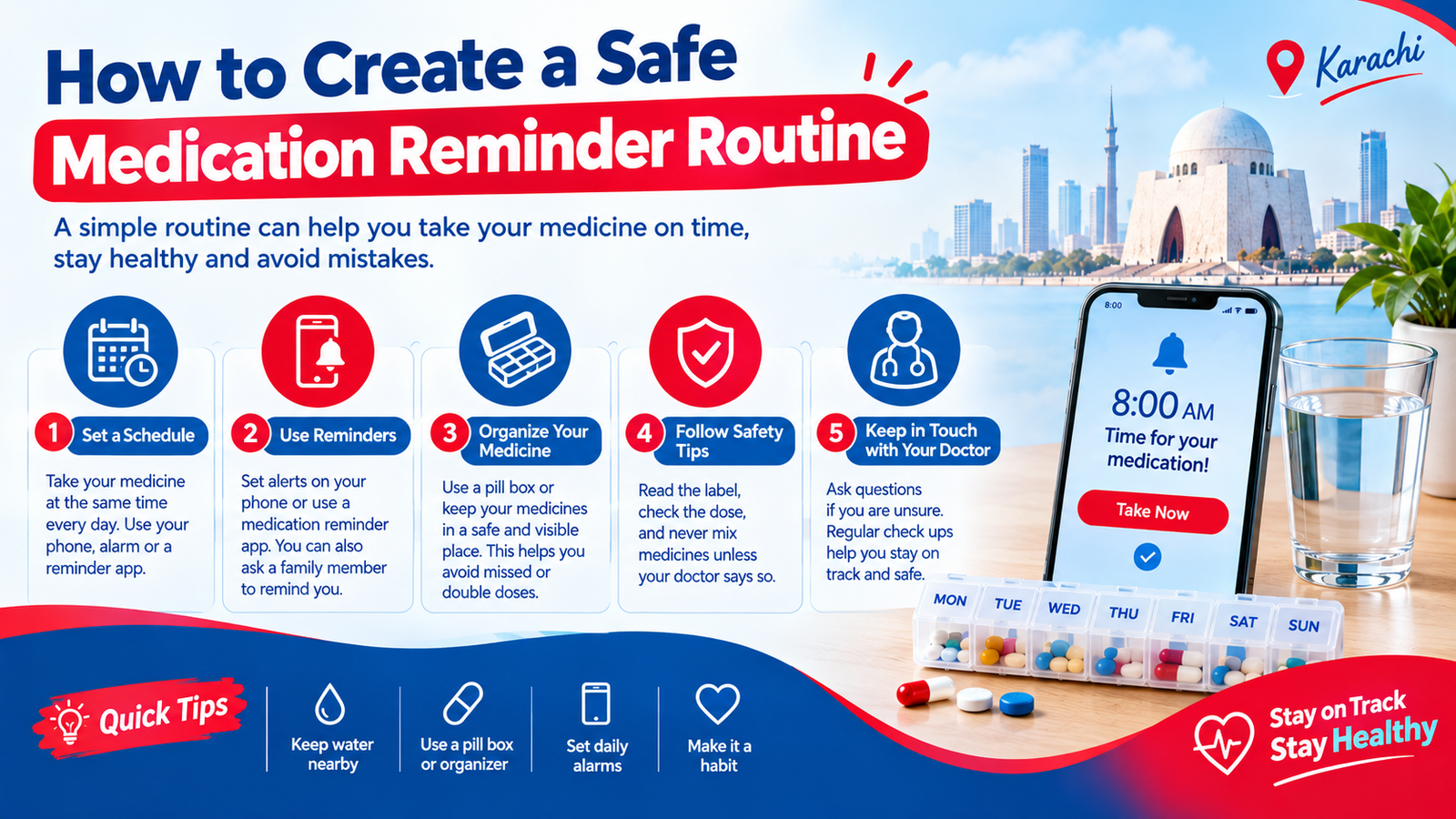
It is best to use a reminder that is similar to the actual prescription and daily routine of the patient.
Check the current medicine list,
not the medicine list from last year or by memory.
Update the medicine list.
Write down every prescription and non-prescription drug, vitamin, and supplement that the patient takes. Add the required dose, time, and indication for the medication and any special instructions, if applicable, that are on the label or given by the healthcare professional.
Give this list to the patient’s doctor or pharmacist – particularly if they are having several different doctors or pharmacists treat them. It is useful to have an updated list to help identify changes and to avoid confusion between the old and new prescriptions.
Confirm the Instructions
Determine if any medicines need to be taken with food, on an empty stomach, at a certain time, or following another specific instruction. Don’t mix all tablets or make up meals.
Don’t make a reminder schedule if you don’t understand the instructions; ask the prescribing professional or pharmacist before making the schedule. This is especially important if medicines require different times.
You pick a reminder method that is appropriate for you.
Choose a technique that the patient can comprehend and utilize daily. Someone who is tech-savvy might prefer a smartphone app; someone who is less tech-savvy might prefer a printout of the chart and calls from caregivers.
Take into account the other senses (such as hearing, vision, memory, language, and hand movements) when choosing the tool. Something complex might cause more chaos rather than solve the problem.
Attach Reminders to Activities of the Day – if applicable.
Helpful memory cues may be provided by regular activities. For instance, if a medicine is prescribed to be taken at breakfast time, the patient might think of it that way because they eat breakfast at the same time.
Avoid altering the timing of medicines in an effort to fit in a routine. Certain medications may need to be taken at certain times or with a space between meals and/or other medications. Do the tasks listed below according to directions.
Record Each Dose
Mark a dose after it has been taken using the app, chart, or other agreed-upon way. This can reduce the possibility of confusion and unnecessary duplication of doses.
Always ensure that a record is made by a caregiver who gives or supervises a medicine; otherwise, another person may give it again by mistake. Make the process simple and accessible to all involved.
Check the Schedule Frequently
Check the reminder system whenever a medicine is added, stopped, or changed. Confirm that alarms, written instructions, and caregiver records are in keeping with the current prescription.
Always look at the medicine supplies and refill dates. Patients should schedule a refill of a prescribed medication if possible, to avoid disruption of treatment if the medication is needed.
Medication Reminders for Older Adults and Patients Receiving Home Care

Elderly people might be taking multiple medications, have decreased vision or hearing, forgetfulness, or difficulty with opening medicines. Medication management may be more difficult with these challenges.
An appropriate reminder system should maintain the person’s autonomy and offer him/her assistance. Text size may be useful, audible alarms, clearly labelled schedules, and agreed family check-ins.
Individuals who require additional assistance may be better served by a professional evaluation of the medication management needs.
If your patient is on home care, families can talk to their patient’s physician about medication support in the home care plan.
They should explain who will remind, record, monitor, and communicate with the health care professional.
Do not alter the dose, discontinue a drug, or prescribe an unprescribed treatment because the reminder schedule is not easy for a caregiver to follow. The use of medicines should be in keeping with the current clinical guidance.
Common Medication Reminder Mistakes to Avoid
Even a well-organised system can fail if the information is out of date or the patient doesn’t understand what an alert is.
Some people have made incorrect choices on the type of prescription list used, set alarms at the wrong time, forget to record a dose and think that the alarm means the medicine has been taken.
Patients can also place all medicines into a pill organiser without determining if the medicine can be safely stored in this manner.
A second risk is if family members have different schedules. When one person changes an alarm, but another still refers to an old chart, the patient might be given conflicting instructions. Have one up-to-date list of medicines and ensure everyone involved is aware of where this is located.
Practical safety checklist:
- Double-check all medicines and directions with the current prescription.
- Label everything with clear labels and a repeated reminder.
- Only record doses when they have been administered.
- Keep medicines safely stored and away from children.
- Before putting medicines into a pill organiser, seek advice from a pharmacist.
- If the patient has repeated missed doses or difficulty with adherence, contact a health care provider.
What Should You Do If You Miss a Dose?
Do not automatically take the dose when it’s missed or double the next dose. The proper treatment will vary depending on the medication, dosage and amount of time elapsed.
Read the patient information leaflet for the medicine and if you are not sure, ask your pharmacist or prescriber.
There are some medicines which have instructions on what to do if a dose is missed, and it may be dangerous to take doses too close together to avoid side effects.
If you are a little unsure if you have taken an extra dose or if there may have been a mistake, get urgent advice from a trained health care provider. If symptoms are severe or if the child has a suspected overdose, is having trouble breathing, or is experiencing any other medical emergency, contact emergency services straight away.
Never miss a reminder, and don’t start, stop, or stop medication by yourself.
How Can Patients Choose the Right Medication Reminder Service in Karachi?

Patients and families in Karachi have varying needs based on their health status, housing, day-to-day activities, and technology status. Some may only need a phone alarm; others might need family supervision or more structured support for home care.
When evaluating a medication reminder service, inquire about how the service documents the medicines, processes prescription changes, notifies family members, and what happens if the patient does not take the medicine as prescribed.
Make sure to explain whether the service will remind them to take the medicine or whether the service will help them take the medicine with trained staff members.
Inquire about who is responsible for verifying the medication list, and how concerns are shared with the patient’s doctor/pharmacist. Process is more important than a long list of features.
This topic is useful for Intensive Patient Care to use in discussions with patients and their family members regarding patient support, including medication management.
It is important to discuss with the provider a specific service, staffing, and/or medication assistance prior to making decisions about care.