

Everything is different when a loved one becomes ill. It upsets your usual routine, your stress increases, and the next moment, you are supposed to take care of the medical treatment without adequate knowledge.
You are confused about where to begin because you want the best for your patient. It is at this point that a patient attendant will be not only helpful, but also indispensable.
A lot of families have to grapple with questions such as: Who will be there to attend to the patient when I am not in the house? What can I do to maintain the right hygiene and medication?
What will happen in case the condition deteriorates abruptly? These issues are tangible, and disregarding them may influence recovery and emotionality.
Throughout this article, we shall get to know all that you need to know about hiring and knowing a patient attendant, so that you will make the right decision without any doubts.
What Is a Patient Attendant and Why Is It Important?
A patient attendant is a trained person who is involved in giving care and support to patients who are not able to take full care of themselves.
This care may be necessitated by illness, recovery after surgery, old age, or disability.The significance of a patient attendant is the balance that he/she provides.
They enable patients to have dignity and, at the same time, secure the provision of proper care. They also help in the reduction of the burden on family members who lack medical training.
Patients are likely to experience delayed recovery, poor hygiene, and emotional distress without proper support. A professional attendant does not allow any of these problems to occur.
Why Do Families Struggle Without a Patient Attendant?
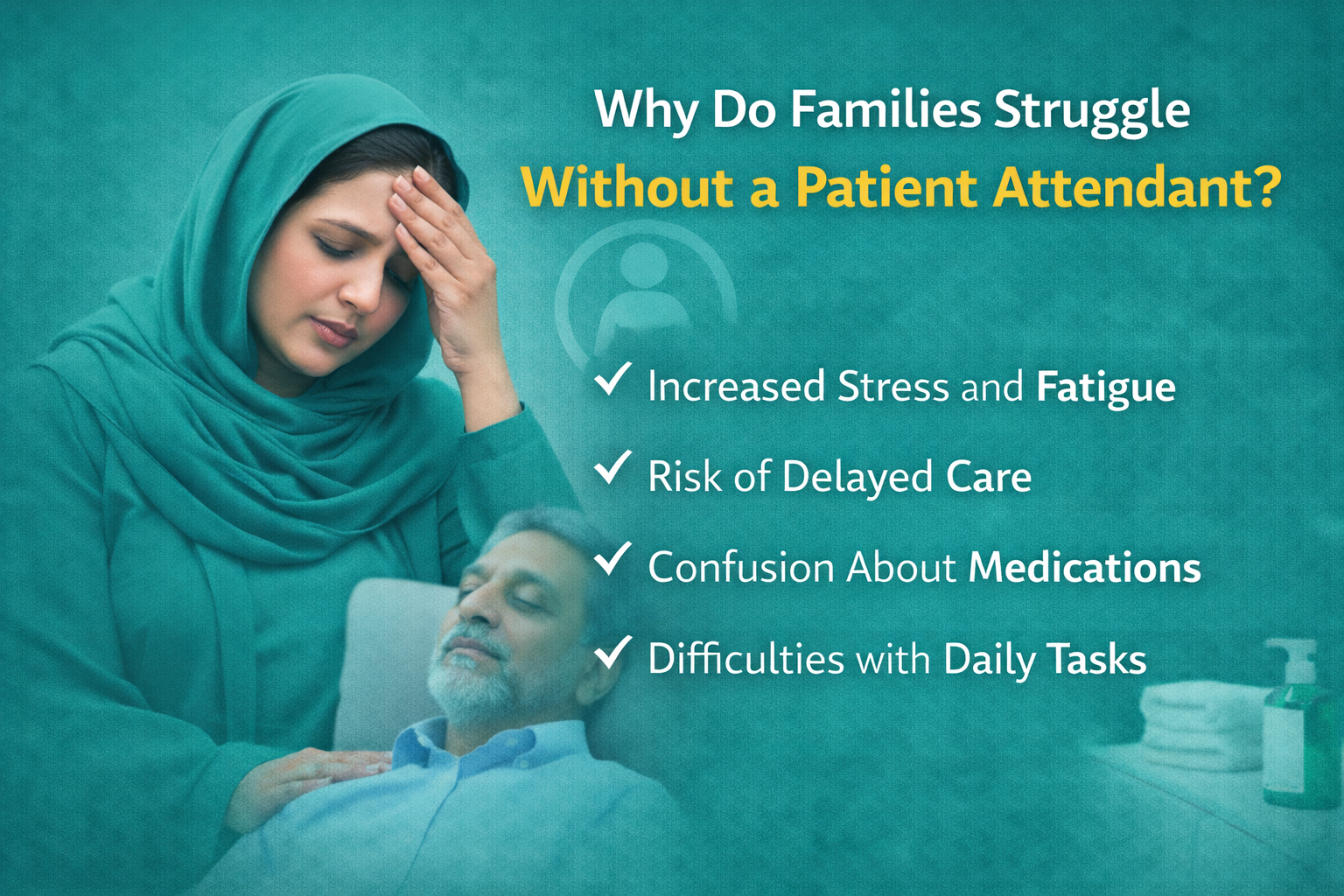
Families often try to manage patient care on their own. While intentions are good, the challenges quickly become overwhelming.
First, there is physical exhaustion. Taking care of a patient requires constant attention, which can drain energy. Second, there is emotional pressure. Watching a loved one suffer can be mentally exhausting.
Third, lack of medical knowledge can lead to mistakes in medication or care routines. A patient attendant helps solve these problems by providing structured care, allowing families to focus on emotional support rather than technical responsibilities.
What Services Does a Patient Attendant Provide?
A professional patient attendant provides a whole gamut of services beyond ordinary assistance.
They help with the day to day tasks like bathing, dressing, and feeding. They see that medicines are taken on time. They keep track of the vital signs and report any deviation. They also assist in movement and avoid falls or injuries.
In addition, they provide companionship. This is what is usually forgotten, yet emotional support is a significant factor in recovery.
How Does a Patient Attendant Improve Recovery Speed?
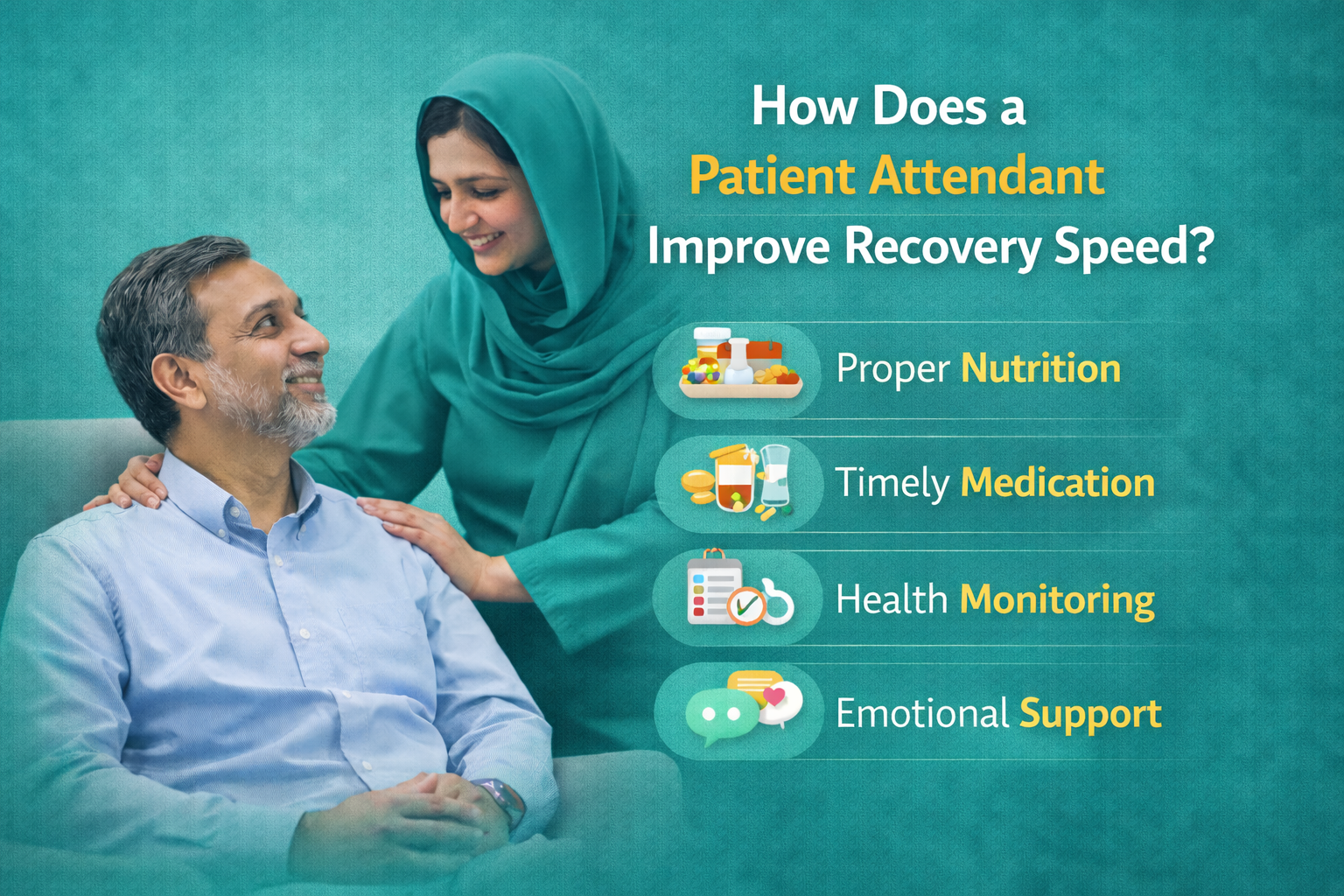
Recovery is not just about medicine. It is about consistency, care, and environment.
A patient attendant ensures that all routines are followed properly. Medicines are given on time. Hygiene is maintained. The patient remains comfortable and stress-free.
When patients feel safe and supported, their mental state improves. This directly impacts physical recovery. Studies and practical experience both show that patients recover faster when they receive continuous care.
What Qualities Should You Look for in a Patient Attendant?
The selection of the appropriate individual is essential. Not all patients match all caregivers.
To begin with, seek experience. A competent attendant is familiar with various medical issues and how to react. Second, skills in check communication.
They must be capable of well defining the patient’s status to the family members.
Third, one needs patience and empathy. Being a caregiver is not merely work; it involves emotional knowledge.
The patient will always be given priority by a good patient attendant.
When Should You Hire a Patient Attendant?
Many people wait too long before hiring help. This can make the situation worse.
You should consider hiring a patient attendant after surgery, during chronic illness, for elderly care, or when a patient has mobility issues. Even short term assistance can make a big difference.
Early support ensures better management of the condition and reduces complications.
How Can a Patient Attendant Reduce Family Stress?
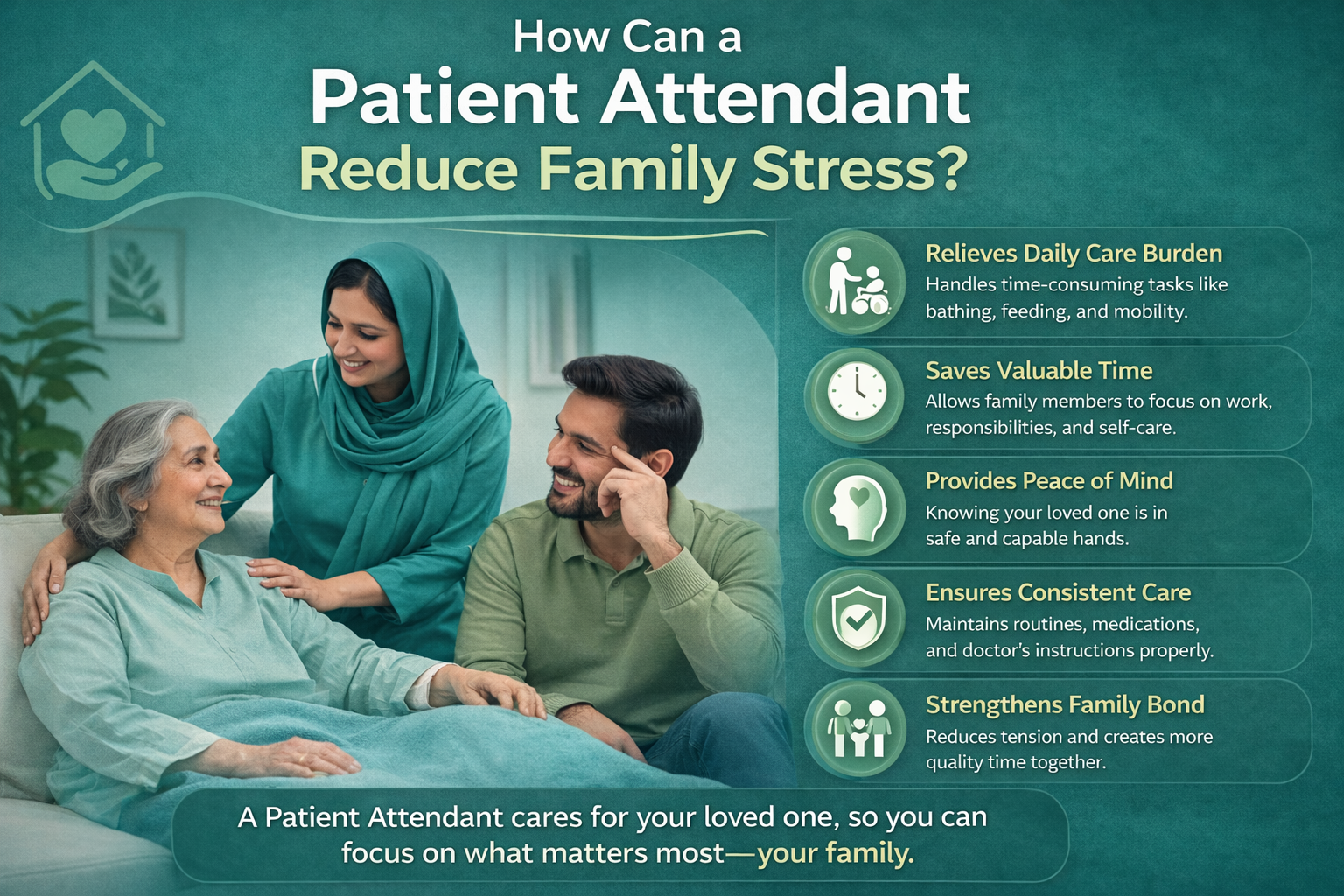
Caring about a patient influences the whole house. Sleep is disrupted, work schedules are disrupted, and stress levels are elevated.
The physical duties are relieved by a patient attendant. This will enable family members to rest, continue with work, and spend good time with the patient without being overwhelmed.
This balance enhances patient care and family wellbeing.
Is Hiring a Patient Attendant Worth the Cost?
Many families hesitate because of cost concerns. However, it is important to look at the bigger picture.
Without proper care, patients may require frequent hospital visits, which can be more expensive. There is also the emotional cost of stress and burnout.
A patient attendant helps prevent complications, reduces hospital visits, and ensures better recovery. In the long run, it is a smart and valuable investment.
What Are the Common Mistakes to Avoid When Hiring a Patient Attendant?
One of the most frequent errors is unverified hiring. Background and experience should always be checked. The other error is failure to communicate expectations clearly. This may cause disorientation and discontent.
Compatibility is also disregarded by some families. The attendant should be comfortable with the patient. A positive relationship enhances the quality of care.
By preventing these errors, you can be guaranteed of the best support possible.
How to Find a Reliable Patient Attendant Near You?
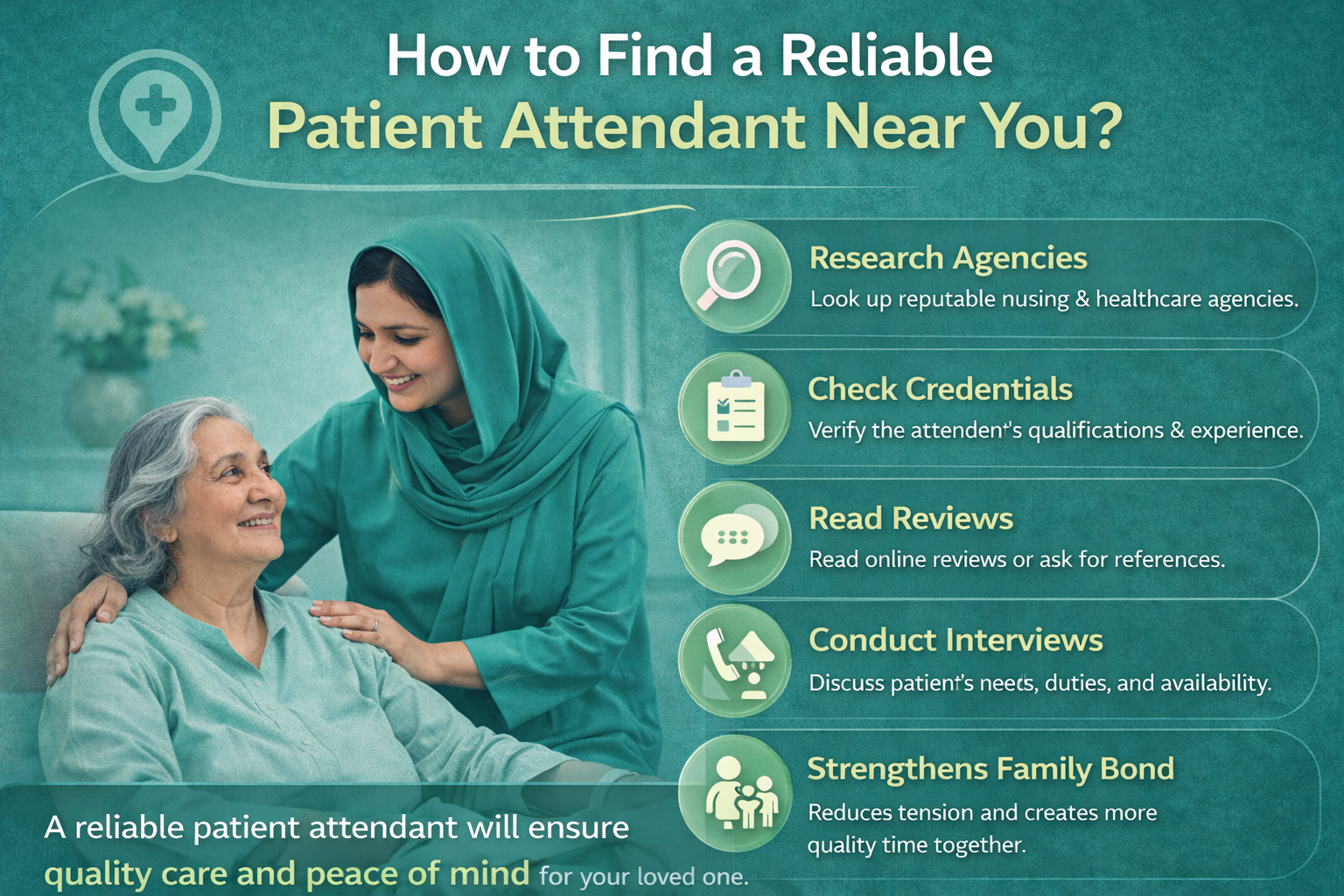
Finding the right caregiver requires research and patience.
You can contact professional caregiving services, hospitals, or agencies. Always check reviews and ask for recommendations. Conduct interviews and ask relevant questions about experience and skills.
A trustworthy patient attendant will always be transparent, professional, and willing to adapt to your needs.
Frequently Asked Questions
What does a patient attendant do?
A patient attendant provides daily care to patients, including help with bathing, feeding, mobility, and medication reminders. They also monitor the patient’s condition and offer emotional support to improve overall wellbeing.
When should I hire a patient attendant?
You should hire a patient attendant when a patient needs continuous care after surgery, during illness, in old age, or when they have difficulty performing daily activities on their own.
How is a patient attendant different from a nurse?
A patient attendant focuses on basic care and daily support, while a nurse is medically trained to perform clinical tasks such as injections, wound care, and medical procedures.
Can a patient attendant help with elderly care at home?
Yes, a patient attendant is ideal for elderly care. They assist with daily routines, ensure safety, and provide companionship, which helps improve both physical and emotional health.
Is hiring a patient attendant safe and reliable?
Hiring a patient attendant is safe if you choose a verified and experienced professional. Always check background, reviews, and qualifications before making a decision.
Conclusion
A patient attendant is not a mere helper. These play an important role in the process of healing. They add order, nurturing, and tranquility when the times are tough.
By selecting the appropriate attendant, you are not only enhancing the state of the patient but also securing your mental and physical well-being. Timely assistance is everything.