

Recovering from surgery does not end when you leave the hospital.
In many cases, the most important stage of healing begins at home. Proper care during this period reduces complications, speeds recovery, improves comfort, and helps patients regain independence with confidence.
Whether someone has undergone orthopedic surgery, abdominal surgery, cardiac surgery, or a minor procedure, every patient needs a personalized recovery plan.
Good nutrition, medication management, wound care, mobility support, and regular monitoring all contribute to a successful recovery.
Many families also choose Post Surgery Care at Home or professional Home Post Operative Care Services because trained nurses and caregivers can identify early warning signs before they become serious problems.
This guide explains everything you need to know about safe recovery after surgery, including professional nursing support, infection prevention, rehabilitation, and expert recommendations that help patients recover comfortably in their own homes.
What Is Post Operative Care at Home?
Post operative care at home refers to the medical and supportive care provided after a patient is discharged from the hospital following surgery.
The goal is to promote healing, prevent complications, manage pain, and help patients safely return to their normal routine.
Depending on the type of surgery, care may include:
- Surgical wound care
- Dressing changes
- Medication management
- Pain control
- Vital signs monitoring
- Mobility assistance
- Home physiotherapy after surgery
- Catheter care after surgery
- Nutrition support
- Follow-up care with the surgeon
Professional Home Healthcare After Surgery is especially valuable for elderly patients, individuals with chronic illnesses, and those recovering from major procedures.
Featured Snippet Answer:
Post operative care at home includes wound care, pain management, medication support, mobility assistance, infection prevention, rehabilitation, and regular monitoring to ensure safe recovery after surgery.
Why Is Professional Home Nursing Important After Surgery?
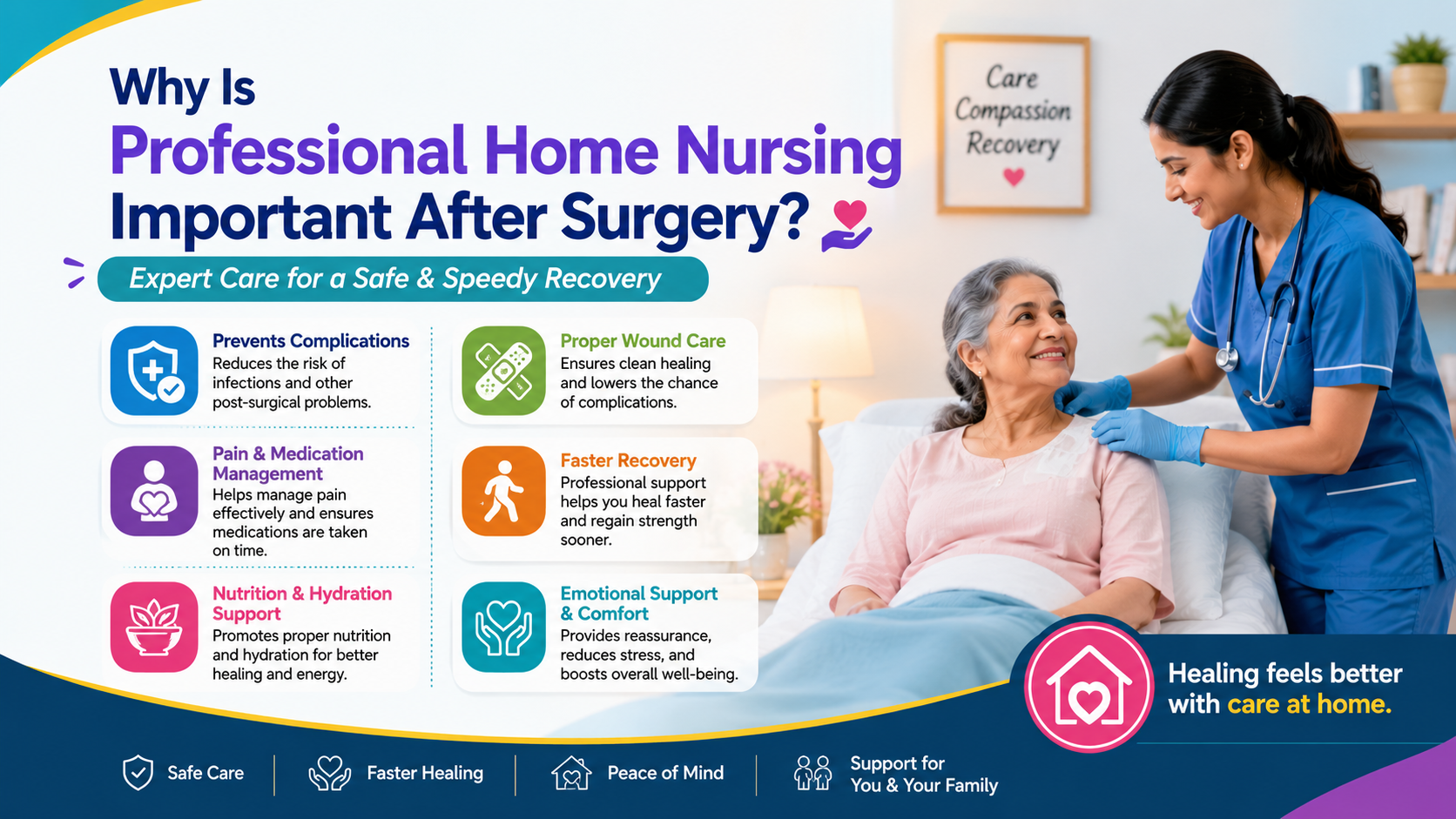
Many people assume that recovery simply requires rest. While rest is important, professional monitoring can make a significant difference in healing outcomes.
A trained nurse provides much more than basic assistance. They continuously assess recovery and identify potential complications before they become emergencies.
Benefits of Professional Home Nursing After Surgery
- Proper wound assessment
- Sterile dressing changes
- Medication administration
- Monitoring blood pressure, pulse, oxygen level, and temperature
- Early detection of infection
- Pain assessment
- Assistance with walking and mobility
- Patient and family education
- Emotional reassurance during recovery
Professional Post Operative Nursing Care also reduces unnecessary hospital readmissions by addressing issues early.
What Care Does a Patient Need After Surgery at Home?
Every surgery has unique recovery requirements, but several essential aspects apply to almost every patient.
1. Surgical Wound Care
Keeping the incision clean and dry is one of the highest priorities.
Good incision care includes:
- Washing hands before touching the wound
- Changing dressings exactly as instructed
- Avoiding contaminated surfaces
- Checking for redness or unusual drainage
- Keeping stitches or staples protected
Professional Post surgery nursing care at home ensures dressing changes are performed using sterile techniques.
2. Pain Management
Pain should gradually improve during recovery.
Healthcare providers may recommend:
- Prescription pain medication
- Ice therapy
- Proper body positioning
- Relaxation techniques
- Gentle movement when approved
Never exceed prescribed medication doses or stop medications without medical advice.
3. Medication Management
Patients often receive several medications after surgery, including:
- Antibiotics
- Pain relievers
- Blood thinners
- Anti-inflammatory medicines
- Vitamins or supplements
A home nurse helps patients follow the correct schedule while monitoring for side effects and drug interactions.
4. Mobility Assistance
Remaining in bed all day may actually slow recovery.
Depending on the surgeon’s advice, patients should gradually increase movement.
Mobility assistance may include:
- Safe walking support
- Fall prevention
- Transfer assistance
- Walking aid education
- Bed exercises
Early movement improves circulation and lowers the risk of blood clots.
5. Nutrition and Hydration
The body needs extra nutrients to repair tissues after surgery.
Foods that support healing include:
- Lean proteins
- Eggs
- Fish
- Chicken
- Fresh fruits
- Vegetables
- Whole grains
- Yogurt
- Nuts
- Plenty of water
Vitamin C, zinc, and protein play an important role in tissue repair.
Patients recovering from abdominal surgery should always follow dietary instructions provided by their surgeon.
How Can You Prevent Infection After Surgery?
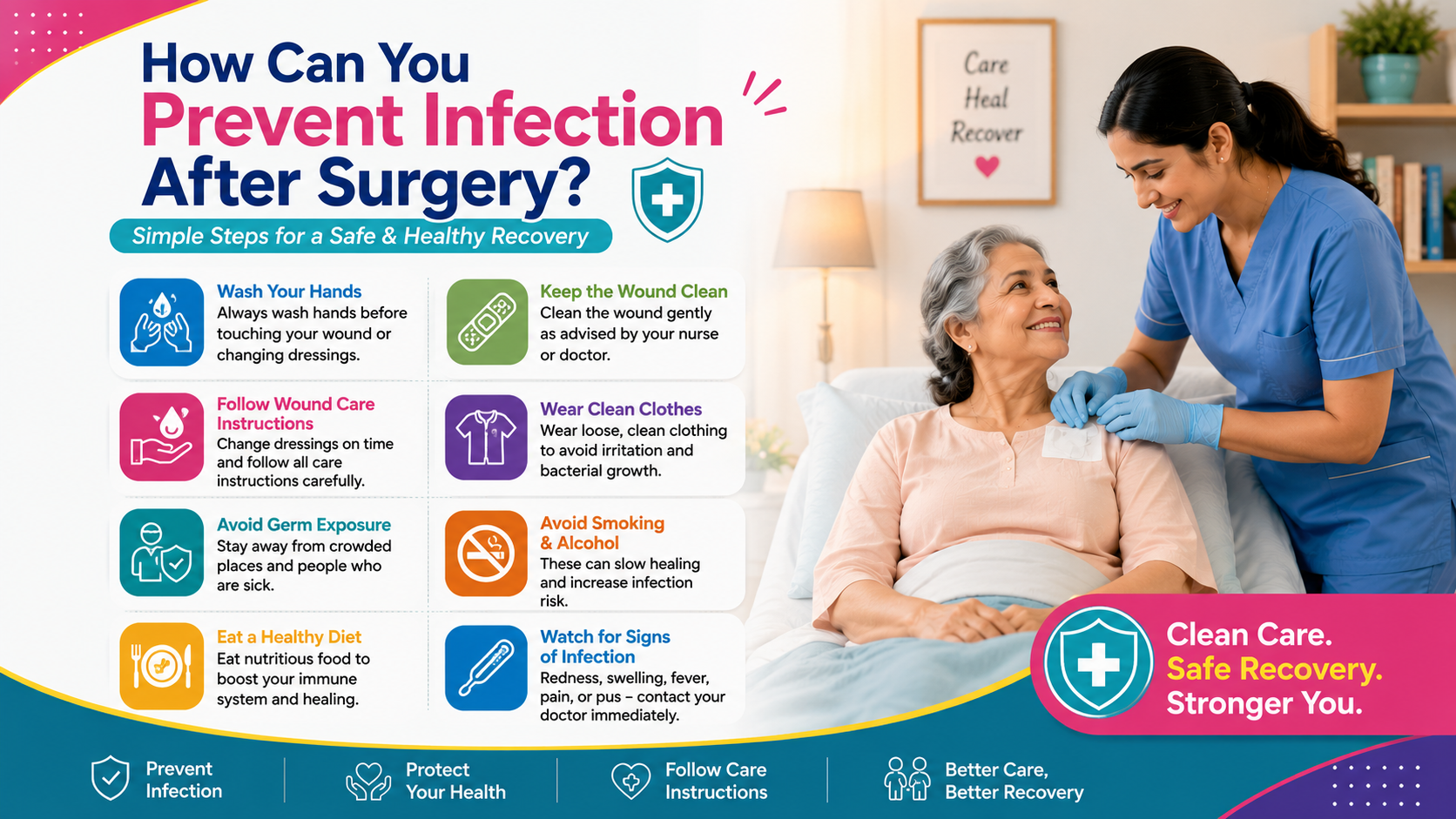
Infection remains one of the biggest concerns during postoperative recovery. Fortunately, many infections are preventable with proper care.
Best Practices for Infection Prevention
✔ Wash hands frequently.
✔ Keep the incision clean.
✔ Change dressings correctly.
✔ Take antibiotics exactly as prescribed.
✔ Avoid smoking.
✔ Eat nutritious meals.
✔ Stay hydrated.
✔ Monitor body temperature daily.
✔ Attend all follow-up appointments.
Warning Signs of Infection
Seek medical advice immediately if you notice:
- Fever above the recommended limit
- Increasing redness around the incision
- Thick yellow or green drainage
- Bad odor from the wound
- Severe swelling
- Increasing pain instead of improvement
According to organizations such as the World Health Organization (WHO) and the Centers for Disease Control and Prevention (CDC), proper hand hygiene and sterile wound care significantly reduce the risk of surgical site infections.
When Should a Nurse Visit After Surgery?
The timing depends on:
- Type of surgery
- Patient’s age
- Existing medical conditions
- Hospital discharge instructions
- Surgeon recommendations
Many patients benefit from nursing visits within the first 24 to 48 hours after returning home.
Professional In Home Post Operative Care may involve:
Recovery Need | Nursing Support |
Dressing changes | ✔ |
Injection administration | ✔ |
Vital signs monitoring | ✔ |
Pain assessment | ✔ |
Catheter care | ✔ |
Mobility assistance | ✔ |
Medication supervision | ✔ |
Family education | ✔ |
Patients recovering from joint replacement, cardiac procedures, or abdominal surgery often require multiple visits during the first few weeks.
How Long Does Postoperative Recovery Take?
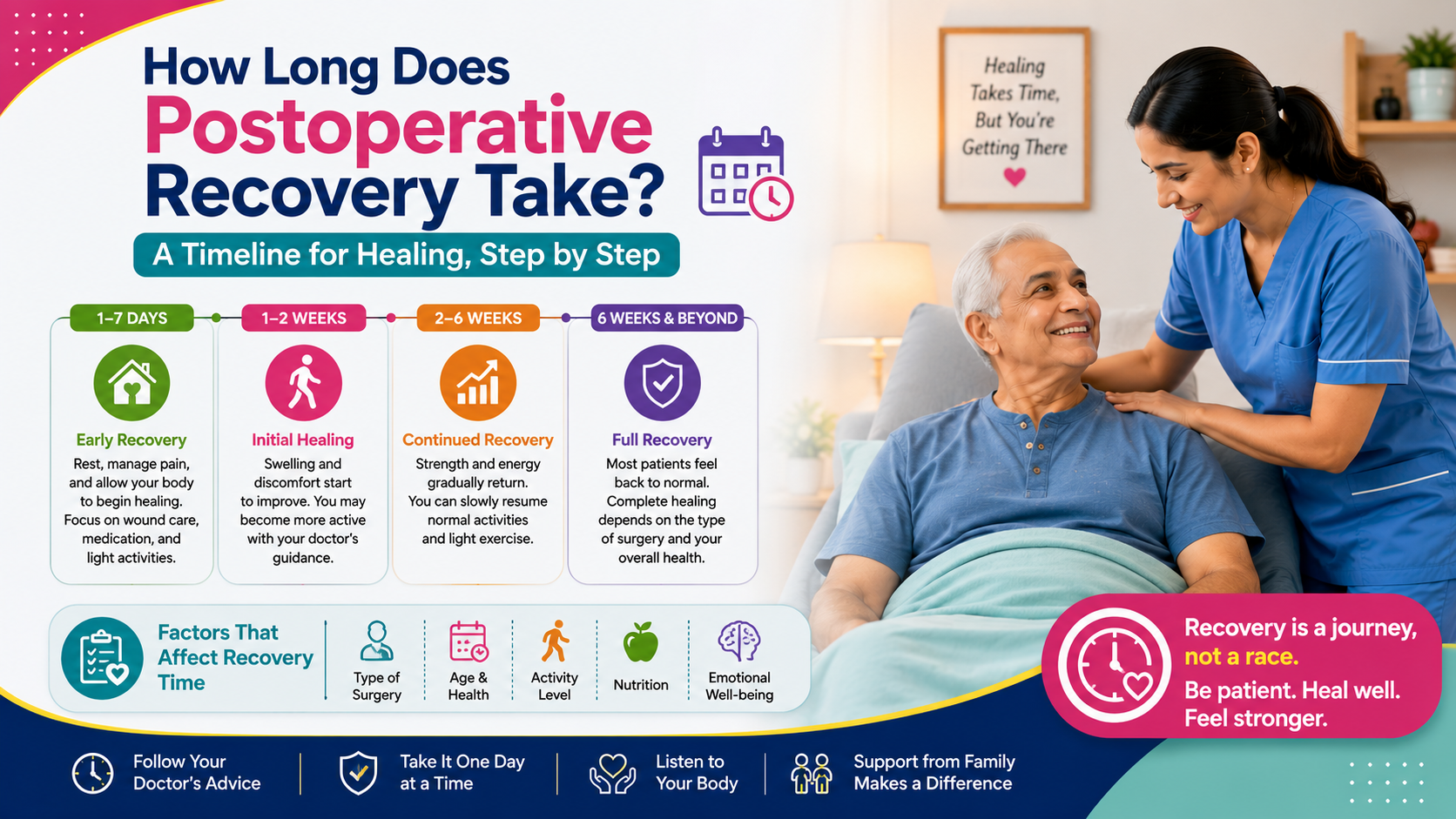
Recovery time varies depending on the type of surgery, the patient’s age, overall health, and how closely the recovery plan is followed.
While some people recover within a few weeks, others may need several months to regain full strength.
General Recovery Timeline
Type of Surgery | Estimated Recovery Time |
Minor Surgery | 1–2 weeks |
Laparoscopic Surgery | 2–4 weeks |
Abdominal Surgery | 4–8 weeks |
Orthopedic Surgery | 6–12 weeks |
Cardiac Surgery | 8–12 weeks or longer |
Joint Replacement | 3–6 months |
These are general estimates. Always follow your surgeon’s instructions, as every patient heals differently.
Featured Snippet Answer:
Most patients recover within a few weeks to several months, depending on the type of surgery, age, overall health, and adherence to the prescribed recovery plan.
How Can Patients Recover Safely at Home After Surgery?
A safe recovery involves more than resting in bed. It requires a structured routine that supports healing while reducing the risk of complications.
Create a Daily Recovery Plan
A simple recovery schedule may include:
Morning
- Check body temperature and blood pressure if advised.
- Take prescribed medications.
- Eat a protein-rich breakfast.
- Perform approved walking or stretching exercises.
Afternoon
- Stay hydrated.
- Change dressings if instructed.
- Take short walks around the house.
- Rest between activities.
Evening
- Eat a balanced dinner.
- Review medications for the next day.
- Inspect the incision for any changes.
- Get adequate sleep.
Following a routine promotes consistency and helps patients recover more comfortably.
What Are the Most Common Mistakes During Recovery?
Even with the best intentions, patients sometimes make mistakes that delay healing or increase the risk of complications.
Avoid These Common Mistakes
- Skipping prescribed medications
- Ignoring follow-up appointments
- Lifting heavy objects too soon
- Staying in bed all day without moving
- Smoking or consuming alcohol during recovery
- Eating an unhealthy diet
- Not drinking enough water
- Removing dressings without proper guidance
- Ignoring signs of infection
- Returning to work or exercise too early
Avoiding these mistakes can significantly improve recovery outcomes.
When Should You Call a Doctor After Surgery?
While mild discomfort is normal, certain symptoms require immediate medical attention.
Seek Medical Care If You Notice:
- Fever or chills
- Excessive bleeding
- Severe or worsening pain
- Redness spreading around the incision
- Thick yellow, green, or foul-smelling drainage
- Shortness of breath
- Chest pain
- Swelling in the legs
- Persistent vomiting
- Difficulty passing urine
- Sudden confusion or dizziness
Prompt medical evaluation can prevent serious complications and support a safer recovery.
Why Is Home Physiotherapy Important After Surgery?
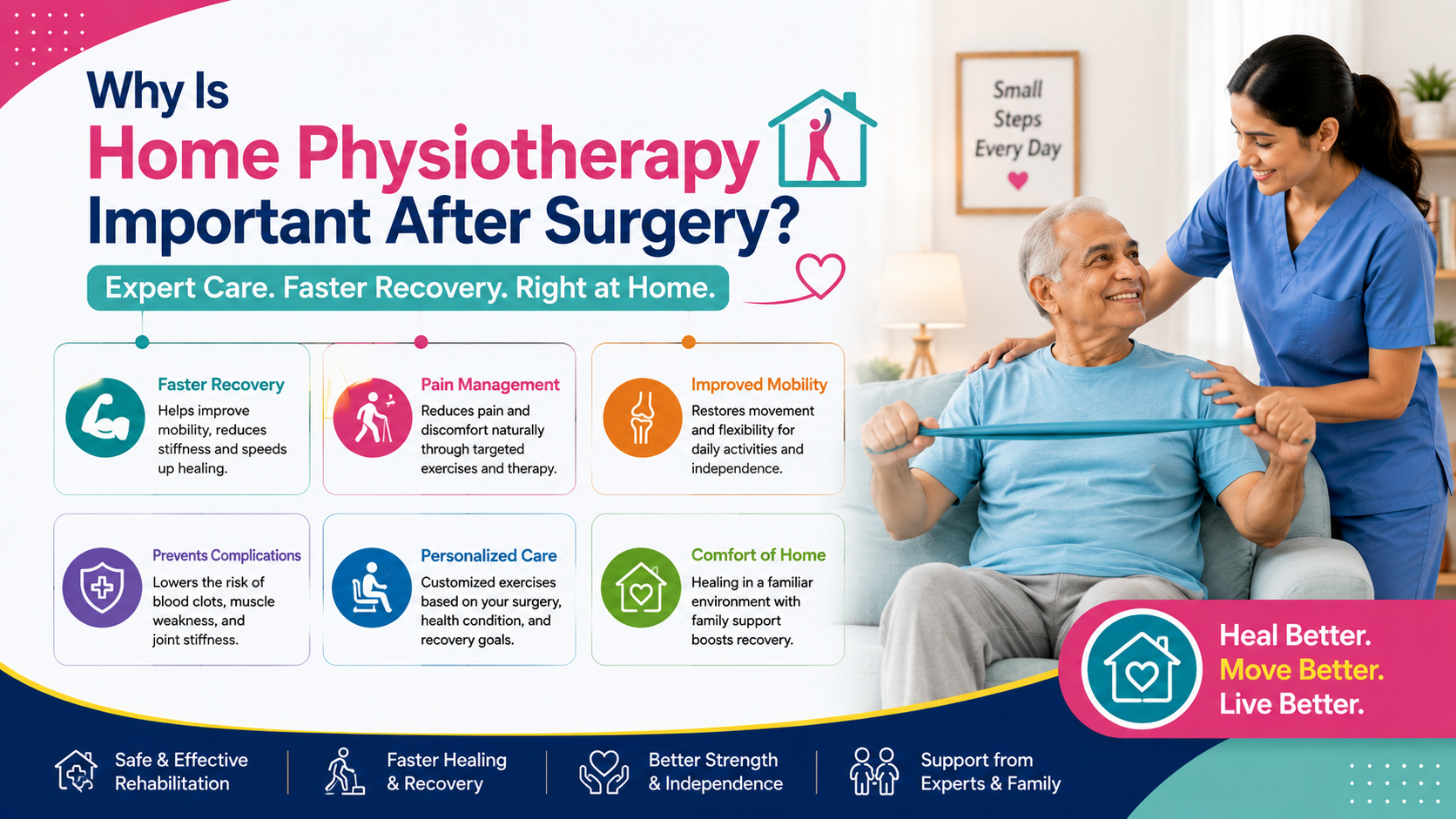
For many patients, especially those recovering from orthopedic, spinal, or neurological procedures, movement is an essential part of healing.
Home physiotherapy after surgery helps restore strength, flexibility, and balance while reducing stiffness and improving circulation.
Benefits of Home Physiotherapy
- Improves joint movement
- Builds muscle strength
- Reduces stiffness
- Enhances balance and coordination
- Lowers the risk of blood clots
- Supports faster return to daily activities
- Boosts confidence during recovery
Exercises should always be performed under the guidance of a qualified physiotherapist or according to the surgeon’s recommendations.
How Does Home Care Differ for Various Types of Surgery?
Every surgical procedure has unique recovery needs. A personalized care plan helps patients heal safely and comfortably.
Orthopedic Surgery Recovery at Home
Patients recovering from knee replacement, hip replacement, or fracture repair often need:
- Walking assistance
- Pain management
- Joint exercises
- Fall prevention strategies
- Home physiotherapy
- Regular monitoring of swelling and mobility
Cardiac Surgery Home Care
Recovery after heart surgery focuses on protecting the heart while gradually increasing activity.
Important aspects include:
- Blood pressure monitoring
- Medication management
- Breathing exercises
- Healthy diet
- Light walking
- Monitoring for chest discomfort or shortness of breath
Abdominal Surgery Home Care
Patients recovering from abdominal procedures should:
- Avoid heavy lifting
- Follow dietary recommendations
- Prevent constipation
- Support the incision when coughing
- Monitor wound healing
- Gradually increase physical activity
How Can Families Support a Loved One During Recovery?
Family members play a key role in helping patients feel safe and motivated.
Practical Ways to Help
- Prepare healthy meals.
- Encourage gentle movement.
- Assist with medication reminders.
- Keep the recovery area clean and organized.
- Provide emotional support.
- Help with transportation to follow-up appointments.
- Watch for warning signs of complications.
Small acts of care often make a significant difference in both physical and emotional recovery.
Who Benefits Most from Professional Home Care Services?
While many patients recover independently, some require additional medical support.
Professional Home Healthcare After Surgery is especially beneficial for:
- Older adults
- Patients recovering from major surgery
- Individuals with diabetes
- Patients with heart disease
- People living alone
- Patients with limited mobility
- Individuals requiring wound care or injections
- Those needing catheter or feeding tube care
Professional caregivers and nurses provide reassurance while helping patients recover in a familiar environment.
Why Are Home Nursing Services Becoming More Popular in Karachi?
The demand for Home Nursing Services Karachi and Home Healthcare Services Karachi has grown as more families prefer personalized recovery in the comfort of their home.
Professional home care teams offer:
- Skilled nursing care
- Postoperative dressing changes
- Medication administration
- Vital signs monitoring
- Wound management
- Rehabilitation support
- Patient education
- Coordination with treating physicians
For many patients, receiving care at home reduces stress, minimizes unnecessary hospital visits, and promotes a smoother recovery experience.
What Do Experts Recommend for a Faster and Safer Recovery?
Healthcare professionals agree that successful recovery depends on consistent care, healthy habits, and early recognition of potential complications.
Organizations such as the World Health Organization (WHO) and the Centers for Disease Control and Prevention (CDC) emphasize proper hygiene, medication adherence, mobility, and follow-up care as essential parts of postoperative recovery.
Expert Recommendations
- Follow your surgeon’s discharge instructions carefully.
- Take medications exactly as prescribed.
- Keep the surgical incision clean and dry.
- Attend every scheduled follow-up appointment.
- Walk regularly if your doctor allows it.
- Eat a balanced diet rich in protein, vitamins, and minerals.
- Drink enough water to stay hydrated.
- Get adequate sleep each night.
- Avoid smoking and alcohol during recovery.
- Contact your healthcare provider immediately if you notice unusual symptoms.
Following these recommendations helps reduce complications and supports a smoother healing process.
Should You Recover at Home or Stay in the Hospital?
For many patients, recovering at home offers greater comfort and emotional well-being.
However, some individuals with complex medical needs may require extended hospital care.
Home Recovery vs Hospital Recovery
Feature | Home Recovery | Hospital Recovery |
Comfort | Familiar surroundings | Clinical environment |
Infection Risk | Lower with proper hygiene | Higher due to hospital exposure |
Family Support | Constant family involvement | Limited visiting hours |
Personalized Attention | One-to-one care with a home nurse | Shared attention among patients |
Cost | Often more affordable for extended care | Generally more expensive |
Emotional Well-Being | Better for most patients | Can be stressful for some |
Rehabilitation | Flexible home-based therapy | Structured hospital programs |
For medically stable patients, Home Recovery After Surgery combined with professional nursing support often provides an excellent balance of safety and comfort.
What Are the Key Takeaways for a Successful Recovery?
A successful recovery does not depend on one factor alone. It is the result of consistent care, informed decisions, and timely medical support.
Remember these essentials:
- Follow your recovery plan every day.
- Never ignore changes in your surgical wound.
- Keep all follow up appointments.
- Stay physically active within your doctor’s recommendations.
- Eat nutritious meals that support tissue healing.
- Ask for professional nursing support when needed.
- Seek medical attention immediately if warning signs appear.
Whether the procedure was minor or major, a well-planned recovery can improve healing, restore independence, and reduce the chance of complications.
Frequently Asked Questions
Can a patient recover safely at home after surgery?
Yes. Most patients can recover safely at home if they follow their surgeon’s instructions, take medications correctly, maintain good hygiene, attend follow-up visits, and receive professional nursing support when required.
What foods help with recovery after surgery?
Foods rich in protein, vitamin C, zinc, iron, and healthy fats support tissue repair and strengthen the immune system.
Lean meat, fish, eggs, dairy products, fruits, vegetables, whole grains, and plenty of water are excellent choices.
When should a nurse visit after surgery?
Many patients benefit from a nursing visit within the first 24 to 48 hours after hospital discharge.
The frequency of visits depends on the type of surgery, wound condition, mobility, and overall health.
What are the signs of postoperative complications?
Warning signs include increasing pain, fever, excessive bleeding, redness around the incision, pus or foul-smelling drainage, swelling, difficulty breathing, chest pain, or sudden confusion.
Contact your healthcare provider immediately if any of these symptoms occur.
Who needs professional home nursing after surgery?
Professional home nursing is recommended for older adults, patients recovering from major surgery, individuals with chronic medical conditions, those with limited mobility, patients requiring wound care or catheter management, and anyone who needs skilled medical supervision during recovery.
Conclusion
Recovering from surgery is a journey that requires patience, proper planning, and reliable support.
Choosing the right post-operative care at home approach allows patients to heal safely while remaining in a familiar and comfortable environment.
From wound care and medication management to rehabilitation and emotional support, every aspect of recovery plays an important role in achieving the best possible outcome.
If you or a loved one needs professional nursing assistance, experienced caregivers can provide personalized care, monitor recovery, and work closely with your healthcare provider to ensure a safe and comfortable healing process. Investing in quality home care today can make recovery smoother, faster, and more confident.