


What Is Senior Citizen Care?
Senior citizen care is help given to older adults who need support in daily life. The help may include bathing, dressing, eating, walking, or using the bathroom.
Some older adults can do most tasks on their own. They may only need help with a few things. Other older adults may need regular care because of illness, weak muscles, poor balance, or limited movement.
The main goal is to keep the older person safe and comfortable. Care should also respect the person’s choices and privacy.
Who May Need Senior Citizen Care?

Age alone does not mean that a person needs a caregiver. Many older adults stay active and independent for many years.
Care may become useful when daily tasks become hard to manage. This can happen after an illness, injury, surgery, or a fall.
An older person may need care if they have trouble with:
- Walking or standing
- Bathing and dressing
- Eating or preparing meals
- Using the bathroom
- Taking medicines on time
- Moving from bed to a chair
- Keeping good personal hygiene
- Going to medical visits
- Staying safe at home
A person with memory problems may also need more support. Family members should watch for changes in daily habits, mood, memory, or movement.
Why Is Good Elderly Care Important?
Older adults may have more health and movement problems as they age. Simple daily tasks can become harder. A little help can make these tasks safer.
Good care also helps the older person stay involved in family life. They can take part in daily talks and family activities when their health allows.
Care should not mean doing everything for the person. If an older adult can safely do a task, they should be encouraged to do it.This can help them keep their strength and confidence.
What Does Senior Citizen Care Include?

Senior citizen care can cover many daily needs. The type of care depends on the person’s health and level of need.Some people need a few hours of help. Others may need care for most of the day.
Personal Care for Older Adults
Personal care is a common part of elderly care. It helps older adults with tasks that may be hard to do alone.
A caregiver may help with bathing, dressing, grooming, and other daily tasks.They may also help the person use the bathroom or change clothes.
Personal care should always be given with respect. The older person should feel safe and comfortable.Privacy is also important during personal care.
Help With Walking and Movement
Some older adults have weak muscles or poor balance. This can make walking harder. It can also increase the chance of a fall.
A caregiver can help an older person move around the home. They can also help the person get in and out of bed or a chair when needed.
The home should be kept clear of items that may cause a fall. Loose rugs, wet floors, poor lighting, and clutter can create risks.
If an older person falls more than once, the family should speak with a healthcare professional. Repeated falls may need medical review.
Help With Food and Water
Older adults may sometimes forget to eat or drink enough water. Some may also have trouble cooking meals.A caregiver can help prepare meals and remind the person to drink fluids.
Food should match the person’s health needs. For example, some people may need a special diet because of diabetes, heart disease, kidney problems, or other health issues.Families should ask a healthcare professional for diet advice when needed.
Medicine Support
Many older adults take more than one medicine. It can be hard to remember every medicine and its correct time.
A caregiver may remind the person about their medicine as part of the care plan.A caregiver should not change a medicine dose without advice from a healthcare professional.
Medicine should not be stopped or started on their own.If there is confusion about a medicine, the family should contact the doctor or pharmacist.
Companionship and Social Support
Senior care is not only about physical needs. Older adults also need social contact.
Some older people spend many hours alone. This can happen when family members are at work or busy with other tasks.
A caregiver can talk with the older person and spend time with them. Simple activities such as reading, talking, watching a favorite program, or sitting together can help them feel connected.Family visits and phone calls can also help.
Senior Citizen Care at Home in Karachi
Many families in Karachi prefer to care for older adults at home. Home care allows the person to stay in a familiar place.
The family can arrange care based on the person’s needs. Some people may need help for a few hours each day. Others may need longer care.
Home care may include personal care, walking support, meal help, companionship, and basic daily support.
For patients with medical needs, professional nursing care may be needed. The type of support should match the patient’s condition.
Home Care and Intensive Patient Care
Home care and intensive patient care are not the same. The level of support depends on the patient’s needs.
Type of Care | Main Support | May Suit |
Family care | Daily help and support | Older adults who need family help |
Home caregiver | Personal and daily care | People who need regular help |
Home nursing | Nursing and health care | Patients with nursing needs |
Intensive patient care | Close and regular support | Patients with higher care needs |
Short term care | Care for a set time | Families needing temporary help |
A person who only needs help with meals may not need intensive care.A patient who cannot move safely or needs close health checks may need a higher level of care.The family should look at the patient’s needs before choosing a service.
When Does an Older Person Need More Care?
Care needs can change over time.An older adult may be independent today but need more help after an illness or fall. A person may also need more care after surgery.
Families should look for changes in daily life. These changes may show that the current level of care is no longer enough.
Some signs include trouble walking, repeated falls, poor eating, poor personal hygiene, or trouble taking medicines correctly.
Memory or behavior changes may also need attention.A sudden change in health should not be ignored.
How to Choose Senior Citizen Care in Karachi
Choosing care for an older person is an important family decision. Start by looking at what the person needs each day.
Do not choose a service only because it offers many features. The care should match the patient’s needs.
Ask about the type of care provided. Ask who will provide the care and what training they have.
It is also useful to ask how the family will receive updates about the patient’s condition.
Questions to Ask a Care Provider
Before starting care, families can ask:
- What type of care do you provide?
- How many hours can care be provided?
- Is nursing care available when needed?
- How is the caregiver supervised?
- How will the family receive updates?
- What should the family do during an emergency?
- Which tasks are included in the service?
- Which tasks are not included?
Clear answers can help prevent problems later.
Caregiver vs Nurse: What Is the Difference?
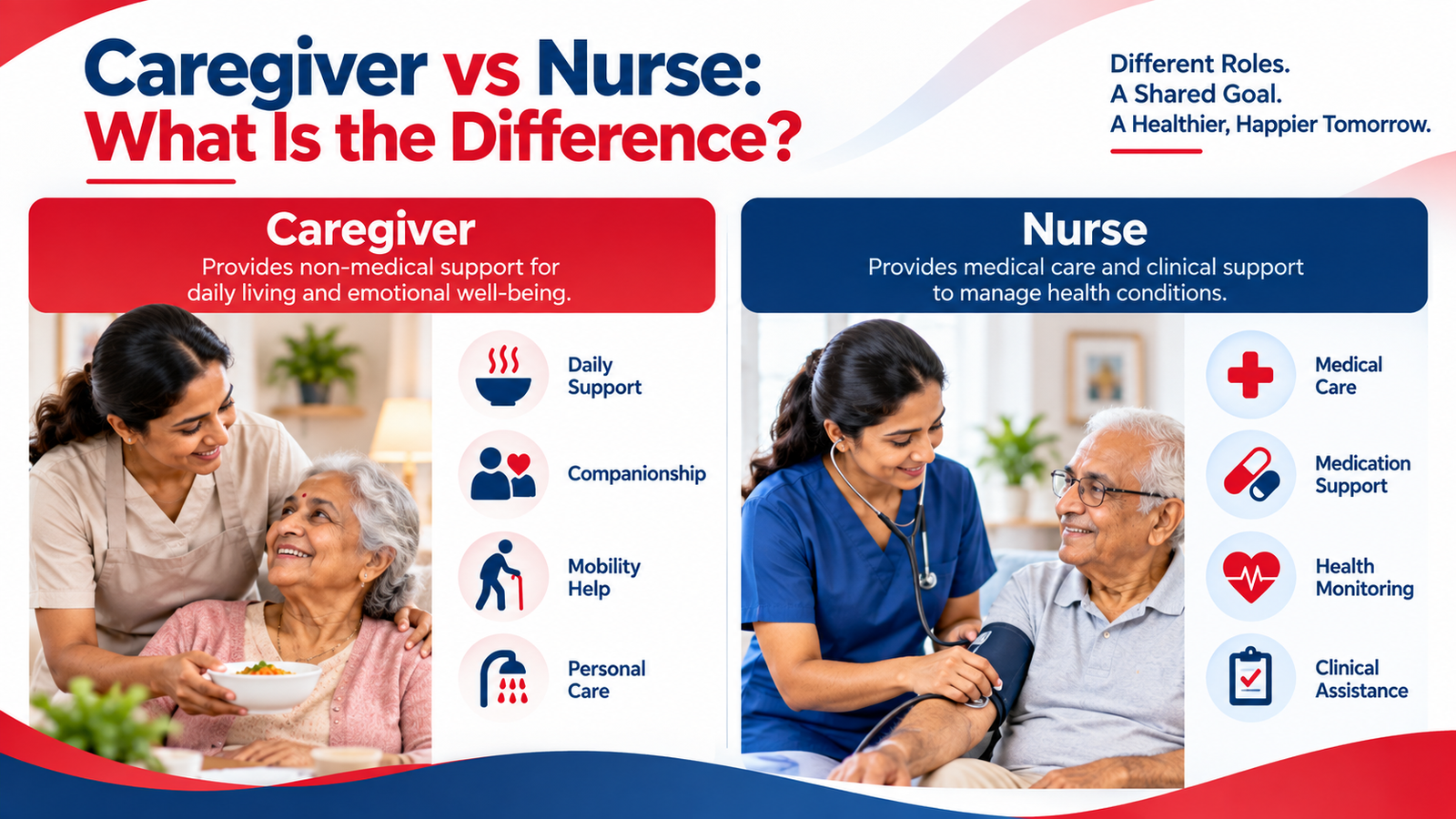
A caregiver and a nurse do not have the same role.A caregiver may help with bathing, dressing, meals, walking, and daily tasks. They may also provide companionship.
A nurse has professional health care training. Nursing work may include health checks and other nursing tasks that are within the nurse’s scope of practice.
The right person depends on the patient’s needs.If an older adult needs medical or nursing care, the family should seek help from a suitable healthcare professional.
How to Make a Home Safer for an Older Adult
A safe home can lower the risk of falls and other accidents. Keep walking areas clear. Remove items that can cause the person to trip.
Good lighting is also helpful. Older adults may have trouble seeing in dark areas.
Keep important items in places that are easy to reach. The older person should not have to climb or stretch too far to get daily items.
Bathrooms also need special attention. Wet floors can be dangerous. Families should take steps to make bathroom use safer.
Common Mistakes in Elderly Care
One common mistake is doing everything for the older person. This may reduce their chance to stay active.If a person can safely dress, eat, walk, or do another task, allow them to do it.
Another mistake is ignoring changes in health. A small change can sometimes point to a health problem.
Families should also avoid giving medical advice on their own. A caregiver should not change medicines or treatment without proper medical advice.
Poor communication can also cause problems. Family members and caregivers should share important updates about the person’s health and daily routine.
When Should a Family Get Professional Help?
Professional help may be useful when family members cannot provide enough care.
This may happen when an older adult needs help for many hours each day. It may also happen when the person has poor mobility, memory problems, or needs nursing support.
Family caregivers can also become tired when they provide care for long hours. Sharing the care load may help the family manage the situation better.
A doctor or other healthcare professional can help the family understand the level of care the patient may need.
Warning Signs That Need Medical Attention

Some changes in an older adult need quick medical Families should not wait for routine care if the person has serious symptoms.
Important warning signs include:
- Severe trouble breathing
- Chest pain
- Fainting or loss of consciousness
- Sudden weakness on one side of the body
- Sudden severe confusion
- Heavy or uncontrolled bleeding
- A serious fall or injury
- A sudden major change in health
These signs may need urgent medical care. A caregiver should not try to manage a serious emergency alone.
Supporting Independence in Older Adults
Good senior citizen care should support independence when it is safe.Older adults should be allowed to make choices about their daily routine. They can choose what to wear, what to eat, and which safe activities they enjoy.
Family members can also involve them in simple household and family activities.This approach can help the older person feel respected and involved.Care should focus on both safety and quality of life.
Senior Citizen Care in Karachi: A Practical Approach
Families in Karachi may have different needs and daily routines. Some older adults live with their children. Others may spend much of the day alone while family members work.
This is why there is no single care plan for every older person.
One person may need a caregiver for a few hours. Another may need home nursing. A patient with serious health or movement problems may need intensive patient care.
Start by listing the person’s daily needs. Then look at the level of care needed.The care plan can be changed if the person’s needs change.
How Families Can Support Healthy Ageing
Families can support older adults in many simple ways.Encourage safe movement when the person’s health allows it. Help them attend medical visits. Make sure they have access to food and water.
Keep regular contact with them. Talk to them and listen to their concerns.Watch for changes in health, memory, mood, appetite, and movement.
Regular health checks can also help manage long-term health problems.The goal is simple: help the older person stay safe, active, and involved for as long as possible.