

When a loved one needs medical care at home, choosing the right healthcare professional can make a significant difference in recovery, comfort, and quality of life.
Whether you’re caring for an elderly parent, a bedridden patient, someone recovering after surgery, or a person living with a chronic illness, hiring a male nurse can provide skilled medical support while allowing patients to remain in the comfort of their own homes.
Today, Home Healthcare has become an essential part of modern medical care.
Many families prefer Home Nursing Services because they reduce unnecessary hospital visits, lower the risk of infections, and provide personalized attention.
A Professional Male Nurse can perform medical procedures, monitor patient progress, administer medications, and work closely with doctors to ensure continuous care.
In this guide, you’ll learn what services a Certified Male Nurse provides, when home nursing is the right choice, how to hire the best professional, expected costs, and what qualities you should look for before making a decision.
Quick Answer
A male nurse provides professional medical care at home, including medication administration, IV therapy, wound dressing, catheter care, patient monitoring, elderly care, post surgery support, and rehabilitation services.
Certified male nurses help patients recover safely while remaining in the comfort of their homes.
What does a male nurse do?
A Professional Male Nurse is a trained healthcare provider who delivers medical and nursing care in hospitals, clinics, rehabilitation centers, and patients’ homes.
When providing Male Nurse for Home Care, they combine clinical expertise with compassionate support to help patients recover safely.
Unlike a caregiver who mainly assists with daily living activities, a Registered Male Nurse is qualified to perform medical procedures prescribed by physicians.
Common responsibilities include:
- Medication administration
- Blood pressure monitoring
- Blood sugar monitoring
- Patient monitoring
- Vital signs monitoring
- Injection service at home
- IV cannulation
- IV drip administration
- Oxygen therapy
- Nebulization
- Catheter insertion and catheter care
- NG tube feeding
- Tracheostomy care
- Suctioning
- Wound care
- Dressing change
- Postoperative care
- Pain assessment
- Infection prevention
- Health education for family members
A Qualified Male Nurse also documents patient progress and immediately reports any concerning symptoms to the supervising physician.
Featured Snippet Answer:
A male nurse provides professional medical care at home, including medication administration, injections, wound dressing, IV therapy, catheter care, patient monitoring, and post-surgical support while coordinating with doctors for safe recovery.
When should you hire a male nurse for home care?
Not every patient requires hospitalization. Many conditions can be safely managed at home with professional nursing supervision.
Hiring a Male Home Care Nurse is often recommended for patients who need regular medical attention but prefer the comfort and privacy of home.
Home nursing is ideal for:
- Elderly patients requiring daily monitoring
- Bedridden individuals
- Stroke recovery
- Paralysis rehabilitation
- Cancer care
- ICU discharge patients
- Post surgery recovery
- Orthopedic recovery
- Chronic illness management
- Diabetes management
- Respiratory disorders
- Long-term neurological conditions
Families also choose Male Nursing Services when patients require physical assistance for mobility, transfers, or rehabilitation exercises.
Real-life example
Imagine a 72-year-old stroke survivor who has recently been discharged from the hospital.
Instead of extending the hospital stay, the family hires a Male Nurse for Stroke Patient care at home.
The nurse monitors vital signs, administers medications, assists with mobility exercises, manages feeding tubes when needed, and communicates progress to the physician.
As a result, the patient recovers in a familiar environment while reducing the risk of hospital-acquired infections.
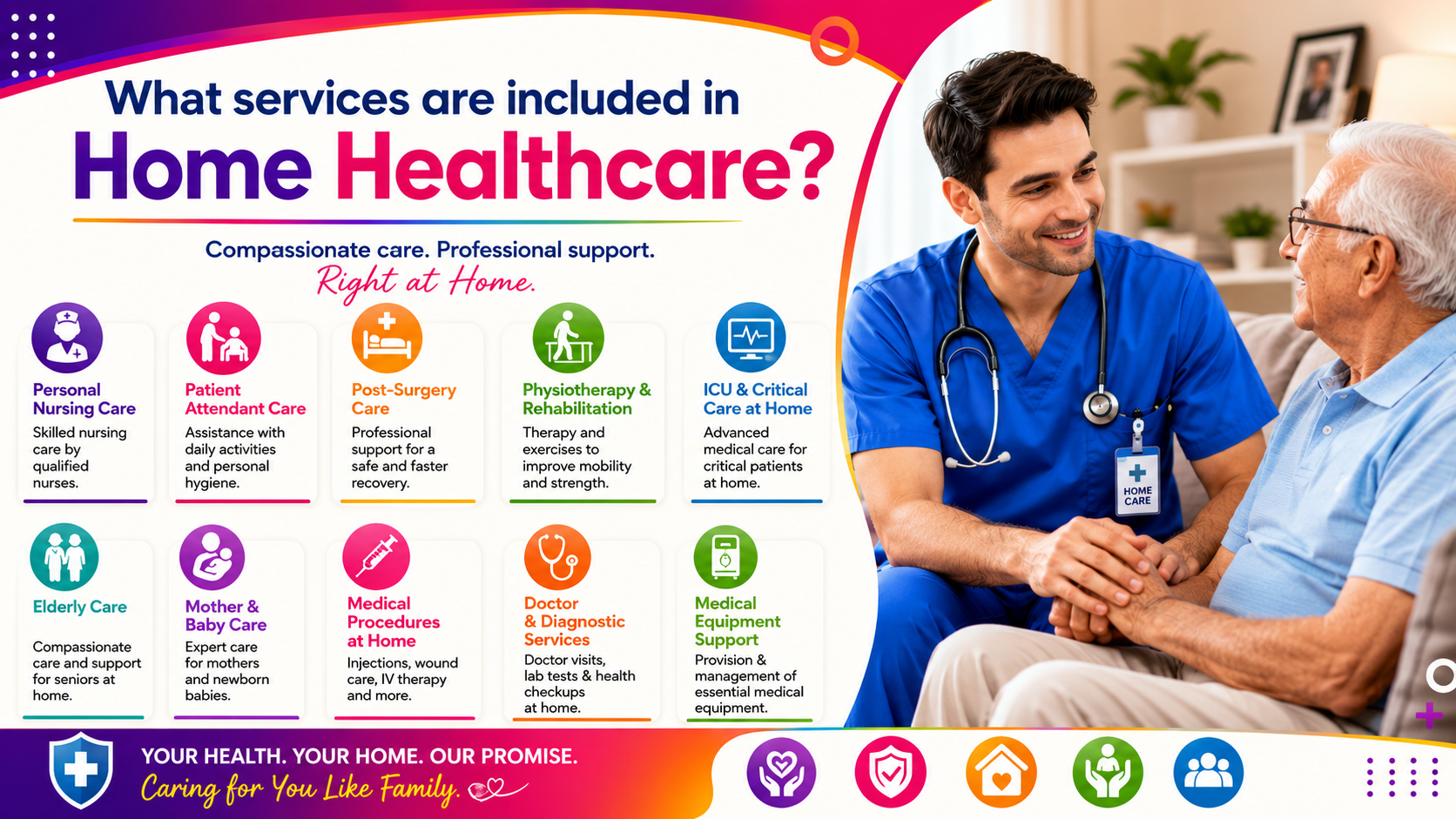
What services are included in home healthcare?
Professional Home Healthcare covers much more than basic nursing assistance.
Depending on the patient’s condition, services can be customized to meet short-term or long-term needs.
Medical nursing services
A Certified Male Nurse for Home Care may provide:
- Medication administration
- Injection at home
- IV drip therapy
- IV cannulation
- Wound dressing
- Surgical dressing changes
- Catheter care
- Catheter insertion
- NG tube feeding
- Tracheostomy care
- Suctioning
- Nebulization
- Oxygen therapy
- Blood sample collection
- Patient assessment
- Vital signs monitoring
Personal care support
Many Male Nurse Services also include assistance with:
- Bathing
- Grooming
- Mobility assistance
- Position changes
- Feeding support
- Fall prevention
- Pressure sore prevention
Long-term disease management
Patients living with chronic illnesses often require continuous Skilled Nursing Care, including:
- Diabetes monitoring
- Hypertension management
- Heart disease support
- COPD monitoring
- Parkinson’s care
- Dementia assistance
- Kidney disease care
Which patients benefit the most from home nursing services?
Different medical conditions require different levels of nursing expertise. Fortunately, experienced home nurses can adapt care plans based on individual needs.
Patient Condition | Recommended Nursing Support |
Elderly patients | Daily monitoring, medication reminders, mobility assistance |
Stroke patients | Rehabilitation support, feeding assistance, and medication management |
Paralysis patients | Position changes, pressure ulcer prevention, and catheter care |
Cancer patients | Pain management, medication support, nutritional monitoring |
ICU recovery | Continuous observation, oxygen therapy, and infection prevention |
Post surgery | Wound dressing, pain monitoring, mobility support |
Bedridden patients | Hygiene care, pressure sore prevention, vital signs monitoring |
This personalized approach helps patients recover more comfortably while reducing unnecessary hospital readmissions.
Why choose a certified male nurse instead of untrained caregivers?
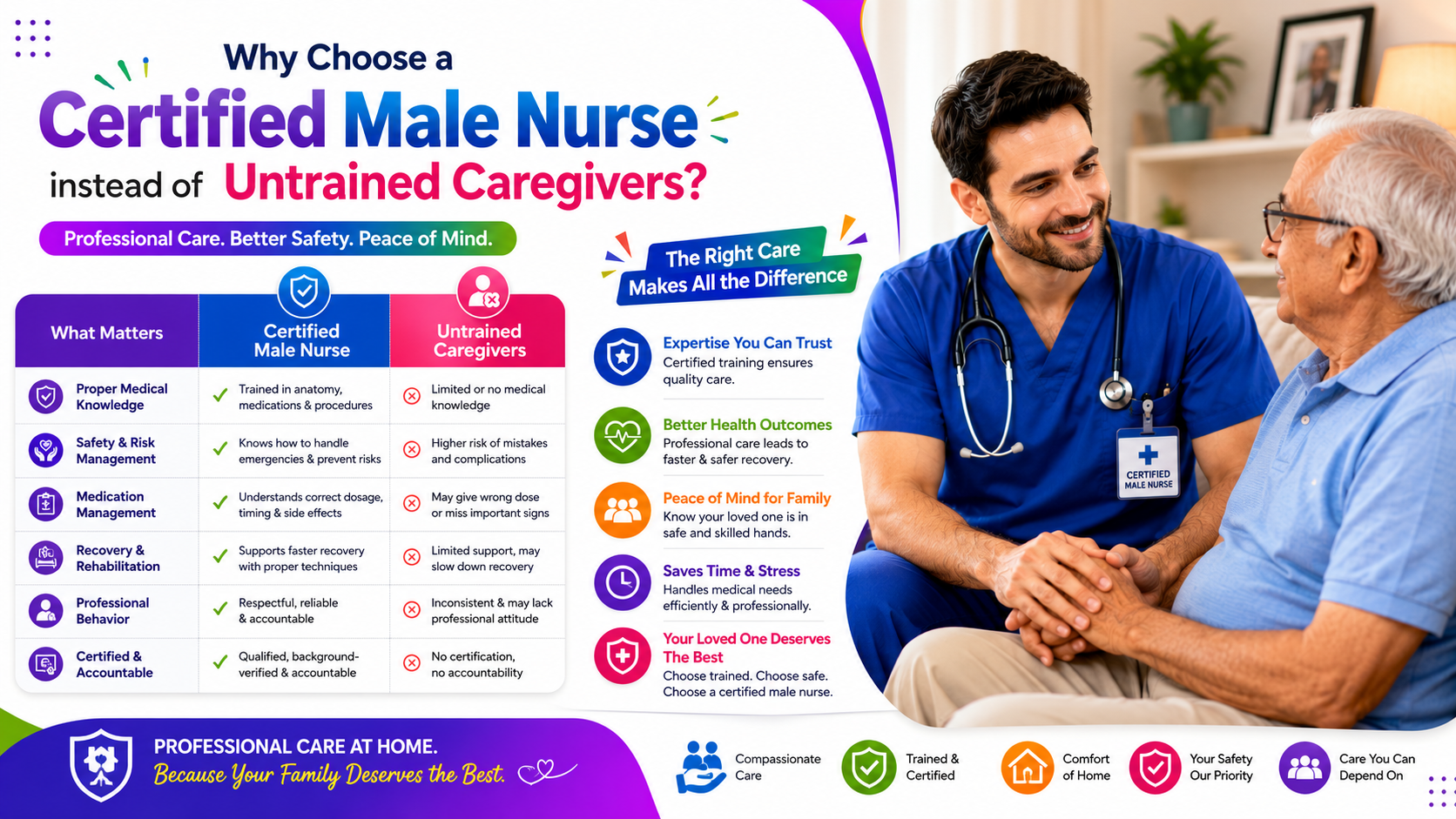
Many families mistakenly assume that all home caregivers provide the same level of care. In reality, there is a significant difference between a trained nurse and an unlicensed attendant.
A Registered Male Nurse has formal nursing education, clinical training, and hands-on experience in managing medical conditions.
They can recognize early warning signs of complications, administer treatments safely, and respond quickly during emergencies.
Comparison
Certified Male Nurse | General Caregiver |
Clinical nursing education | Basic caregiving skills |
Medication administration | Usually not authorized |
IV therapy | No |
Catheter care | Limited or unavailable |
Wound management | Basic assistance only |
Medical monitoring | Limited |
Emergency response | Professional clinical training |
For patients with complex medical needs, choosing a trained nursing professional provides greater peace of mind and supports safer recovery.
How can you hire a male nurse at home?
Finding the right healthcare professional involves more than searching for Male Nurse Near Me.
You should choose someone with the right qualifications, experience, and communication skills to ensure safe and effective care.
Step 1: Assess the patient’s medical needs
Start by discussing the patient’s condition with the treating physician. This helps determine whether the patient requires:
- Daily nursing care
- Occasional home visits
- Post-operative monitoring
- Long-term nursing support
- ICU-level care at home
- Rehabilitation assistance
A clear care plan helps you hire the most suitable professional instead of paying for services you don’t need.
Step 2: Choose a trusted home healthcare provider
A reputable Home Healthcare Agency usually employs Certified Male Nurses, verifies their credentials, and follows standard clinical protocols.
Before hiring, ask about:
- Nursing qualifications
- Professional registration
- Clinical experience
- Background verification
- Emergency response procedures
- Availability of doctor supervision
Step 3: Verify experience
Different patients have different medical needs. Make sure the nurse has relevant experience if your loved one requires specialized care, such as:
- Male Nurse for Elderly Care
- Male Nurse for Bedridden Patient
- Male Nurse for Stroke Patient
- Male Nurse for Paralysis Patient
- Male Nurse for ICU Patient
- Male Nurse for Cancer Patient
- Male Nurse for Post Surgery Care
Specialized experience often leads to better patient outcomes and fewer complications.
What services can a male nurse provide at home?
A Male Nurse Visit at Home can include a wide range of medical and supportive services depending on the patient’s condition.
Daily nursing care
- Medication Administration
- Vital Signs Monitoring
- Blood Pressure Monitoring
- Blood Sugar Monitoring
- Patient Monitoring
- Pain assessment
- Health documentation
Clinical procedures
An Experienced Male Nurse may perform:
- Injection Service at Home
- IV Cannulation
- Male Nurse for IV Drip
- Wound Care
- Dressing Change
- Catheter Insertion
- Male Nurse for Catheter Care
- NG Tube Feeding
- Suctioning
- Nebulization
- Male Nurse for Oxygen Therapy
- Male Nurse for Tracheostomy Care
These procedures should always be performed according to a physician’s instructions and accepted clinical standards.
Which type of home nursing service is right for your family?
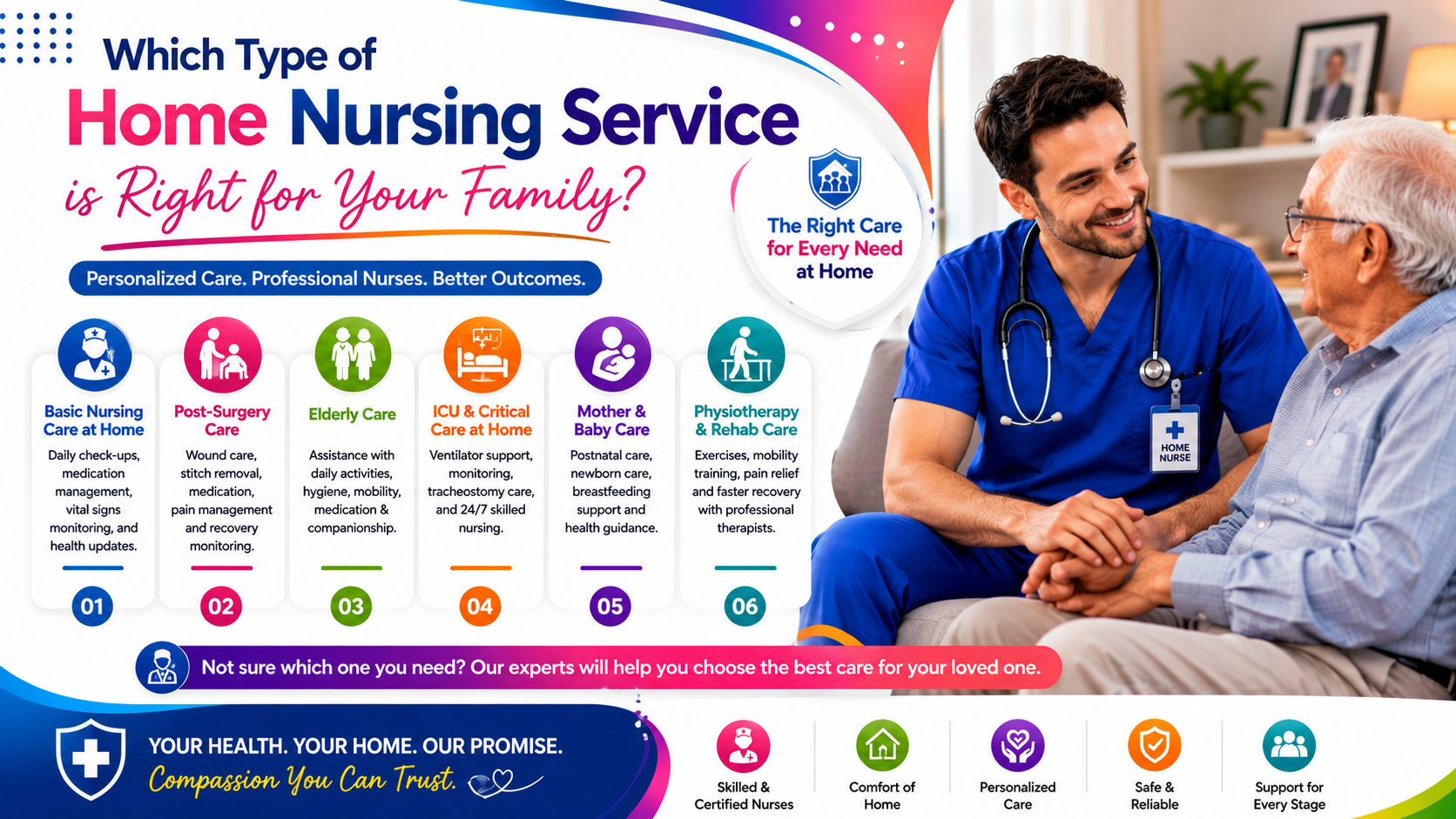
Every patient has different care requirements. Fortunately, home nursing services are flexible and can be customized.
Service Type | Best For |
Part-Time Male Nurse | Daily medication, injections, dressing changes |
Full-Time Male Nurse | Patients needing assistance throughout the day |
24 Hour Male Nurse | ICU recovery, critical illness, advanced neurological conditions |
Emergency Male Nurse | Urgent nursing care after discharge or sudden illness |
Private Male Nurse | Personalized one-on-one medical attention |
The right option depends on the patient’s medical condition, the doctor’s recommendations, and family support at home.
How much does a male nurse cost?
One of the most common questions families ask is:
“How much does a male nurse cost?”
There isn’t a single fixed price because costs vary based on several factors.
Typical pricing depends on:
- Number of working hours
- Medical complexity
- Nurse’s qualifications
- Specialized procedures
- Day or night shifts
- Location
- Duration of care
For example, a patient requiring only medication management and vital sign checks will usually pay less than someone needing continuous ICU-level monitoring or advanced respiratory support.
Instead of choosing the lowest-priced option, focus on the nurse’s qualifications, experience, and reliability.
High-quality care often reduces complications and unnecessary hospital readmissions.
Is a male nurse available for home care in Pakistan?
Yes. Professional home nursing services are now available in many major cities.
Families commonly search for:
- Male Nurse in Karachi
- Male Nurse Home Service Karachi
- Home Nurse Karachi
- Home Nursing Karachi
- Home Care Services Karachi
- Male Nurse in Lahore
- Male Nurse in Islamabad
- Male Nurse in Pakistan
Many healthcare providers also offer online booking, scheduled home visits, and emergency nursing support.
If you’re searching for the Best Male Nurse Service, choose a provider that offers qualified nurses, transparent pricing, and physician-supervised care.
What should you ask before hiring a home nurse?
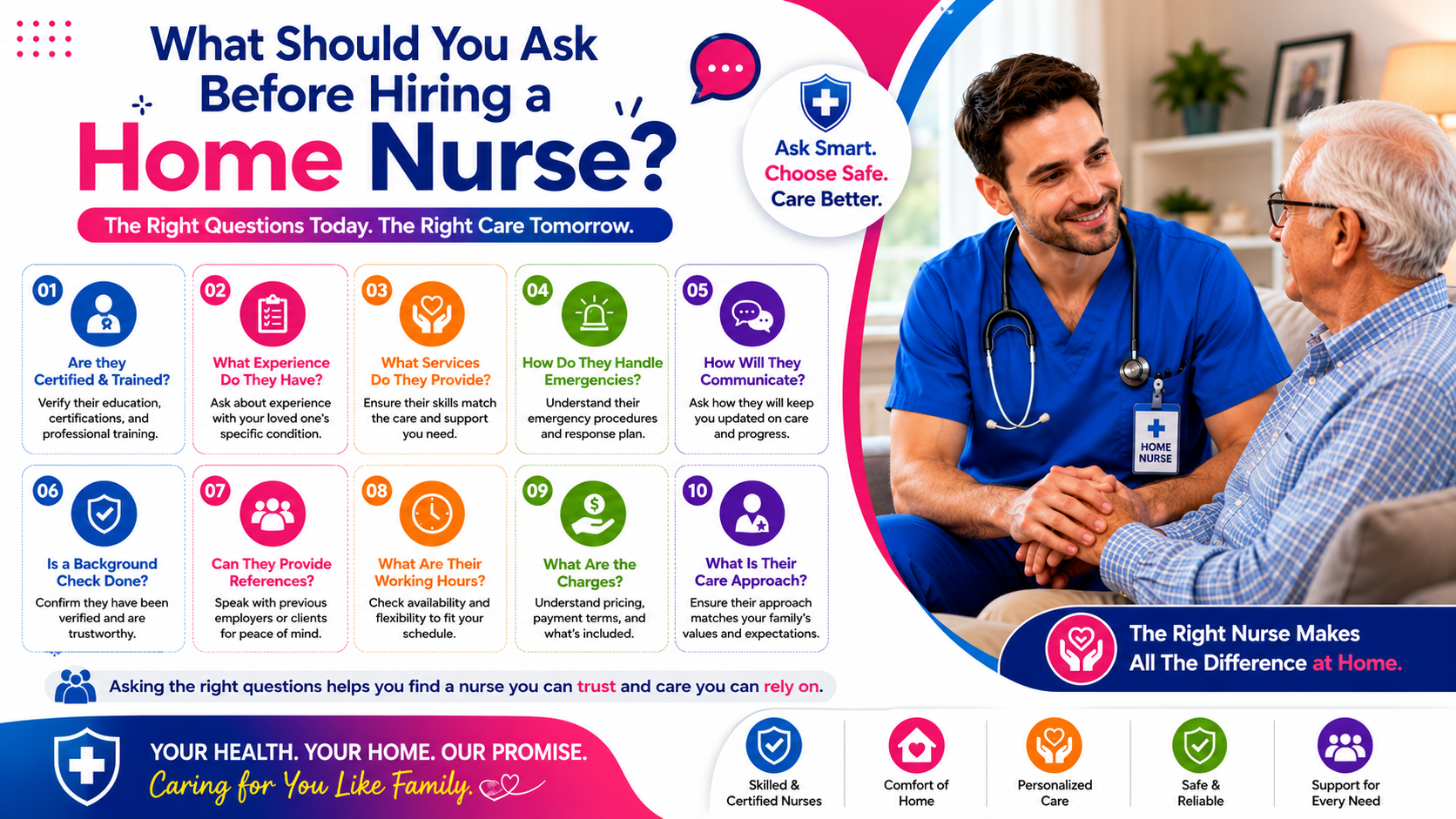
Before making a final decision, ask these important questions:
 Is the nurse certified?
How many years of experience do they have?
Have they cared for patients with similar conditions?
Are they trained in emergency response?
Can they perform IV therapy and wound dressing?
Are they available on weekends and holidays?
Will they coordinate with the patient’s doctor?
Are background checks completed?
Is replacement staff available if needed?
These questions help you select a dependable professional while avoiding unnecessary risks.
What are the biggest benefits of hiring a professional male nurse?
Home nursing offers advantages for both patients and families.
For patients
- Greater comfort at home
- Personalized medical attention
- Reduced exposure to hospital infections
- Faster recovery in familiar surroundings
- Better medication adherence
- Improved emotional well-being
For families
- Peace of mind
- Less caregiving stress
- Professional medical guidance
- Better communication with healthcare providers
- Flexible care schedules
- Continuous patient monitoring
A trained nurse also educates family members on safe caregiving practices, making long-term care more manageable.
What mistakes should families avoid when hiring a male nurse?
Choosing the wrong caregiver can affect patient safety. Avoid these common mistakes:
- Hiring based only on the lowest price
- Not verifying certifications
- Ignoring experience with specific medical conditions
- Failing to discuss the care plan with the doctor
- Not checking references or reviews
- Overlooking emergency response skills
- Choosing an unlicensed caregiver for complex medical procedures
Taking time to evaluate qualifications can help ensure safe, high-quality care.
Expert Recommendations: How to Get the Best Results from Home Nursing
Hiring a qualified nurse is only one part of successful home healthcare. Families who actively participate in the care plan often see better recovery, fewer complications, and improved patient satisfaction.
Healthcare professionals generally recommend the following best practices:
- Keep an updated list of all medications and allergies.
- Follow the doctor’s treatment plan consistently.
- Schedule regular follow-up appointments.
- Record changes in symptoms, appetite, or mobility.
- Maintain a clean and hygienic environment.
- Encourage light physical activity when medically appropriate.
- Ensure proper nutrition and hydration.
- Communicate openly with the nurse about any concerns.
When patients, families, nurses, and physicians work together, home care becomes safer and more effective.
How Can You Prepare Your Home for Professional Nursing Care?
Preparing the home before nursing services begin helps create a safe environment for both the patient and the healthcare professional.
Create a comfortable recovery space
Choose a room that offers:
- Good ventilation
- Adequate lighting
- Easy access to a bathroom
- Enough space for medical equipment
- Minimal noise and distractions
Keep essential medical supplies nearby
Depending on the patient’s condition, you may need:
- Prescribed medications
- Gloves and disinfectants
- Sterile dressing materials
- Digital thermometer
- Blood pressure monitor
- Glucometer
- Pulse oximeter
- Wheelchair or walker
- Hospital bed (if recommended)
- Oxygen concentrator (if prescribed)
For some patients, additional support from a Physiotherapist, a doctor home visit service, or a medical equipment rental provider may be beneficial as part of a comprehensive care plan.
Can a Male Nurse Provide ICU-Level Care at Home?
In many situations, yes—but it depends on the patient’s condition and the treating physician’s recommendations.
Patients who have been discharged from intensive care may still require advanced monitoring and nursing support at home.
A skilled nurse may assist with:
- Continuous patient monitoring
- Oxygen therapy
- Tracheostomy care
- Suctioning
- Enteral (NG tube) feeding
- Medication administration
- Prevention of pressure injuries
- Infection control
- Coordination with the treating physician
However, not every ICU patient is suitable for home care. The decision should always be made by the treating medical team after evaluating the patient’s stability and available home support.
What Are Some Common Misconceptions About Male Nurses?
Despite growing awareness, several misconceptions still exist.
Myth: Male nurses only help with lifting patients.
Fact: They are trained healthcare professionals who provide clinical care, administer medications, monitor patients, and perform medical procedures within their professional scope.
Myth: Home nursing is only for elderly patients.
Fact: Home nursing benefits people of all ages, including children, adults recovering from surgery, individuals with disabilities, and patients managing chronic illnesses.
Myth: Home care is less effective than hospital care.
Fact: For medically stable patients, home-based nursing can provide excellent outcomes when supervised by qualified healthcare professionals and coordinated with the treating physician.
Why Is Home Healthcare Becoming More Popular?
Home healthcare has expanded significantly because many patients prefer receiving care in familiar surroundings while maintaining independence.
Some key reasons include:
- Greater patient comfort
- Personalized one-on-one attention
- Reduced travel to healthcare facilities
- Lower exposure to infectious diseases
- Flexible scheduling
- Family involvement in care
- Better quality of life for long-term patients
Organizations such as the World Health Organization emphasize the importance of people-centered healthcare, and home-based services have become an increasingly valuable part of modern healthcare systems.
Frequently Asked Questions
What services does a male nurse provide at home?
A home nurse can provide medication administration, injections, IV therapy, wound dressing, catheter care, oxygen therapy, patient monitoring, blood pressure and blood sugar checks, post-operative care, and support for chronic medical conditions as prescribed by a physician.
How can I hire a male nurse at home?
Start by assessing the patient’s medical needs, then choose a reputable home healthcare provider.
Verify the nurse’s qualifications, experience, references, and availability before finalizing the service.
Is a male nurse suitable for elderly care?
Yes. Experienced nurses provide medication management, mobility assistance, fall prevention, chronic disease monitoring, and personalized support that helps older adults remain comfortable and safe at home.
Can a male nurse give injections at home?
Yes. Qualified nurses can safely administer prescribed injections, IV medications, and infusion therapies while following proper infection-control practices and medical guidelines.
Where can I find a certified male nurse near me?
You can find certified professionals through reputable home healthcare agencies, hospital referral services, physician recommendations, or licensed nursing providers operating in your city. Always verify credentials, experience, and service quality before hiring.
Conclusion
Choosing the right male nurse can make a meaningful difference in a patient’s recovery, safety, and overall well-being.
Whether your loved one requires post-surgical support, elderly care, stroke rehabilitation, wound management, injections, catheter care, or long-term medical supervision, a qualified nursing professional brings clinical expertise directly to the home.
Before hiring, verify qualifications, relevant experience, and the provider’s commitment to quality care.
A personalized care plan, regular communication with the treating physician, and active family involvement all contribute to better outcomes.
If you’re looking for reliable home healthcare services, take time to compare providers, ask the right questions, and select a professional who meets your family’s medical needs with compassion and competence.