

Finding a reliable Nurse for Home in Karachi can make daily healthcare easier for patients and families.
Home nursing allows patients to receive professional care in a familiar environment instead of making frequent trips to a hospital or clinic.
It can be useful for elderly people, bedridden patients, individuals recovering from surgery, patients with chronic illnesses, and those who need intensive patient care after a serious health condition.
Professional home nursing is more than basic assistance.
A trained nurse may help with medication schedules, wound care, vital sign monitoring, mobility support, personal care, post operative recovery, and other nursing needs according to the patient’s care plan.
In Karachi, families may look for home nursing services Karachi, a home care nurse Karachi, or a nurse at home Karachi for temporary or long-term support.
The right choice depends on the patient’s medical condition, the level of care required, and whether the patient needs routine nursing or more intensive supervision.
What Is a Nurse for Home Care?
A nurse for home care is a qualified healthcare professional who provides nursing support to a patient in their home.
The nurse works according to the patient’s condition and the instructions of the treating doctor or healthcare team.
Home nursing can be arranged for a few hours a day, overnight care, or longer periods, depending on the patient’s needs. Some patients need support during recovery, while others require regular nursing because of age, disability, chronic disease, or limited mobility.
The main purpose is to provide appropriate nursing care in a safe home environment while helping the patient maintain comfort, dignity, and independence whenever possible.
Who May Need a Nurse at Home in Karachi?
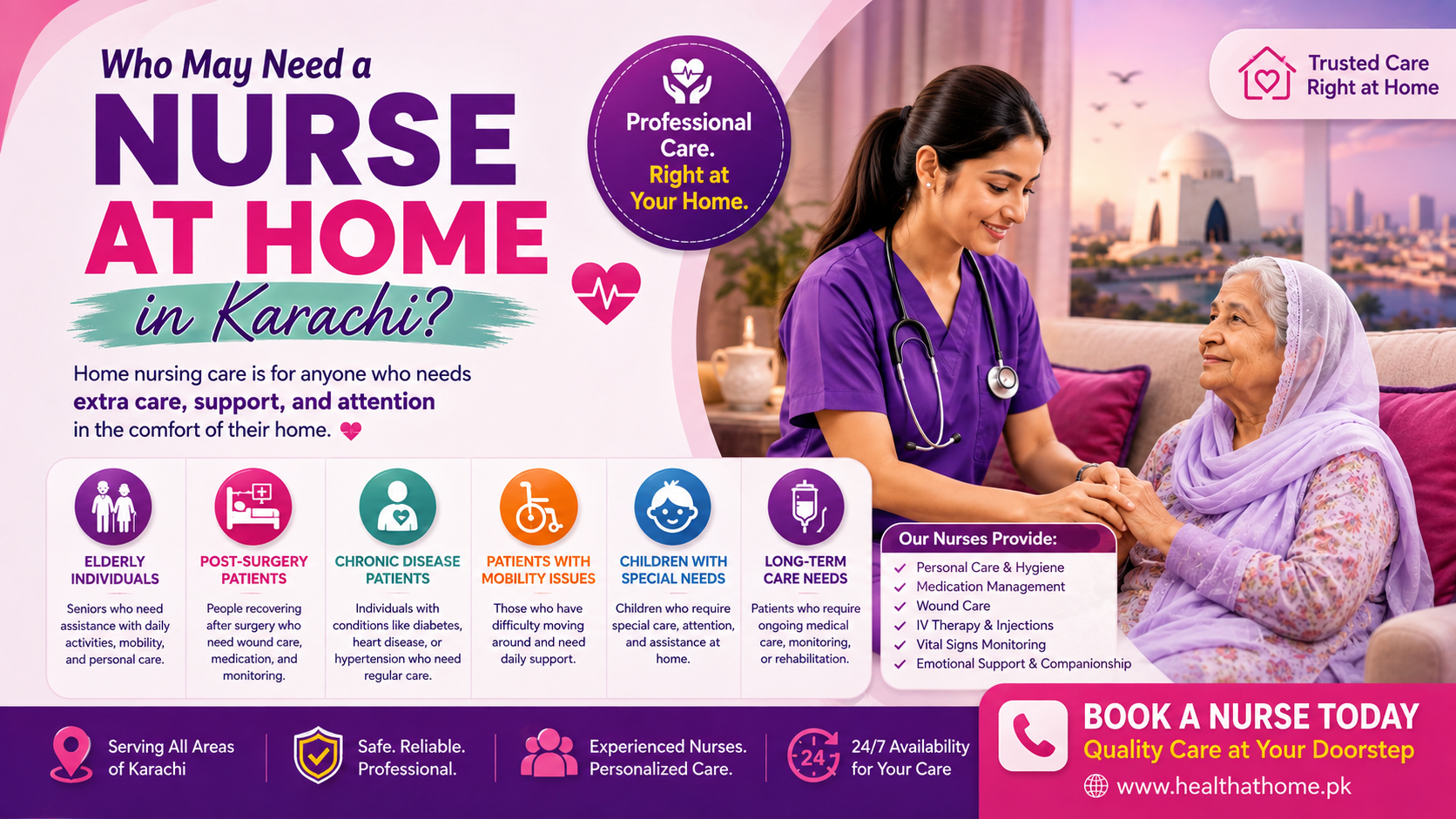
Home nursing can benefit patients with different healthcare needs. It is not limited to elderly people.
A doctor may recommend home-based nursing when a patient needs ongoing care but does not necessarily need to stay in a hospital.
Common situations include:
- Elderly patients who need assistance with daily healthcare needs
- Bedridden patients requiring regular repositioning and personal care
- Patients recovering after surgery or hospitalization
- People with mobility limitations or physical disabilities
- Patients with chronic health conditions requiring routine monitoring
- Individuals who need wound or dressing care
- Patients who need medication assistance according to medical instructions
- People recovering from injuries or serious illnesses
- Patients who require intensive patient care and close observation at home
The level of nursing should always match the patient’s medical condition.
A relatively independent patient may need only a few hours of support, whereas a medically complex patient may require continuous or intensive nursing supervision.
What Services Can a Home Nurse Provide?
The exact services depend on the nurse’s qualifications, the patient’s care plan, and the healthcare provider’s instructions.
A professional home nurse may provide several types of nursing support.
Medication Support
A nurse can help maintain an organized medication routine according to the prescription provided by the doctor.
This may include reminding the patient about scheduled medicines or administering medications when it is within the nurse’s professional scope and supported by medical instructions.
Families should not ask a nurse to independently change medication doses or start new medicines without appropriate medical direction.
Monitoring Vital Signs
Depending on the patient’s condition, home nursing may involve monitoring parameters such as blood pressure, pulse, temperature, respiratory rate, and oxygen saturation.
Regular observations can help identify changes that should be reported to the doctor.
However, home monitoring does not replace medical evaluation when a patient’s condition is worsening.
Wound and Dressing Care
Patients recovering from surgery, injuries, pressure injuries, or other wounds may need professional dressing care.
A nurse can follow appropriate infection prevention practices and the wound care plan prescribed by the healthcare team.
Families should avoid relying on unverified home remedies for wounds, especially when there are signs of infection or delayed healing.
Personal and Bedside Care
Some patients require assistance with bathing, grooming, changing clothes, toileting, feeding, repositioning, and maintaining personal hygiene.
This type of support can be particularly important for bedridden patients who cannot safely perform these activities independently.
Post Surgery Nursing Care
After discharge from a hospital, some patients still need nursing supervision at home.
A home nurse may assist with the prescribed recovery routine, monitor the patient’s condition, support wound care, and communicate concerning changes to the family or healthcare team.
The exact level of care varies according to the surgery and the patient’s recovery.
What Is Intensive Patient Care at Home?
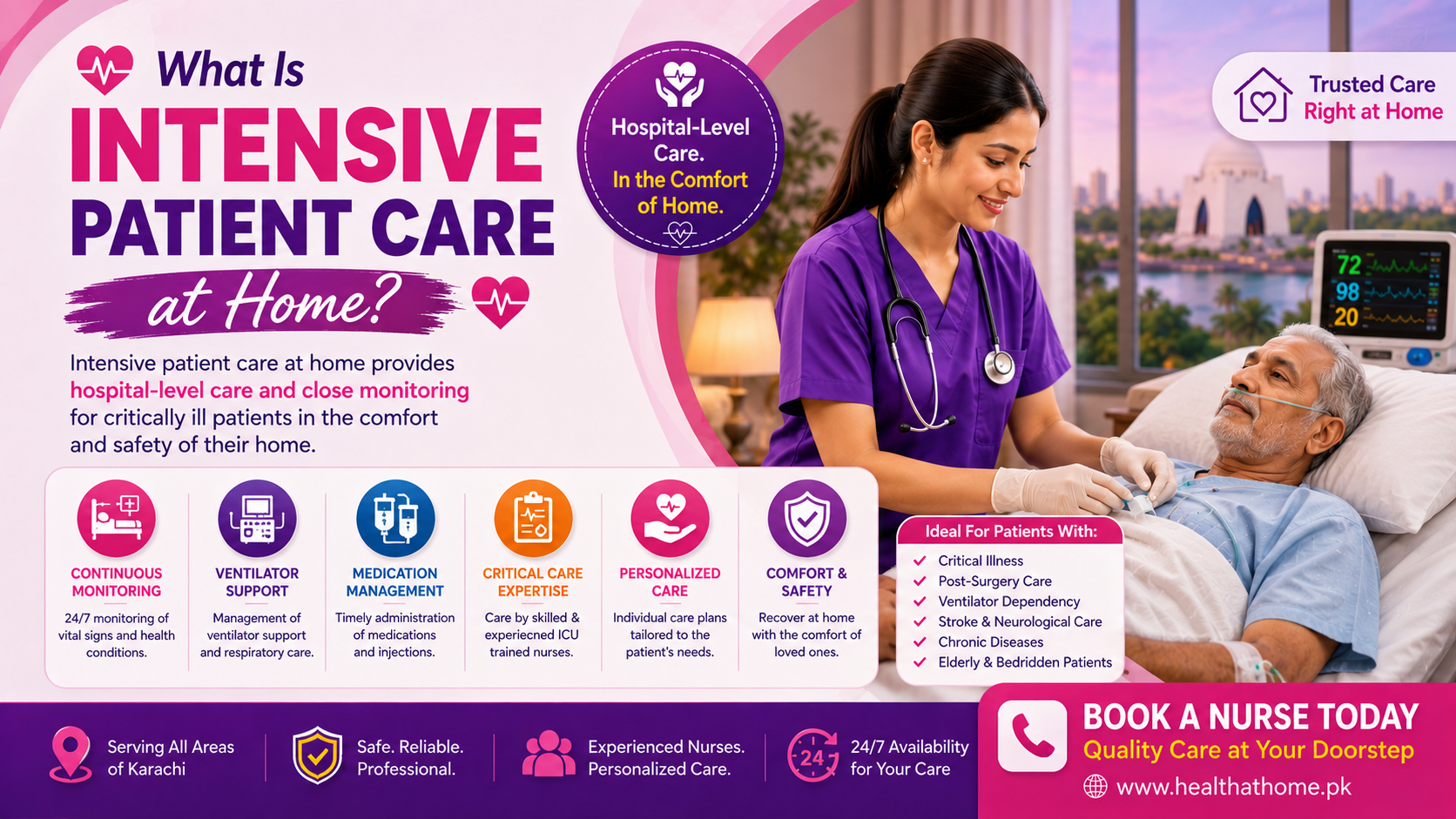
Intensive patient care refers to a higher level of nursing attention for patients who need frequent monitoring, extensive assistance, or close observation because of a serious or complex medical condition.
It should not be confused with intensive care unit treatment. A patient who requires ICU-level treatment, ventilatory support, emergency intervention, or continuous hospital-based monitoring may need hospital care rather than ordinary home nursing.
However, some medically stable patients can receive intensive nursing support at home when their doctor determines that home care is appropriate.
Examples may include patients who are highly dependent on caregivers, have complex post-hospital needs, require frequent observation, or need extensive bedside assistance.
What Can Intensive Home Patient Care Include?
Depending on the medical plan, intensive home nursing may involve:
- Frequent monitoring of vital signs
- Close observation for changes in the patient’s condition
- Assistance with feeding and hydration
- Repositioning and pressure injury prevention
- Personal hygiene and bedside care
- Medication administration according to medical instructions
- Wound and dressing care
- Support during recovery after hospitalization
- Communication with family members and the treating healthcare team
The patient’s care plan should clearly define what the nurse is expected to do and when medical escalation is required.
Home Nursing Services Karachi: What Should You Look For?
When searching for home nursing services in Karachi, do not choose a provider only because it is inexpensive or available immediately.
Nursing involves direct patient care, so qualifications, experience, reliability, and communication are important.
A good home nursing provider should be able to explain the nurse’s qualifications and the type of care available.
Families should also ask whether the service can accommodate the patient’s specific medical needs.
For example, the requirements of an independent elderly person are very different from those of a bedridden patient recovering from major surgery.
How to Choose a Qualified Home Nurse in Karachi
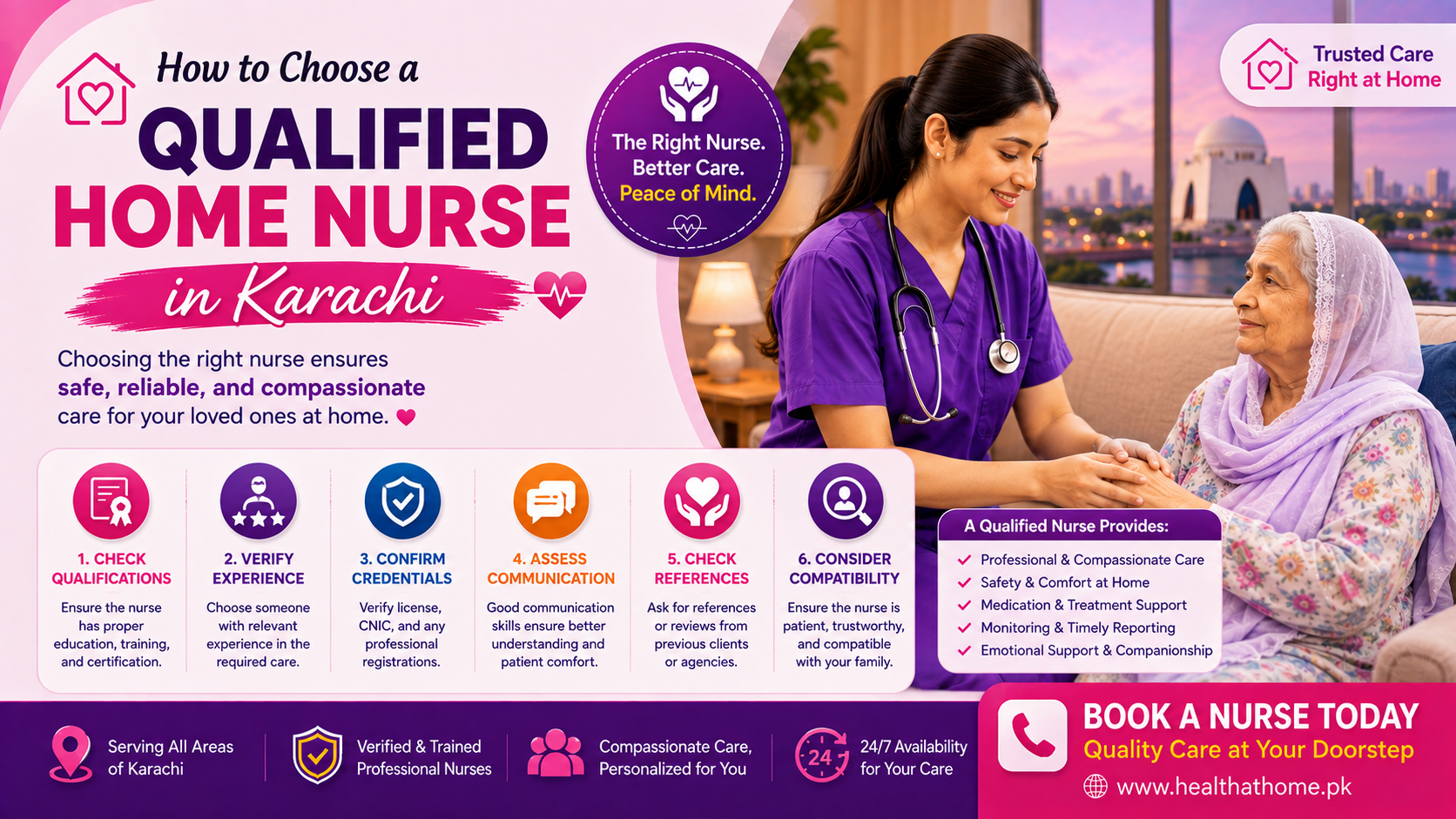
Choosing a qualified home nurse Karachi families can trust requires a little research.
The nurse should have appropriate professional education and experience for the patient’s condition.
Before starting home care, discuss the patient’s diagnosis, current treatment, mobility level, medication routine, allergies, dietary restrictions, and any special nursing requirements with the provider.
Here are important points to consider:
- Verify the nurse’s professional qualifications and relevant experience.
- Explain the patient’s medical condition before assigning care.
- Ask whether the nurse has experience with similar patients.
- Confirm the working hours and expected responsibilities.
- Discuss emergency communication procedures.
- Make sure the nurse follows appropriate hygiene and infection prevention practices.
- Ask how the provider handles replacement staff if the assigned nurse is unavailable.
For complex cases, the nurse should work within their professional scope and follow the patient’s medical care plan.
Registered Nurse for Home Care vs General Caregiver
A registered nurse for home care and a caregiver may both support patients at home, but their responsibilities and professional training are not necessarily the same.
Care Need | Registered/Qualified Nurse | General Caregiver |
Vital sign monitoring | Depending on the training and care plan | Basic assistance may be possible |
Medication-related nursing tasks | Within the professional scope and medical instructions | Usually limited |
Wound care | Appropriate when trained and prescribed | Generally not a substitute for professional wound care |
Personal hygiene | Yes | Yes |
Mobility assistance | Yes, according to patient needs | Yes |
Post surgery nursing | Yes, when appropriately qualified | Can assist with basic daily needs |
Complex nursing needs | May be appropriate depending on qualifications | Usually requires nursing support |
Intensive patient care | Can be appropriate when medically suitable | May provide supportive bedside assistance |
The correct professional depends on the patient’s needs. A caregiver may be suitable for companionship and daily living support, while a patient requiring clinical nursing interventions should have an appropriately qualified nurse.
When Should You Hire a Nurse at Home in Karachi?
Families may consider a nurse at home Karachi service when traveling to a hospital or clinic regularly is difficult, or when the patient needs nursing support between medical appointments.
Home nursing may be especially practical after hospital discharge.
Instead of managing every task alone, family members can have professional support with routine nursing needs.
It can also help families care for older adults who need regular assistance but prefer to remain in their own homes.
However, home nursing is not automatically the best option for every medical condition.
Patients with severe or rapidly worsening symptoms may require immediate hospital assessment.
Nursing Care at Home for Elderly Patients
Older adults may have several healthcare needs at the same time.
Reduced mobility, weakness, medication schedules, recovery after illness, and difficulty with daily activities can make home care challenging for families.
Nursing care at home in Karachi can provide practical support while helping families maintain a structured care routine.
For an elderly patient, a nurse may monitor vital signs, assist with hygiene, support safe movement, provide prescribed nursing care, and observe changes that should be communicated to the family or doctor.
The goal should not be to take away the patient’s independence. Where medically safe, the nurse can encourage appropriate participation in daily activities.
Home Nursing for Bedridden Patients
Bedridden patients need careful daily care because prolonged immobility can increase the risk of complications such as pressure injuries, stiffness, poor hygiene, constipation, and reduced physical function.
A suitable home nurse can follow the patient’s care plan and help with regular repositioning, hygiene, nutrition support, mobility exercises when prescribed, skin observation, and other nursing requirements.
Family members should also receive practical guidance about safe patient handling and warning signs that require medical attention.
Post Hospital and Post Operative Home Care
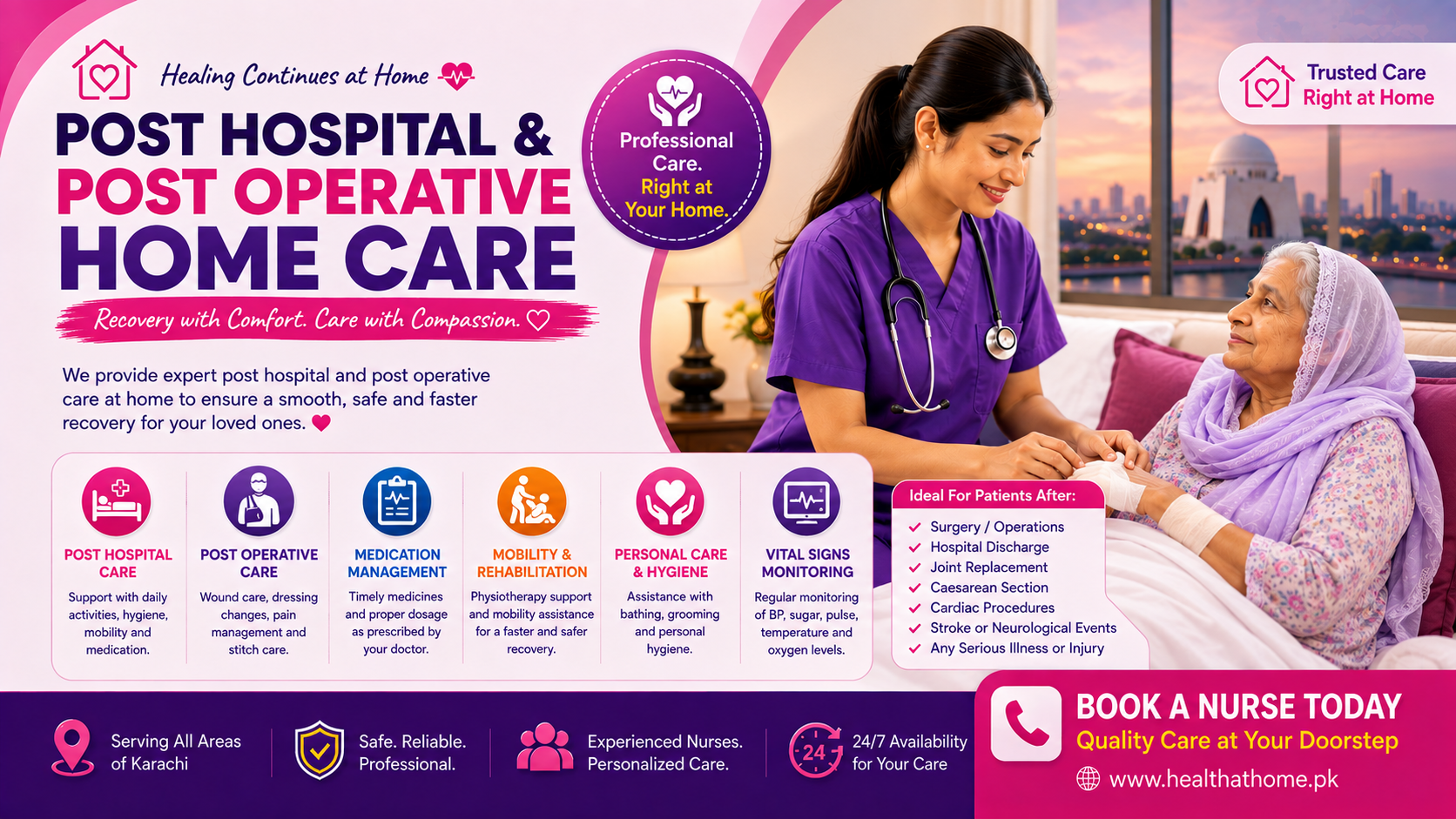
Going home after hospitalization does not always mean that the patient has returned to normal health.
Some people remain weak and require assistance for days or weeks.
A home nurse can help bridge the gap between hospital discharge and independent recovery.
Depending on the doctor’s instructions, care may include monitoring, dressing changes, medication support, mobility assistance, hygiene, nutrition support, and observation for complications.
The nurse should document relevant changes and communicate concerns to the family and healthcare team.
What Are the Benefits of Home Nursing?
Home nursing can provide both practical and emotional benefits when the service is properly matched to the patient’s needs.
Patients can receive care in a familiar setting, while family members may have additional professional support during demanding periods.
Key benefits include:
- Convenient nursing support without frequent travel
- More personalized bedside attention
- Support for elderly and bedridden patients
- Assistance during post surgery recovery
- Professional help with appropriate nursing tasks
- Regular observation of the patient’s condition
- Greater support for family caregivers
- Potentially better continuity of daily care
The benefits depend on the patient’s condition and the quality of the nursing service.
Home care should complement medical treatment rather than replace necessary doctor visits or emergency services.
How Much Does a Home Nurse Cost in Karachi?
The cost of a home nurse in Karachi can vary significantly.
There is no single fee that applies to every patient because nursing requirements are different.
Pricing may depend on the nurse’s qualifications, experience, working hours, shift length, patient condition, type of nursing care, and whether the patient needs routine or intensive care.
For example, a patient requiring a short daily visit may have different costs from someone who needs overnight or continuous nursing support.
Families should request a clear quotation and ask what is included before starting the service.
If additional services or extended hours have separate charges, these should also be clarified in advance.
How Can You Find a Home Nurse Service Near Me?
People searching for a home nurse service near me in Karachi should evaluate providers based on quality rather than proximity alone.
Online searches, healthcare directories, recommendations from doctors, and referrals from trusted families can help create a shortlist.
After finding potential providers, compare their nurse qualifications, experience, service coverage, availability, and care policies.
Ask specific questions about the patient’s condition instead of simply asking whether the provider offers home nursing.
For example, if a patient requires intensive bedside care after hospitalization, tell the provider about the patient’s mobility, medication requirements, wound care, feeding needs, and monitoring requirements.
This allows the provider to determine whether they can arrange an appropriately qualified nurse.
What Should You Prepare Before a Nurse Starts Home Care?
A little preparation can make home nursing safer and more organized.
Keep the patient’s current prescriptions, medical reports, recent test results, doctor’s instructions, allergies, emergency contact details, and medication list in an accessible place.
The family should also explain the patient’s normal routine, mobility limitations, dietary requirements, communication needs, and any specific concerns.
For patients receiving intensive patient care, it is especially important to establish clear communication between family members, nurses, and the treating doctor.
When Is Home Nursing Not Enough?
Home nursing is designed for patients who can safely receive the required level of care outside a hospital. It should not delay emergency treatment.
Seek urgent medical attention when a patient develops severe breathing difficulty, chest pain, loss of consciousness, sudden weakness, severe bleeding, seizures, or another serious and rapidly worsening symptom.
A home nurse can observe and report changes, but nurses should not be expected to manage emergencies that require hospital-level treatment.
Frequently Asked Questions About Nurse for Home in Karachi
Can I hire a nurse for home care in Karachi?
Yes. Families can arrange home nursing for elderly patients, post surgery recovery, bedridden patients, chronic care, wound care, and other appropriate nursing needs. The nurse’s qualifications should match the patient’s condition.
Can a nurse provide intensive patient care at home?
In some cases, yes. Medically stable patients who need close nursing supervision may receive intensive home care when their doctor considers it appropriate. The required services should be clearly defined in a care plan.
Is a home nurse the same as a caregiver?
No. A qualified nurse has professional healthcare training and can provide nursing services within their scope. A caregiver generally focuses on daily living assistance, companionship, and basic support.
How long can a patient receive home nursing?
Home nursing may be arranged for a few hours, overnight shifts, several days, or longer periods depending on the patient’s needs and the service provider’s availability.
Should I choose a nurse based only on price?
No. Cost is important, but qualifications, experience, reliability, patient safety, communication, and suitability for the patient’s condition should be considered before price alone.
Conclusion
A Nurse for home care in Karachi can provide valuable support to patients who need professional nursing care without staying in a hospital.
Home nursing may be suitable for elderly people, bedridden patients, post operative patients, individuals with chronic conditions, and patients who require additional support after hospitalization.
The most important step is to match the nurse’s qualifications and experience with the patient’s actual needs.
Routine home care and intensive patient care are not the same, so families should explain the patient’s condition clearly before arranging a service.
If a patient requires home nursing services in Karachi, look for a provider that prioritizes qualified staff, appropriate care plans, hygiene, communication, and patient safety.
When home care is medically suitable and professionally managed, it can make daily healthcare more organized and comfortable for both patients and their families.