
Recovering from surgery does not end when you leave the hospital.
For many patients, the most important phase begins at home, where proper care supports healing, reduces complications, and improves comfort.
Post surgery care at home Karachi has become an essential healthcare option for people recovering from major or minor surgical procedures.
Whether someone has undergone orthopedic surgery, abdominal surgery, cardiac surgery, or a cesarean section, professional home care can make recovery smoother and safer.
Families often want to provide the best support possible, but postoperative recovery requires medical knowledge, careful monitoring, and consistent wound management.
Professional home nursing services help bridge this gap by delivering skilled care in a familiar environment while reducing unnecessary hospital visits.
This guide explains everything you need to know about home-based surgical recovery, including available services, benefits, recovery steps, common mistakes, and expert recommendations.
What Is Post Surgery Care at Home?
Post surgery care at home is a healthcare service that provides professional medical support after a patient is discharged from the hospital.
Instead of staying in a healthcare facility for an extended period, patients receive skilled nursing and recovery assistance in their own homes.
These services may include Home post operative care Karachi, medication support, wound monitoring, mobility assistance, dressing changes, pain management, and regular health assessments.
The goal is to promote safe healing while allowing patients to recover comfortably with their families.
Home recovery is suitable for many surgical procedures, including:
- Orthopedic surgeries such as knee or hip replacement
- General abdominal surgeries
- Gallbladder surgery
- Hernia repair
- Cardiac procedures
- Spine surgery
- Cosmetic surgery
- Gynecological procedures
- Cesarean delivery
- Cancer-related surgeries
Every patient’s recovery plan depends on their surgery, age, overall health, and medical history.
Why Home Recovery Matters After Surgery
Leaving the hospital too early without proper care can increase the risk of complications.
Patients may forget medications, miss warning signs, or perform activities that delay healing.
Professional Post operative nursing care Karachi helps patients maintain the right recovery routine while reducing stress for family members.
Home recovery offers several important advantages:
- Greater comfort in a familiar environment
- Lower exposure to hospital-acquired infections
- Better emotional well-being
- Individual attention from healthcare professionals
- Easier communication with family caregivers
- Improved adherence to recovery instructions
Many surgeons recommend home nursing support during the first few days or weeks after surgery, especially for older adults and patients with limited mobility.
Who Needs Home Nursing After Surgery?
Not every patient requires the same level of assistance.
Some recover independently, while others benefit greatly from professional nursing care.
Patients who commonly require Home nursing after surgery in Karachi include people recovering from major operations, elderly patients, individuals with chronic illnesses such as diabetes, patients with limited mobility, and those who live alone.
People recovering from complex procedures often need assistance with daily activities, medication schedules, wound observation, and rehabilitation exercises until they regain strength.
Services Included in Professional Home Recovery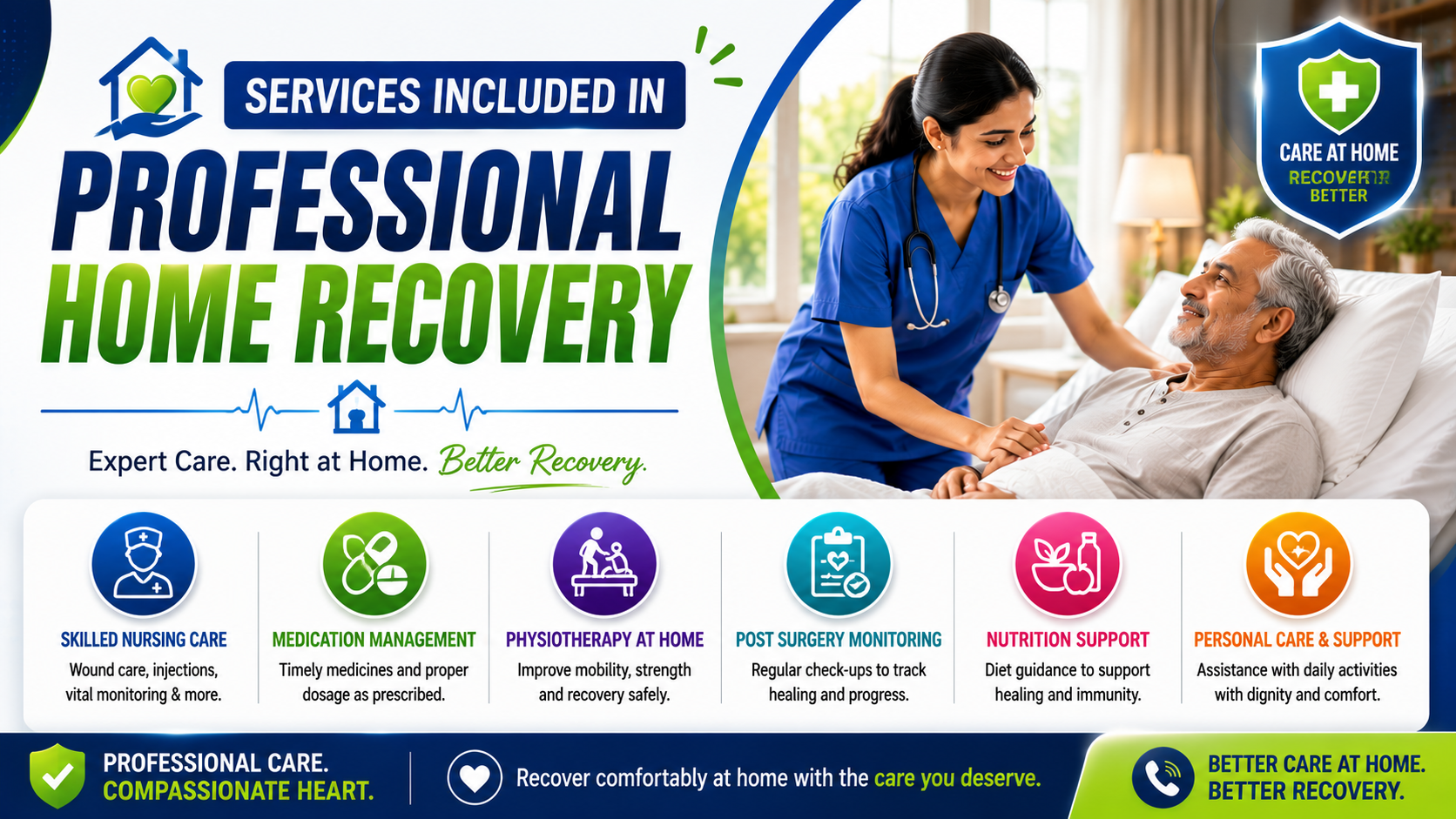
Professional home healthcare providers usually develop personalized recovery plans according to the patient’s condition and doctor’s recommendations.
Common services include:
- Monitoring vital signs
- Medication administration
- Pain assessment
- Mobility assistance
- Nutrition guidance
- Infection monitoring
- Catheter care
- Drain management
- Physiotherapy coordination
- Health education for caregivers
These services reduce recovery risks while improving patient confidence during the healing process.
Benefits of Post Surgery Care at Home Karachi
- Faster recovery in a comfortable environment
- Reduced exposure to infections commonly found in hospitals
- Professional monitoring during the healing process
- Personalized nursing care based on medical needs
- Better medication management and treatment compliance
- Support with mobility and daily activities
- Timely wound assessment to identify early complications
- Lower stress for both patients and family caregivers
- Convenient follow up care without frequent travel
- Improved overall recovery experience
Common Procedures That Require Home Recovery Support
Different surgeries require different levels of aftercare. Some procedures involve only basic observation, while others require intensive nursing support.
|
Surgical Procedure |
Typical Home Care Requirements |
Recovery Focus |
|
Knee Replacement |
Mobility assistance, physiotherapy, pain management |
Regaining movement |
|
Hip Replacement |
Walking support, wound monitoring |
Safe mobility |
|
Cesarean Section |
Incision care, newborn support, pain control |
Healing and maternal recovery |
|
Hernia Surgery |
Activity monitoring, dressing care |
Preventing strain |
|
Cardiac Surgery |
Vital sign monitoring, medication support |
Heart recovery |
|
Spine Surgery |
Limited movement guidance, wound observation |
Protecting the surgical site |
The exact care plan should always follow the surgeon’s discharge instructions.
Surgical Recovery Care at Home: Step-by-Step Process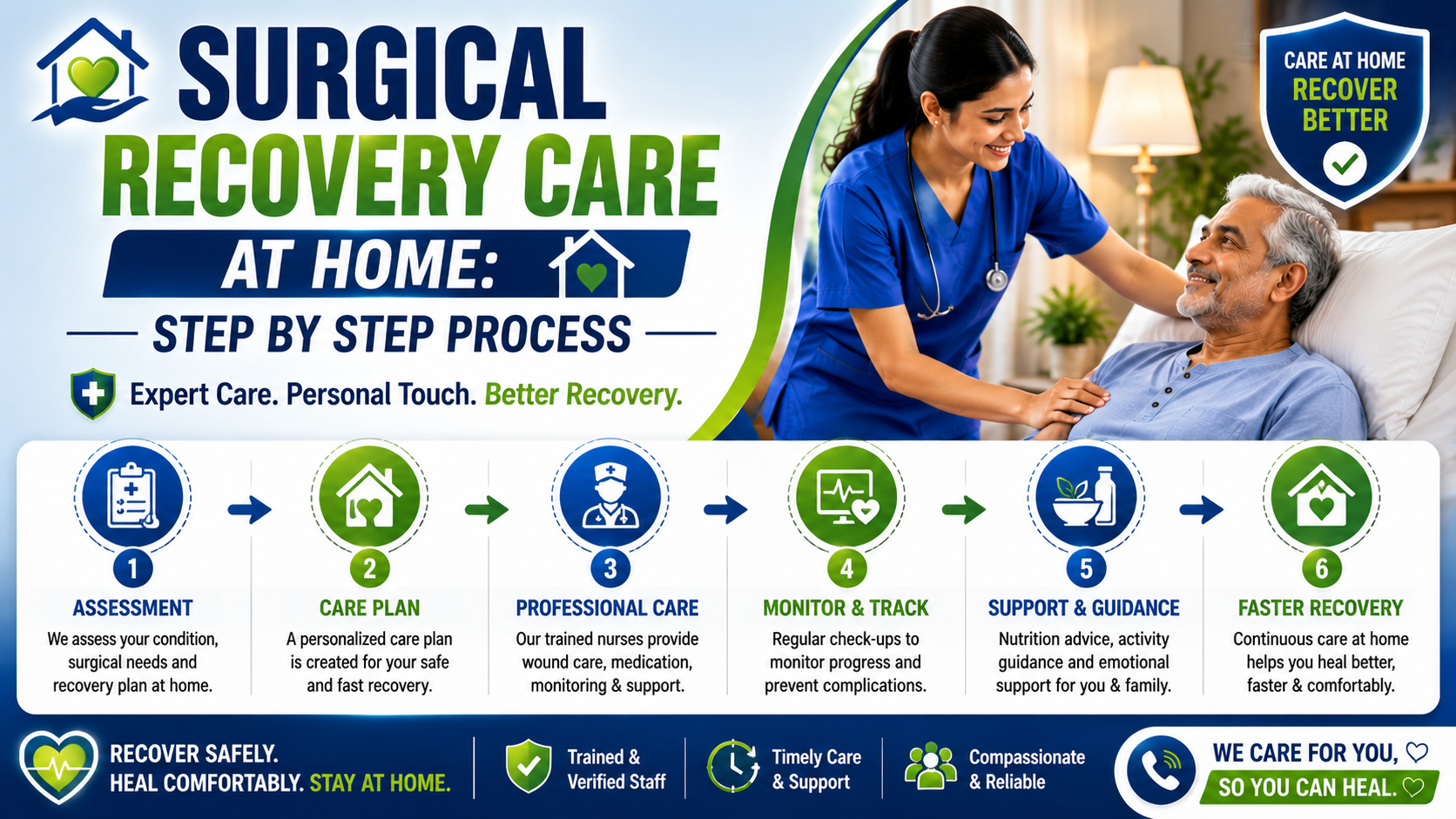
Successful recovery depends on following a structured care plan rather than relying on rest alone.
Initial Assessment
The recovery process begins with a detailed assessment of the patient’s condition.
The healthcare professional reviews discharge instructions, prescribed medications, mobility level, wound condition, and medical history before creating a personalized care plan.
Medication Management
Many patients take antibiotics, pain relievers, blood thinners, or anti-inflammatory medicines after surgery.
Missing doses or taking medications incorrectly may delay recovery or increase complications.
Professional nurses ensure medicines are administered correctly and monitor for possible side effects.
Mobility Support
Early movement is encouraged after many surgical procedures because it improves circulation and lowers the risk of blood clots. However, excessive activity may damage healing tissues.
Nurses guide patients through safe movement techniques recommended by their healthcare providers.
Nutrition and Hydration
Proper nutrition supplies the body with the nutrients needed to repair damaged tissues.
Protein-rich foods, vitamins, adequate fluids, and balanced meals support faster healing while preventing weakness and dehydration
Wound Care at Home Karachi
One of the most important parts of recovery is keeping the surgical wound clean and protected.
Professional Wound care at home Karachi includes regular inspection of the incision, cleaning the area according to medical guidelines, monitoring for infection, and documenting healing progress.
Patients should immediately report symptoms such as increasing redness, swelling, foul smelling drainage, excessive pain, fever, or separation of wound edges.
Early intervention often prevents serious complications.
Dressing Change at Home Karachi
Proper dressing management protects the wound from bacteria while allowing healthy healing.
Professional Dressing change at home Karachi services ensure that sterile techniques are followed during every dressing replacement.
Nurses also evaluate wound healing, identify abnormal discharge, and notify the treating physician if recovery does not progress as expected.
Incorrect dressing techniques performed without proper hygiene can increase infection risk and delay recovery.
Home Healthcare After Surgery: What Families Should Expect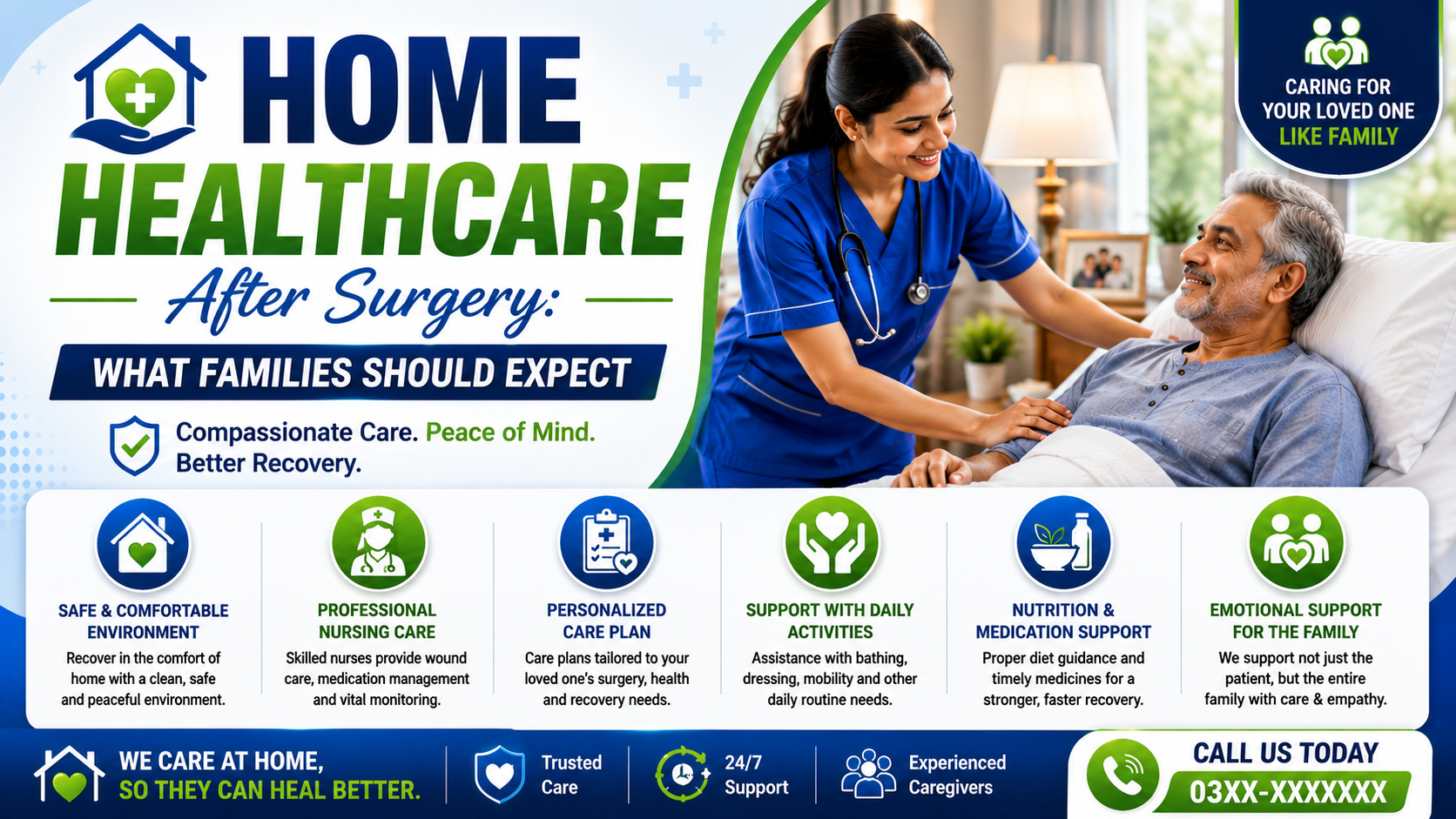
Bringing a loved one home after surgery is often a positive step, but it also comes with new responsibilities.
Family members usually become the primary support system, helping with daily routines while healthcare professionals provide medical supervision.
Good communication between the patient’s doctor, nurse, and family creates a safer recovery environment.
Professional Home healthcare after surgery focuses on monitoring progress, identifying concerns early, and helping patients regain independence at a pace that matches their condition.
Recovery plans may change as healing progresses, so regular reassessment is important.
Patients are encouraged to follow discharge instructions carefully, attend scheduled follow-up appointments, and report any unusual symptoms promptly.
How Professional Nurses Support Recovery
A qualified post-surgery nurse at home in Karachi does much more than administer medication.
Nurses play a critical role in identifying early warning signs, educating families, and ensuring recovery stays on track.
They regularly monitor:
- Body temperature and vital signs
- Blood pressure and pulse
- Oxygen saturation when required
- Pain levels
- Surgical wound condition
- Mobility progress
- Fluid intake and nutrition
- Medication effectiveness
Continuous monitoring helps detect problems before they become serious medical emergencies.
Pain Management During Home Recovery
Pain is a normal part of healing, but it should gradually improve rather than become worse.
Effective pain management allows patients to sleep better, move more comfortably, and participate in rehabilitation exercises.
Doctors usually recommend a combination of prescribed medications, gentle movement, adequate hydration, proper positioning, and sufficient rest.
Patients should never increase medication doses without medical advice.
If pain suddenly becomes severe despite treatment, immediate medical evaluation is necessary.
Preventing Infection After Surgery
Infection remains one of the most common concerns after any surgical procedure.
Fortunately, many infections can be prevented through proper hygiene and consistent wound care.
Patients and caregivers should wash their hands thoroughly before touching the surgical area, keep dressings clean and dry, avoid unnecessary contact with the incision, and follow every instruction provided by the healthcare team.
Medical attention should be sought immediately if symptoms such as persistent fever, increasing redness, swelling, pus, or worsening pain develop.
Home Care After Hospital Discharge
The first few days following discharge are often the most challenging.
Patients may feel weak, tired, or uncertain about their recovery progress.
A structured recovery routine helps reduce confusion and supports healing.
This routine generally includes taking medications on time, eating nutritious meals, drinking enough water, getting adequate sleep, performing approved exercises, and attending follow-up appointments.
Families should also prepare the home before discharge by reducing fall hazards, ensuring easy access to essential items, and arranging comfortable sleeping areas.
The Importance of Nutrition in Surgical Recovery
Food provides the building blocks the body needs to repair tissues and restore strength.
Patients recovering from surgery usually require higher amounts of protein, vitamins, minerals, and fluids.
A balanced recovery diet may include lean meats, eggs, fish, dairy products, fresh vegetables, fruits, whole grains, and healthy fats.
Patients with diabetes or kidney disease should follow dietary recommendations provided by their healthcare provider.
Poor nutrition can slow wound healing and increase recovery time.
Physical Activity During Recovery
Many people believe complete bed rest speeds healing.
In reality, prolonged inactivity may increase the risk of blood clots, muscle weakness, joint stiffness, and slower recovery.
The level of activity depends on the type of surgery.
Some patients begin walking within a day, while others require several weeks before increasing physical movement.
Healthcare professionals usually recommend gradually increasing activity while avoiding heavy lifting, sudden twisting movements, or strenuous exercise until approved by the surgeon.
Post Surgical Wound Care Services
Professional post-surgical wound care services focus on protecting surgical incisions throughout every stage of healing.
These services typically include:
- Sterile wound cleaning
- Dressing replacement
- Monitoring for infection
- Measuring wound healing progress
- Managing surgical drains if present
- Educating family caregivers about proper wound care
Regular professional evaluation helps identify delayed healing before complications develop.
Expert Tips for Faster Recovery at Home
- Follow every instruction provided by your surgeon and nursing team.
- Take medications exactly as prescribed without skipping doses.
- Keep all surgical wounds clean, dry, and properly covered.
- Stay hydrated throughout the recovery period.
- Eat protein-rich meals that support tissue repair.
- Walk only as recommended by your healthcare provider.
- Avoid smoking and alcohol because they may delay healing.
- Attend every scheduled follow-up appointment.
- Watch for warning signs such as fever, unusual swelling, or excessive drainage.
- Ask for professional nursing assistance whenever recovery becomes difficult.
Common Mistakes That Can Delay Recovery
Recovery setbacks often happen because patients unintentionally ignore important medical advice.
Recognizing these mistakes helps improve outcomes.
One common mistake is returning to normal activities too soon.
Heavy lifting, climbing stairs repeatedly, or driving before receiving medical clearance may place unnecessary stress on healing tissues.
Another frequent mistake is missing medication doses or stopping antibiotics early because symptoms improve.
This can increase the risk of infection or incomplete treatment.
Some patients also neglect proper hydration, eat nutritionally poor meals, or avoid recommended movement due to fear of pain. These habits may slow healing and prolong recovery.
Ignoring warning signs is another serious concern.
Symptoms such as persistent fever, severe swelling, increasing redness, chest pain, difficulty breathing, or heavy bleeding require immediate medical evaluation rather than waiting for the next appointment.
Choosing Quality Home Recovery Services
Selecting experienced healthcare professionals contributes significantly to a safe recovery.
Families should confirm that nurses have appropriate clinical training, experience with postoperative care, and clear communication with the treating physician.
Reliable home recovery services should provide individualized care plans, maintain proper hygiene standards, document patient progress, and respond promptly if complications arise.
A coordinated approach between the patient’s surgeon, home nurse, physiotherapist, and family often leads to better long-term recovery outcomes.
Frequently Asked Questions
Who needs post-surgery care at home in Karachi?
Patients recovering from orthopedic surgery, abdominal surgery, cardiac procedures, cesarean delivery, cosmetic surgery, or other major operations often benefit from professional home nursing.
Elderly patients and individuals with chronic medical conditions may also require additional support during recovery.
What services are included in home postoperative care?
Home post operative care Karachi commonly includes medication management, wound care, dressing changes, monitoring vital signs, pain assessment, mobility assistance, catheter care, nutrition guidance, rehabilitation support, and caregiver education.
How long should a patient receive home nursing after surgery?
The duration depends on the type of surgery, the patient’s overall health, and the surgeon’s recommendations. Some patients require only a few days of care, while others may need several weeks of professional nursing support.
Can dressing changes be safely performed at home?
Yes. Professional Dressing change at home Karachi services use sterile techniques to reduce infection risk and monitor wound healing.
Patients should avoid changing complex surgical dressings without proper medical guidance.
When should I contact a doctor after surgery?
You should seek immediate medical advice if you experience persistent fever, increasing redness around the incision, excessive swelling, heavy bleeding, foul-smelling wound drainage, severe pain that does not improve with medication, chest pain, or difficulty breathing.
Conclusion
Recovering from surgery requires patience, consistency, and proper medical guidance.
Choosing post surgery care at home in Karachi allows patients to heal in a familiar environment while receiving professional support tailored to their individual needs.
From medication management and mobility assistance to wound care and dressing changes, home nursing services help reduce complications and improve overall recovery.
Following your surgeon’s instructions, maintaining good nutrition, staying physically active within safe limits, and monitoring for warning signs all contribute to a successful recovery.
Whether the surgery was minor or complex, a well-planned home care routine can make the healing process safer, more comfortable, and more efficient.