

Finding reliable Private Patient Care Karachi services can make daily life easier for patients and their families.
People recovering from surgery, living with chronic conditions, dealing with mobility problems, or needing elderly support may require care beyond occasional hospital visits.
Private patient care allows families to arrange professional assistance according to the patient’s individual needs.
Depending on the condition, care may include personal support, medication reminders, mobility assistance, vital sign monitoring, wound care, rehabilitation support, or more specialized nursing supervision.
In Karachi, families may also look for Private Patient Care Services Karachi when a patient prefers to recover in familiar surroundings rather than staying in a hospital.
Home-based care can be particularly useful for older adults, post surgery patients, people with long-term illnesses, and patients who need continuous observation.
The right service should not simply be selected because it is advertised as the “best.”
Families should consider the patient’s medical needs, caregiver qualifications, supervision, emergency procedures, communication, and the level of care required.
What Is Private Patient Care in Karachi?
Private patient care refers to individualized support provided to a patient outside or alongside traditional hospital care.
Depending on the patient’s condition, services may be provided at home by nurses, trained caregivers, attendants, or other qualified healthcare professionals.
The purpose is to provide appropriate assistance while maintaining the patient’s comfort, dignity, safety, and daily routine.
Quick answer: Private patient care is suitable for people who need personalized assistance with healthcare needs, daily activities, recovery, elderly support, or ongoing monitoring at home.
For example, a patient recovering after an operation may need help with movement, hygiene, meals, medication schedules, and follow-up instructions.
An elderly person with limited mobility may need assistance with daily activities and observation for changes in health.
The level of care should always match the patient’s condition. A person needing basic companionship does not necessarily require intensive nursing.
On the other hand, someone with complex medical needs may require professional nursing supervision.
Why Do Families Choose Home Patient Care in Karachi?
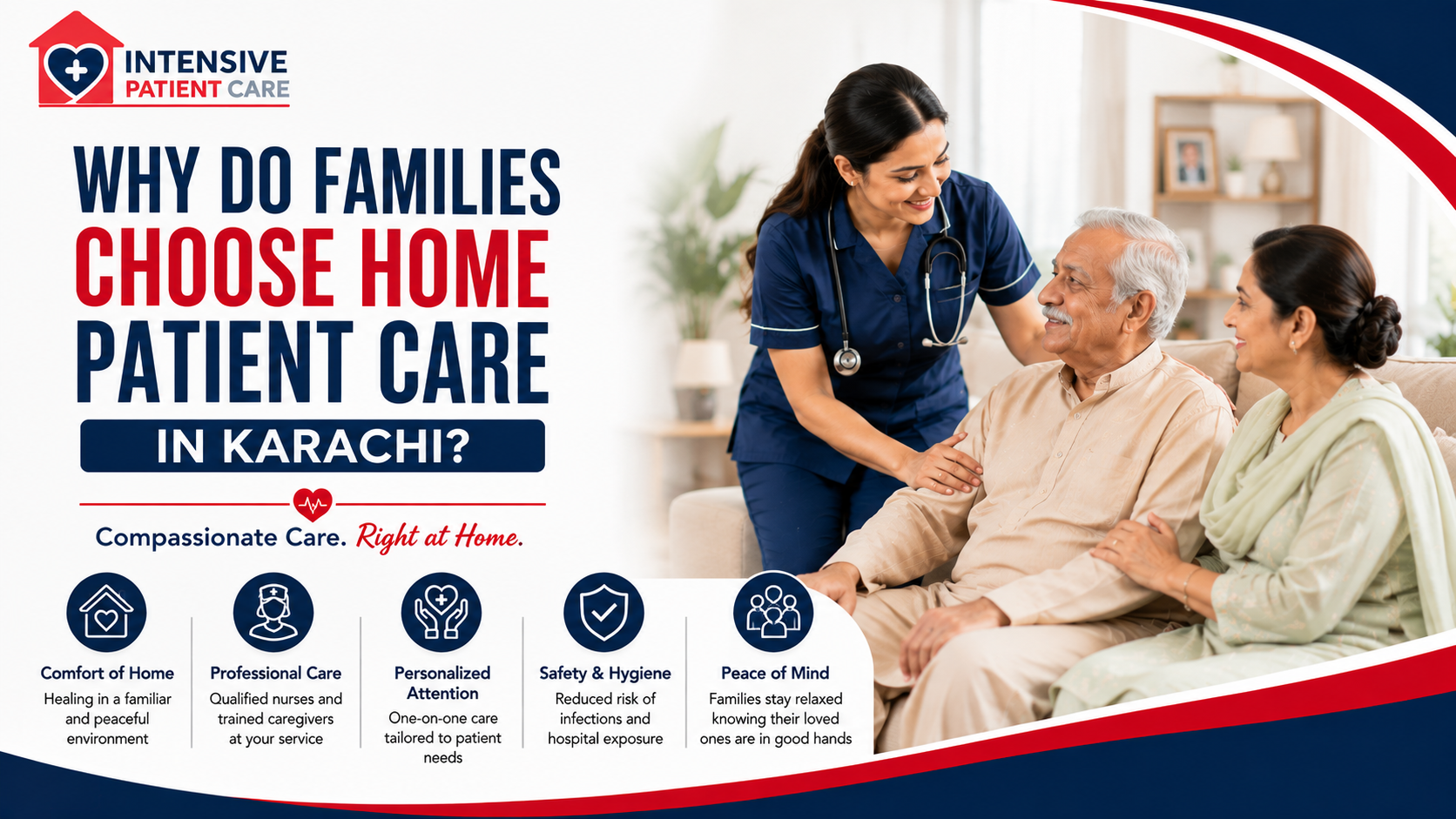
Many families prefer Home Patient Care Karachi because it allows patients to receive support in a familiar environment.
Home care can also make it easier for family members to stay involved in daily routines.
A home setting may be particularly comfortable for elderly patients who find frequent travel difficult. It can also help patients who need assistance during recovery after hospitalization.
Home care does not mean that a patient should avoid medical treatment. Instead, it can complement care provided by doctors and hospitals.
A qualified healthcare professional should determine whether home care is appropriate, particularly when the patient has complex symptoms or requires specialized treatment.
What Services Are Included in Private Patient Care Services Karachi?
The services provided depend on the patient’s condition and the qualifications of the person providing care.
Common services may include:
- Assistance with bathing, dressing, feeding, and personal hygiene
- Mobility and positioning support
- Medication reminders according to the prescribed schedule
- Monitoring of basic vital signs when appropriate
- Assistance after surgery or hospitalization
- Wound care by appropriately qualified nursing staff
- Support for elderly patients
- Basic rehabilitation assistance as directed by healthcare professionals
- Support with doctor-recommended routines
- Patient observation and communication with family members
- Assistance with appointments and follow-up care
- Emotional support and companionship
Families should clearly discuss the required services before starting care.
If the patient requires medical procedures, the family should confirm that the assigned healthcare professional has the appropriate training and authorization to perform them.
Who Can Benefit From Professional Patient Care at Home Karachi?
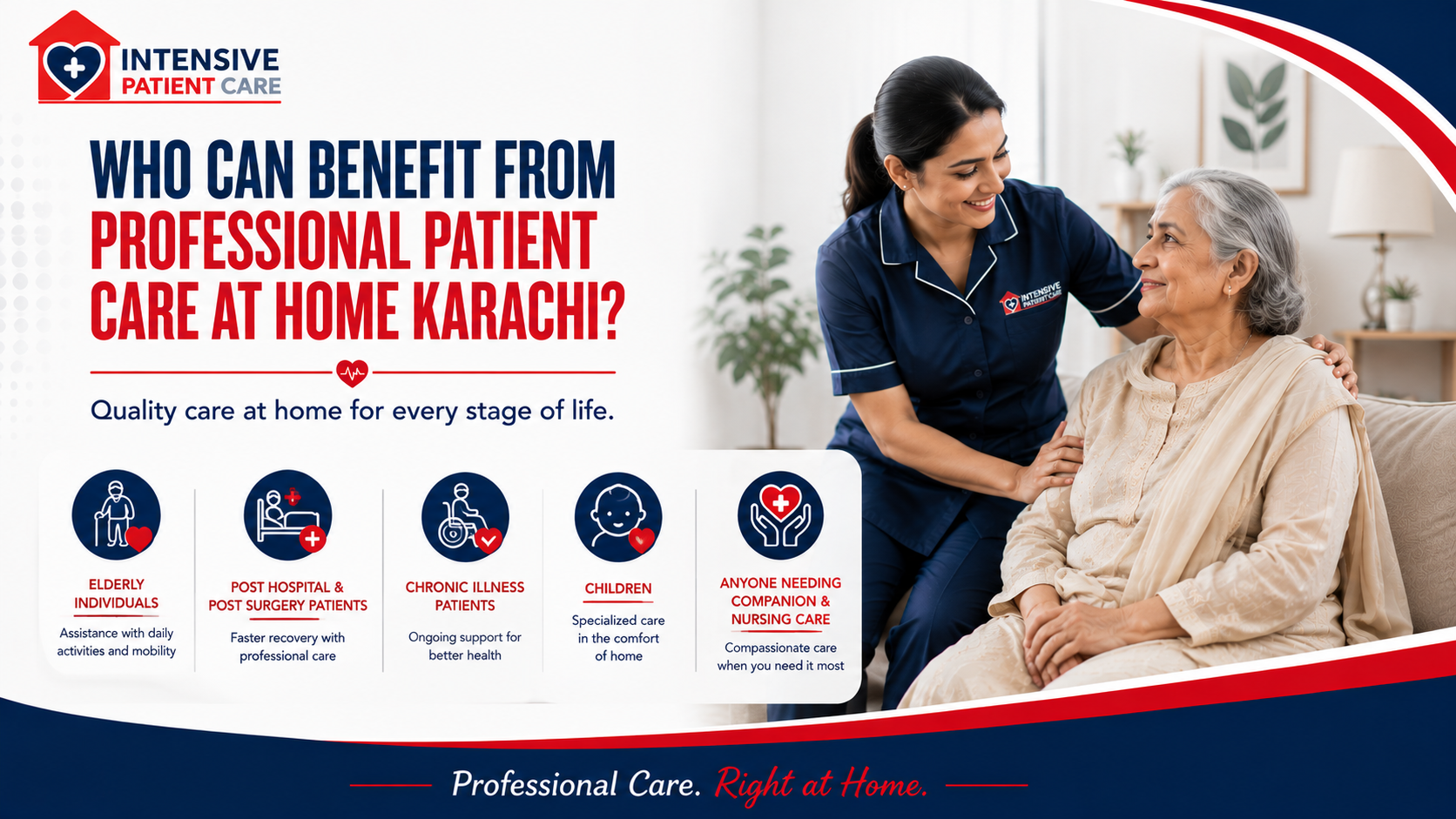
Professional Patient Care at Home Karachi can be useful for several groups of patients.
Elderly Patients
Older adults may need assistance with movement, meals, hygiene, medication routines, and daily activities.
A caregiver or nurse can provide support while allowing the person to remain in their own home.
Post Surgery Patients
Recovery after surgery may involve restricted movement, wound care, medication schedules, dietary instructions, and follow-up appointments.
A trained professional can help the patient follow the care plan provided by the treating doctor.
Patients With Chronic Conditions
People living with long-term illnesses may need regular assistance and observation.
Home care can help families maintain a consistent daily routine while keeping the treating healthcare team informed about relevant changes.
Patients With Limited Mobility
Patients who cannot move independently may require help with transferring from bed to chair, personal hygiene, positioning, and other daily tasks.
Patients Recovering After Hospitalization
After discharge, some patients may still be weak or require assistance. Private care can bridge the gap between hospital treatment and independent living.
What are Elderly Patient Care Services Karachi?
Elderly Patient Care Services Karachi focuses on helping older adults maintain safety, comfort, and independence.
Elderly care is not always about medical treatment. Many older adults mainly need support with routine activities and companionship.
However, some elderly patients have several health concerns at the same time.
In these cases, communication between caregivers, family members, and doctors becomes especially important.
A caregiver should observe changes in appetite, mobility, alertness, sleep, mood, or general condition and report concerning changes to the family or appropriate healthcare professional.
When Is Intensive Patient Care Needed?
Intensive patient care may be considered when a patient requires closer observation or more frequent professional assistance than routine home care can provide.
This may apply to patients with significant medical needs, serious weakness, complex recovery requirements, or conditions that require frequent monitoring.
The exact level of care should be decided according to the patient’s medical condition and the treating doctor’s recommendations.
Intensive care at home should not be confused with intensive care provided in an ICU. An ICU has specialized equipment, continuous monitoring, and a hospital-based medical team for critically ill patients.
If a patient has a medical emergency, severe breathing difficulty, loss of consciousness, uncontrolled bleeding, chest pain, or another potentially life-threatening symptom, emergency medical attention should be sought instead of relying on routine home nursing.
What Is Certified Home Nursing Care Karachi?
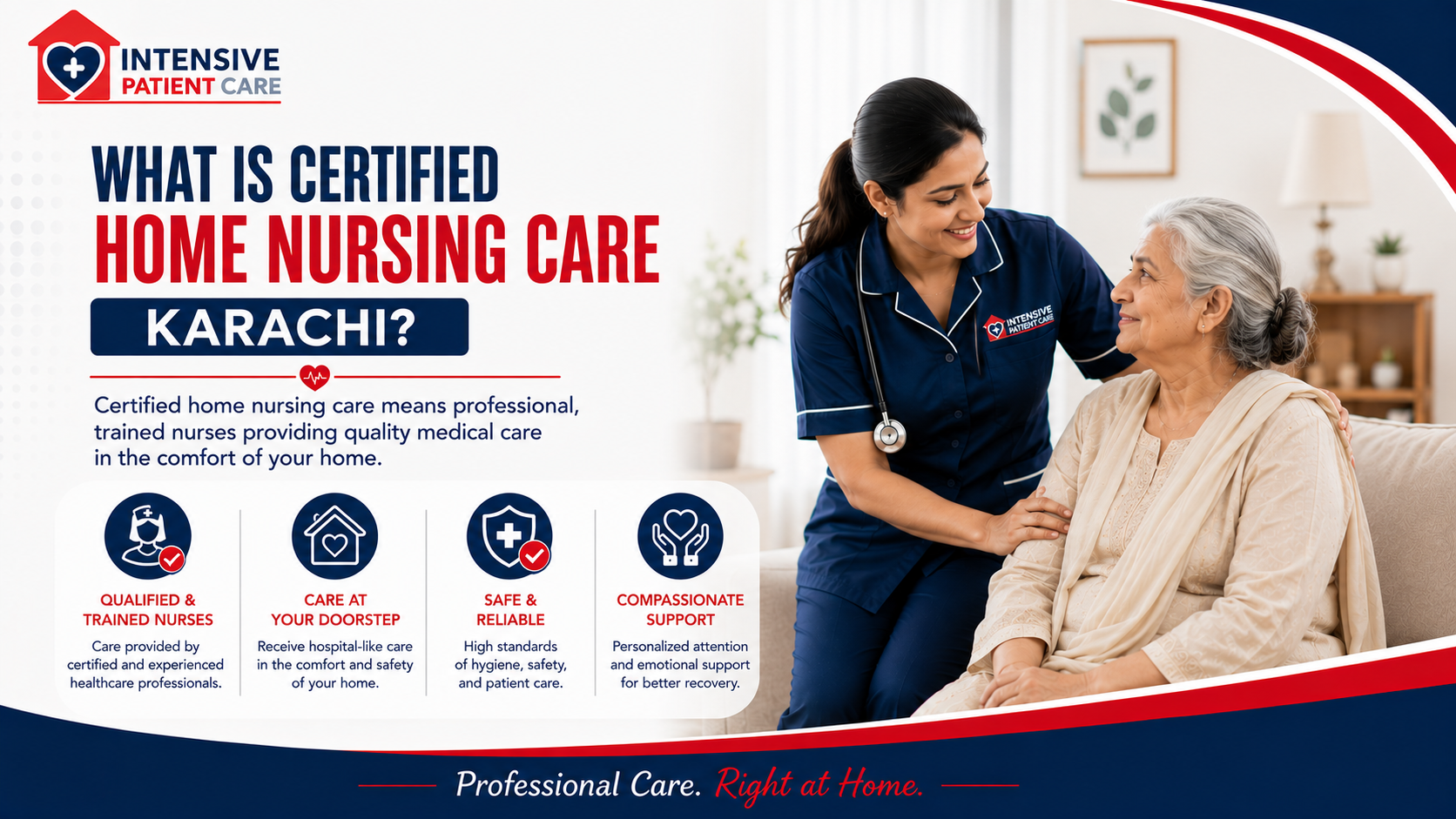
Certified Home Nursing Care Karachi refers to home nursing support provided by appropriately qualified nursing professionals.
Nursing requirements can vary depending on the patient.
Some patients may require basic monitoring, while others may need more specialized support.
Before hiring a nurse, families should ask about qualifications, relevant experience, professional registration where applicable, and experience with the patient’s specific condition.
A professional nurse should also work within their scope of practice and follow the treatment plan established by the patient’s healthcare team.
Private Caregiver vs Home Nurse: What Is the Difference?
A caregiver and a nurse do not necessarily perform the same role.
Care Option | Main Role | Suitable For |
Private Caregiver | Daily living assistance and companionship | Elderly people and patients needing routine support |
Home Nurse | Nursing care, monitoring, and appropriate clinical tasks | Patients requiring professional nursing support |
Intensive Home Nursing | Closer monitoring and higher-level nursing support | Patients with more complex care requirements |
Family Care | Emotional and routine support | Patients whose families can provide regular assistance |
Hospital Care | Medical treatment and continuous clinical supervision | Patients requiring hospital-level treatment |
The appropriate option depends on the patient’s health status and the doctor’s recommendations.
Important Questions to Ask Before Hiring
Consider asking:
- What qualifications does the caregiver or nurse have?
- Does the professional have experience with similar patients?
- What services are included?
- Is care available during the day, night, or around the clock?
- Who supervises the care?
- How are changes in the patient’s condition reported?
- What happens if the assigned caregiver is unavailable?
- Can the provider coordinate with the patient’s doctor?
- Are additional charges applicable for specialized care?
- What emergency procedure should the family follow?
These questions can help families make a safer and more informed decision.
What Should Families Expect From In-Home Private Care for Patients Karachi?
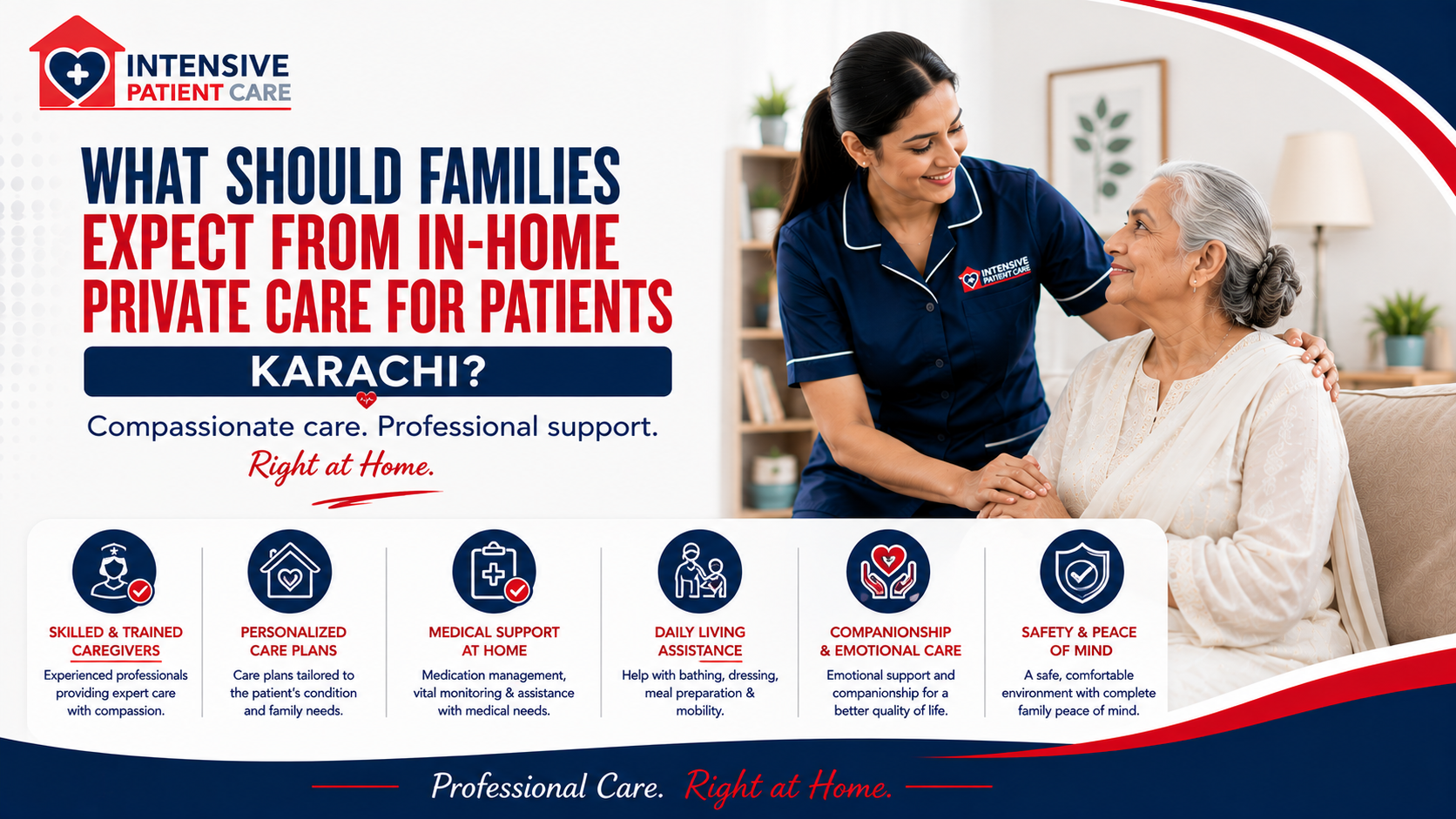
In Home Private Care for Patients Karachi should be organized around the patient’s actual requirements.
A good home care arrangement begins with an assessment of the patient’s condition, daily routine, mobility, medications, nutrition, hygiene needs, and level of independence.
The care plan should clearly explain what the caregiver or nurse is expected to do.
For example, an elderly patient may need assistance getting out of bed in the morning, personal hygiene support, meal assistance, medication reminders, and companionship.
A post surgery patient may have different requirements, such as movement restrictions, wound care, observation, and assistance with follow-up appointments.
Personalized planning helps prevent unnecessary services and ensures that important needs are not overlooked.
How Does Home Patient Care Work?
The process can be relatively straightforward when the family has clearly identified the patient’s needs.
Step 1: Assess the Patient
Start by identifying the patient’s health condition, mobility, daily activities, medical requirements, and level of independence.
Step 2: Consult the Treating Doctor
For patients with medical conditions, families should discuss home care requirements with the treating doctor.
The doctor can explain what type of monitoring or nursing support may be appropriate.
Step 3: Select the Right Professional
Choose a caregiver or nurse based on qualifications, experience, and the patient’s specific needs.
Step 4: Create a Care Routine
Document important information such as medication schedules, mobility restrictions, dietary instructions, appointments, and emergency contacts.
Step 5: Monitor Progress
Families should remain involved and communicate regularly with the caregiver and healthcare team.
Any significant change in the patient’s condition should be addressed promptly.
What Are the Benefits of Private Patient Care?
Private home care can offer practical benefits when it is appropriately planned.
Patients may feel more comfortable receiving assistance in their own surroundings.
Families may also find it easier to remain involved in the patient’s daily routine.
Key benefits can include:
- Personalized attention
- Assistance with daily activities
- Greater comfort at home
- Support for elderly family members
- Help during post surgery recovery
- Better continuity of daily routines
- Reduced the need for unnecessary travel
- Family involvement in care
- Flexible scheduling depending on the provider
- Support with doctor-recommended care plans
However, home care is not automatically better than hospital care. The right choice depends on the patient’s medical condition.
What Are the Limitations of Home Patient Care?
Home care also has limitations.
A home environment may not have the equipment required for patients who need advanced medical treatment.
Some conditions require hospital-based monitoring or specialist intervention.
There may also be challenges related to caregiver availability, communication, emergency response, and the suitability of the home environment.
Families should not delay hospital treatment simply because a home nurse or caregiver is available.
When symptoms are severe or rapidly worsening, professional medical evaluation is more important than continuing routine home care.
How Can Families Make Home Care Safer?
Patient safety should be a priority from the beginning.
The home should have clear walking areas and adequate lighting, especially for elderly patients.
Frequently used items should be easy to reach.
Medication should be organized according to the treating doctor’s instructions.
Families should avoid changing doses or stopping prescribed medicines without medical advice.
For patients with limited mobility, caregivers should follow appropriate techniques for movement and positioning.
Important medical information should also be available to the caregiver, including the patient’s current treatment plan and emergency contact information.
When Should a Patient See a Doctor Instead of Relying on Home Care?
Home care is supportive. It should not replace professional diagnosis and treatment.
A doctor should evaluate symptoms that are new, persistent, severe, or worsening.
Immediate medical attention may be necessary for signs such as severe breathing difficulty, loss of consciousness, serious injury, uncontrolled bleeding, severe chest pain, or other emergency symptoms.
Families should also contact the treating doctor when there is a significant change in the patient’s condition.
How Can You Find Reliable Private Patient Care Services in Karachi?
When searching for Private Patient Care Services Karachi, avoid selecting a provider based only on price or claims such as “number one” or “best.”
Look for transparent information about qualifications, services, supervision, availability, and patient safety.
Reviews can provide useful context, but they should not replace verification of professional credentials.
For patients requiring medical nursing, ask specifically whether the assigned professional has experience with the relevant condition.
It is also helpful to understand whether the service provider can coordinate with the patient’s doctor when necessary.
Why Is Doctor and Nurse Communication Important?
Good communication is one of the most important elements of home-based patient care.
The caregiver or nurse may notice changes in the patient before the family does.
Timely communication can help the healthcare team decide whether the patient needs an assessment or a change in the care plan.
For example, a caregiver might notice that an elderly patient is eating less than usual or having increasing difficulty walking.
These observations should be communicated rather than ignored.
Home care works best when the patient, family, caregiver, nurse, and doctor have clearly defined responsibilities.
Private Patient Care Karachi: What Should You Remember?
Private care can be valuable, but the service should always match the patient’s actual requirements.
The most important considerations include:
- Assess the patient before choosing a service.
- Use qualified professionals for nursing tasks.
- Follow the treating doctor’s instructions.
- Keep medication information organized.
- Maintain communication between family and healthcare professionals.
- Choose intensive patient care only when the patient’s needs justify closer supervision.
- Ask about emergency procedures before starting care.
- Do not use home care as a substitute for emergency medical treatment.
- Review the care plan when the patient’s condition changes.
Frequently Asked Questions
What is Private Patient Care Karachi?
Private Patient Care Karachi refers to personalized support provided to patients in their homes or other suitable settings.
Depending on the patient’s needs, it may include personal assistance, elderly care, recovery support, monitoring, or professional nursing services.
Is home patient care suitable for elderly people?
Yes, home patient care can be suitable for elderly people who need assistance with daily activities, mobility, companionship, or healthcare routines.
The required level of support depends on the individual’s health condition.
What is the difference between a caregiver and a home nurse?
A caregiver generally focuses on daily living assistance, companionship, hygiene, mobility, and routine support.
A qualified home nurse can provide appropriate nursing care and clinical tasks within their professional scope.
When is intensive patient care required?
Intensive patient care may be considered when a patient needs closer observation or more frequent professional assistance.
The appropriate level should be determined according to the patient’s condition and the healthcare team’s recommendations.
How do I choose the best doctor in Karachi for a patient?
When choosing the best doctor in Karachi, consider the doctor’s qualifications, relevant specialization, professional experience, communication, and suitability for the patient’s specific condition.
Avoid relying solely on promotional claims.
Conclusion
Reliable Private Patient Care Karachi services can provide valuable support for elderly people, post surgery patients, individuals with limited mobility, and patients who need assistance with ongoing care.
The key is to select a service based on the patient’s actual needs rather than simply choosing the cheapest option or believing an unsupported “best” claim.
For routine assistance, a trained caregiver may be appropriate. For clinical requirements, Certified Home Nursing Care Karachi may be more suitable.
Patients with more complex needs may require intensive patient care under appropriate professional supervision.
Families should involve the treating doctor whenever medical decisions are required and should seek urgent medical attention when serious symptoms occur.
With qualified professionals, clear communication, an appropriate care plan, and regular monitoring, home-based care can provide patients with practical support while allowing them to remain in a familiar and comfortable environment.