

Home healthcare has become an essential part of modern medical care.
Many patients prefer receiving treatment in familiar surroundings rather than spending long periods in a hospital.
A registered nurse for home care provides professional medical support, helping patients recover, manage chronic illnesses, and maintain a better quality of life while remaining at home.
Whether someone is recovering after surgery, living with a long-term medical condition, or needs specialized care due to aging, professional nursing services offer a practical and reliable solution.
From medication management to wound care and health monitoring, registered nurses deliver skilled medical care that promotes comfort, safety, and independence.
This guide explains everything you need to know about home nursing services, including the different types of care, benefits, expert recommendations, common mistakes to avoid, and practical advice for choosing the right nursing support.
What Is a Registered Nurse for Home Care?
A registered nurse for home care is a licensed healthcare professional who provides medical treatment and nursing care in a patient’s home instead of a hospital or clinic.
These professionals have completed formal nursing education, passed licensing requirements, and possess the clinical skills needed to manage a wide range of health conditions.
Unlike non-medical caregivers who primarily assist with daily living activities, a registered home care nurse performs medical procedures, monitors health conditions, administers medications, and communicates with physicians to ensure continuity of care.
Home nursing has become increasingly valuable because it combines professional medical expertise with the comfort of a familiar environment.
Patients often feel more relaxed at home, which can positively influence recovery and emotional well-being.
Why Home Nursing Care Matters
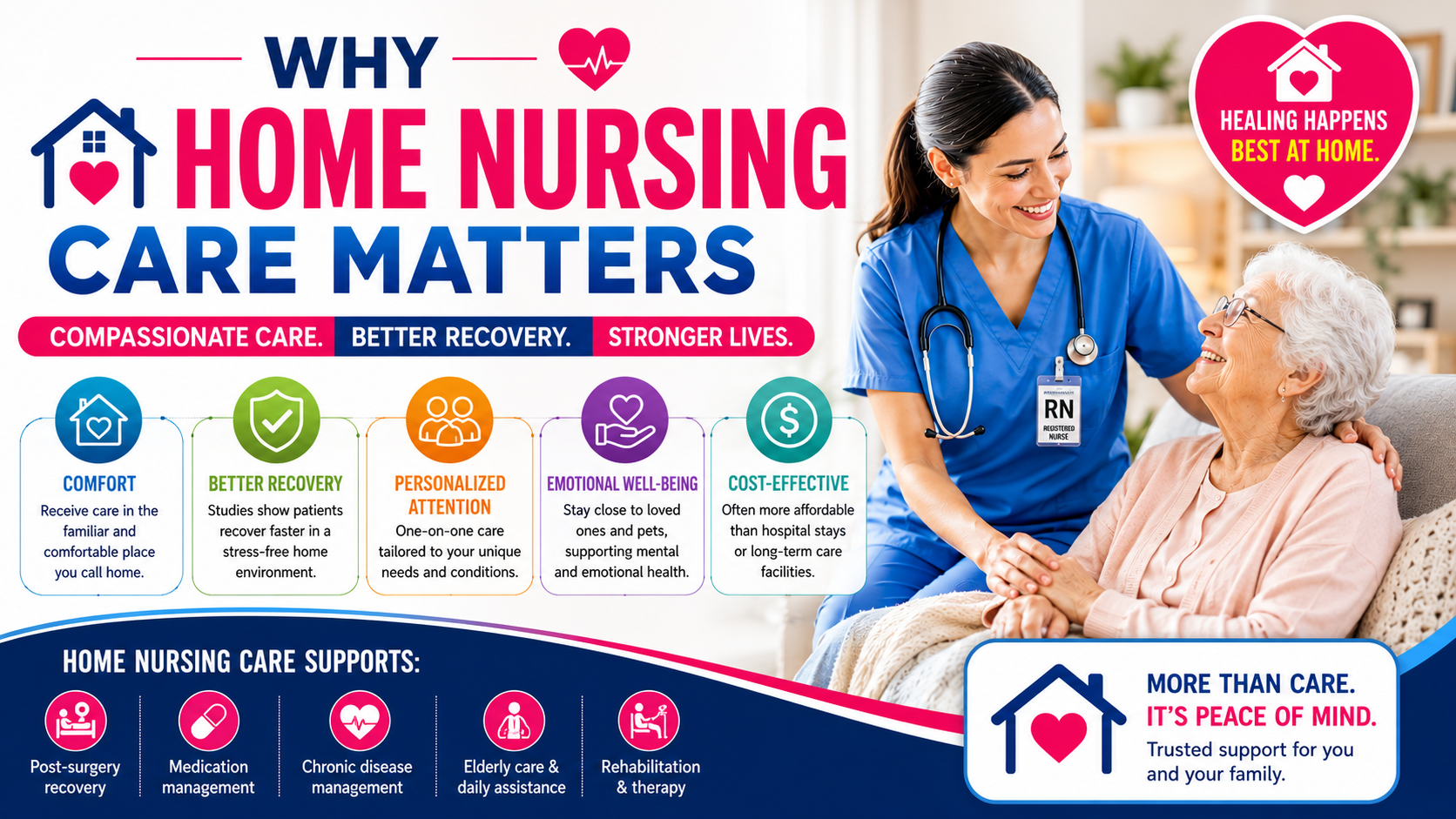
Healthcare needs do not always end after a patient leaves the hospital.
Many individuals require continued medical supervision during recovery or while managing chronic diseases.
This is where licensed home health nurse services play a vital role.
Receiving professional nursing care at home helps reduce unnecessary hospital visits, supports faster recovery, and allows patients to remain close to their families.
A qualified home healthcare registered nurse can identify early signs of complications before they become serious.
Regular monitoring allows timely medical intervention, reducing the risk of emergency hospital admissions.
Home nursing also provides personalized attention. Unlike busy hospital settings where nurses care for multiple patients, home care focuses entirely on one individual during each visit.
How In-Home Registered Nursing Services Work
In-home registered nursing services begin with a professional health assessment.
The nurse reviews the patient’s medical history, current medications, treatment goals, and the physician’s instructions before creating an individualized care plan.
Depending on the patient’s condition, the nurse may schedule daily visits, weekly appointments, or extended private duty care.
During each visit, the nurse evaluates health progress and adjusts care based on medical needs.
Common nursing responsibilities include:
- Monitoring vital signs
- Administering prescribed medications
- Changing wound dressings
- Managing feeding tubes
- Providing injections
- Monitoring blood sugar levels
- Educating patients and family members
- Reporting progress to physicians
This coordinated approach ensures patients receive consistent medical care without leaving their homes.
Types of Home Care RN Services
Not every patient requires the same level of medical attention. Home care RN services are designed to meet different healthcare needs, from short-term recovery to long-term disease management.
Short-Term Recovery Care
Patients recovering from surgery, fractures, or serious illnesses often need temporary nursing support.
Nurses monitor healing, manage medications, inspect surgical wounds, and help prevent complications during recovery.
Long-Term Chronic Disease Management
Individuals living with diabetes, heart disease, kidney disorders, neurological conditions, or respiratory illnesses often benefit from continuous monitoring by a medical home care nurse.
Regular assessments help detect changes early and support better disease management.
Rehabilitation Nursing
Patients recovering after strokes, orthopedic surgery, or severe injuries often need rehabilitation support.
Nurses work closely with physical therapists and physicians to coordinate care and promote steady recovery.
Palliative and Comfort Care
Some patients with serious illnesses require symptom management and comfort-focused care.
Registered nurses help control pain, monitor symptoms, and improve overall quality of life while supporting family caregivers.
Private Duty Nursing
A private duty registered nurse provides individualized care for patients requiring extended medical supervision.
This option is common for individuals with complex medical conditions, ventilator support, or advanced neurological disorders.
Who Can Benefit from Home Nursing Care?
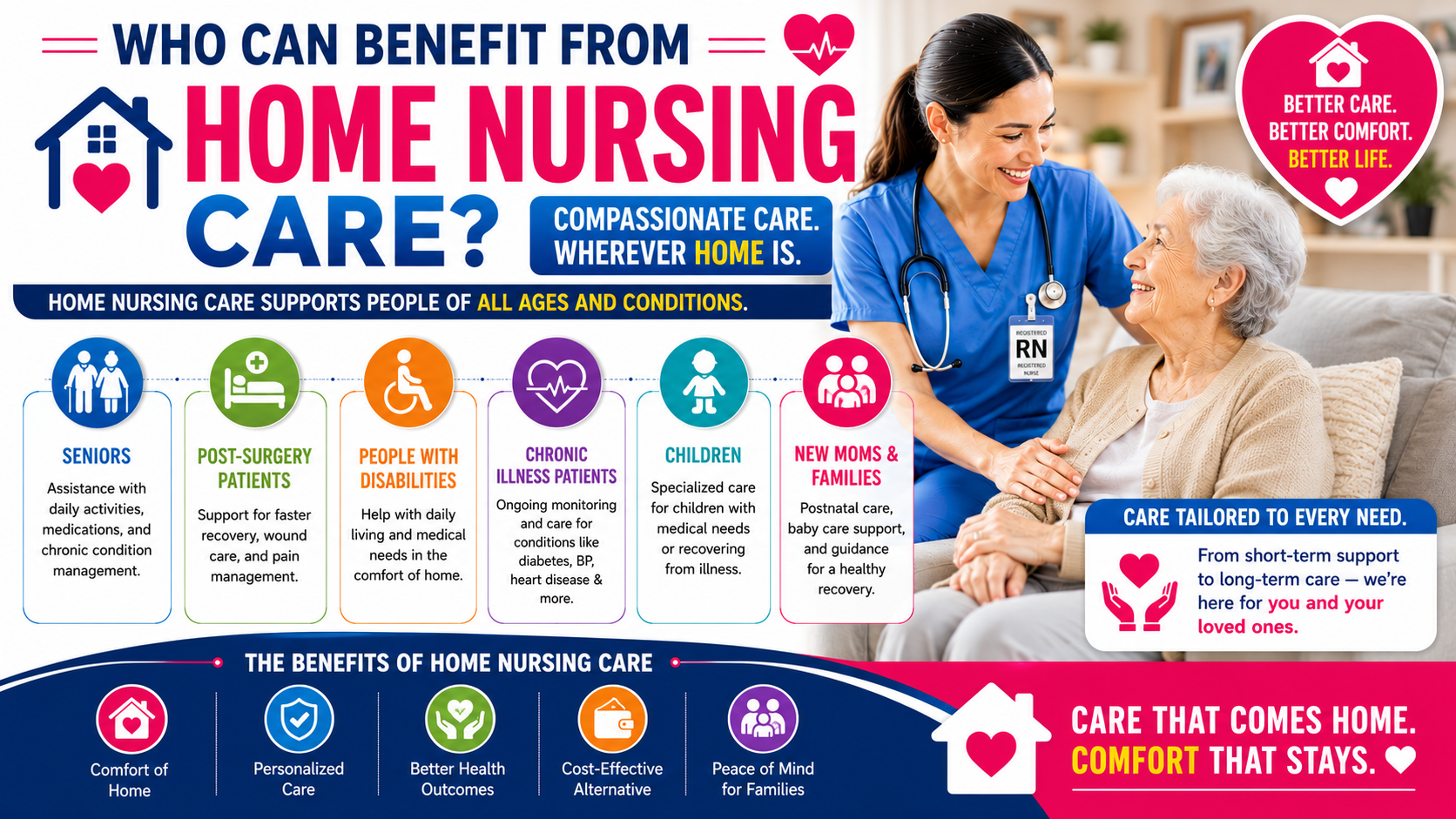
Professional nursing at home serves patients across all age groups. Medical needs vary significantly, but skilled nursing provides flexible support based on individual circumstances.
Older adults often require elderly home nursing services after hospitalization or while managing multiple chronic illnesses.
Regular nurse visits help reduce complications associated with aging.
Adults recovering from surgery frequently need post-surgery home nursing care to monitor incisions, manage medications, and reduce infection risks.
Patients living with chronic illnesses benefit from a chronic disease home care nurse who monitors symptoms and helps maintain stable health.
Individuals with disabilities or mobility limitations also receive valuable support through home patient care nurse services that improve independence while maintaining medical safety.
Children with complex medical conditions may also require skilled nursing at home under physician supervision.
Benefits of Choosing Skilled Nursing Care at Home
Professional skilled nursing care at home offers advantages that extend beyond convenience.
It improves both medical outcomes and patient satisfaction while reducing unnecessary healthcare costs.
Patients often experience lower stress levels when recovering in familiar surroundings.
Family members remain closely involved in the care process, creating stronger emotional support during recovery.
Medical professionals can observe the patient’s living environment, allowing practical recommendations that improve daily safety and long-term health management.
Consistent nurse visits also reduce medication errors and improve treatment adherence because patients receive ongoing education and supervision.
Personalized Home Nursing Care Improves Recovery
Every patient has unique medical needs. Personalized home nursing care allows registered nurses to tailor treatment plans according to individual health conditions, physician recommendations, and recovery goals.
For example, two patients recovering from the same surgery may require different levels of wound care, mobility assistance, or medication management.
A home nurse continuously evaluates progress and adapts care as recovery advances.
This individualized approach also strengthens communication between healthcare providers, patients, and family members.
Questions can be addressed promptly, helping everyone stay informed about treatment progress.
Patients often feel more confident following medical instructions when they receive one-on-one guidance from an experienced nurse.
This improves compliance with medications, rehabilitation exercises, and lifestyle recommendations, which can lead to better long-term outcomes.
The Growing Role of Home-Based Nursing Care
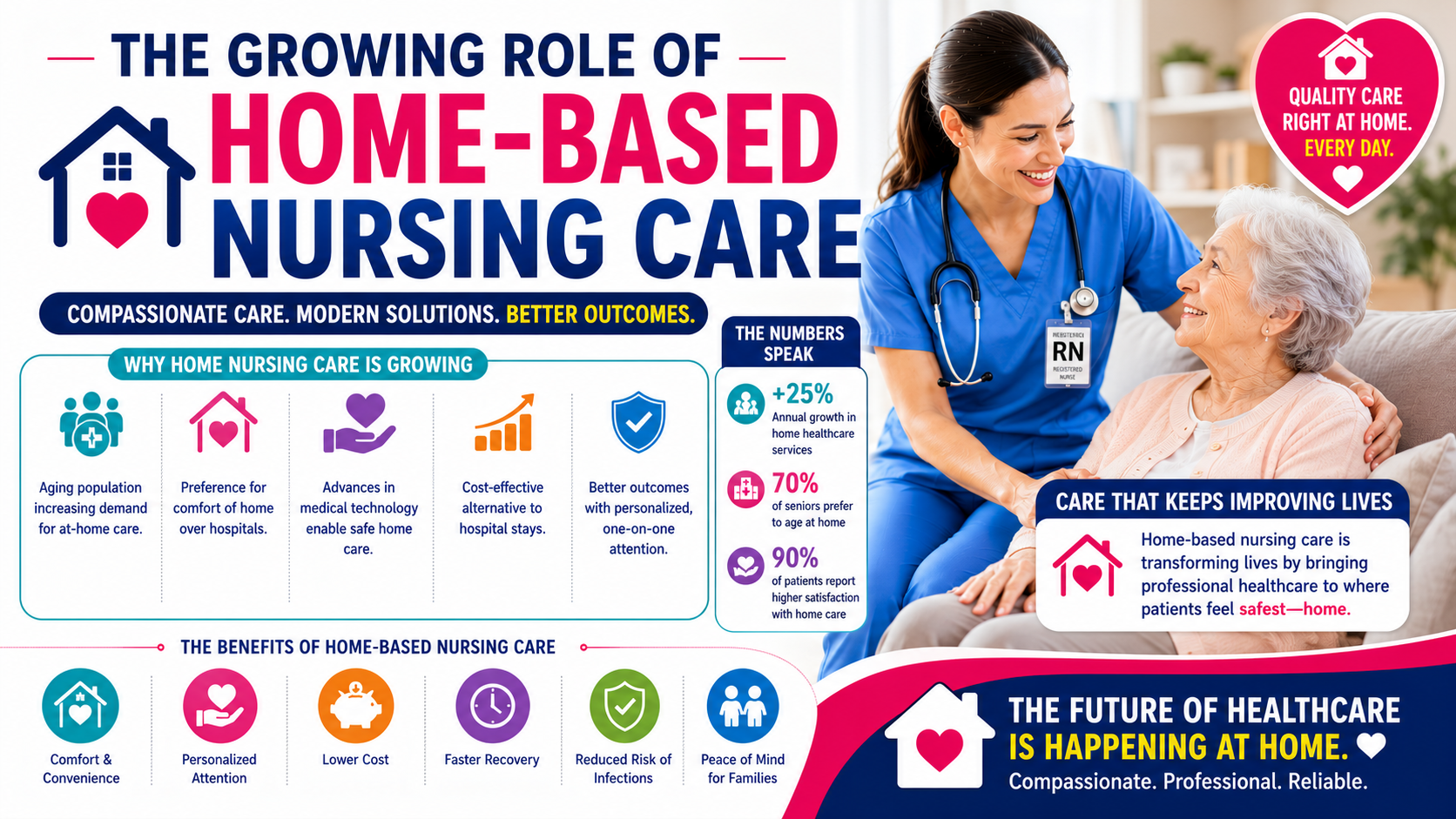
Healthcare systems worldwide are placing greater emphasis on home-based nursing care because it supports patient-centered treatment while reducing unnecessary hospital stays.
Advances in medical technology now allow many treatments that once required hospitalization to be safely delivered at home.
Portable medical equipment, digital health monitoring, and improved communication between physicians and nurses have made home care more efficient than ever.
A certified home health nurse can perform many advanced nursing tasks while keeping the patient’s healthcare team informed through regular progress updates.
This model also benefits family caregivers. Instead of managing complex medical tasks alone, they receive professional guidance and practical education that helps them confidently assist their loved ones between nursing visits.
Professional home nursing is no longer limited to post-hospital recovery. It has become an important part of modern healthcare for patients seeking safe, effective, and compassionate medical support without leaving home.
Registered Nurse vs Caregiver: What Is the Difference?
Many people assume that a registered nurse and a caregiver perform the same role.
While both provide valuable support, their responsibilities, qualifications, and scope of practice are very different. Choosing the right type of care depends on the patient’s medical needs.
Feature | Registered Nurse for Home Care | Non-Medical Caregiver |
Education | Licensed nursing degree and professional certification | Caregiving training may vary |
Medical Procedures | Yes | No |
Medication Administration | Yes, according to medical instructions | Usually not permitted |
Wound Care | Yes | No |
Health Monitoring | Comprehensive clinical assessment | Basic observation |
Chronic Disease Management | Yes | Limited |
Physician Communication | Regular clinical reporting | Usually through family |
Best For | Medical conditions, recovery, and long-term nursing care | Daily living assistance and companionship |
If a patient requires injections, wound care, medication management, or regular health assessments, a registered nurse home visit service is usually the safest option.
Caregivers remain valuable for helping with bathing, meal preparation, mobility, and companionship, but they are not trained to perform skilled medical procedures.
Signs You May Need Professional Home Nursing Services
The need for professional home nursing services is not always obvious. Some families wait until a medical emergency occurs before seeking skilled nursing support.
Early intervention often leads to better health outcomes and fewer complications.
The following situations commonly indicate that a patient may benefit from a medical home care nurse:
- Recovery after surgery requires wound care and medication management.
- A chronic illness needs regular monitoring and ongoing nursing supervision.
- Frequent hospital readmissions are becoming a concern.
- An older adult struggles to manage medications correctly.
- A patient has limited mobility or difficulty attending clinic appointments.
- Specialized medical equipment such as feeding tubes or catheters, is used at home.
- Family caregivers feel overwhelmed by complex healthcare responsibilities.
Recognizing these signs early allows patients to receive timely care before minor health issues develop into serious medical problems.
How to Choose the Right Registered Home Care Nurse
Selecting a qualified nurse is one of the most important healthcare decisions a family can make.
While availability and cost matter, professional qualifications and experience should always remain the top priorities.
Start by confirming that the nurse holds an active professional license and has experience caring for patients with similar medical conditions.
A nurse who regularly provides home nursing care services for post-operative recovery may require different expertise than one specializing in neurological disorders or long-term elderly care.
Communication skills are equally important. A good nurse explains treatment plans clearly, answers questions patiently, and keeps family members informed about changes in the patient’s condition.
It is also helpful to ask whether the nurse collaborates with physicians, physical therapists, and other healthcare professionals.
Coordinated care creates a smoother recovery process and improves overall treatment quality.
Families should discuss scheduling, emergency availability, documentation practices, and follow-up visits before beginning care.
Setting clear expectations from the beginning helps build trust and prevents misunderstandings later.
Step-by-Step Guide to Starting Home Nursing Care
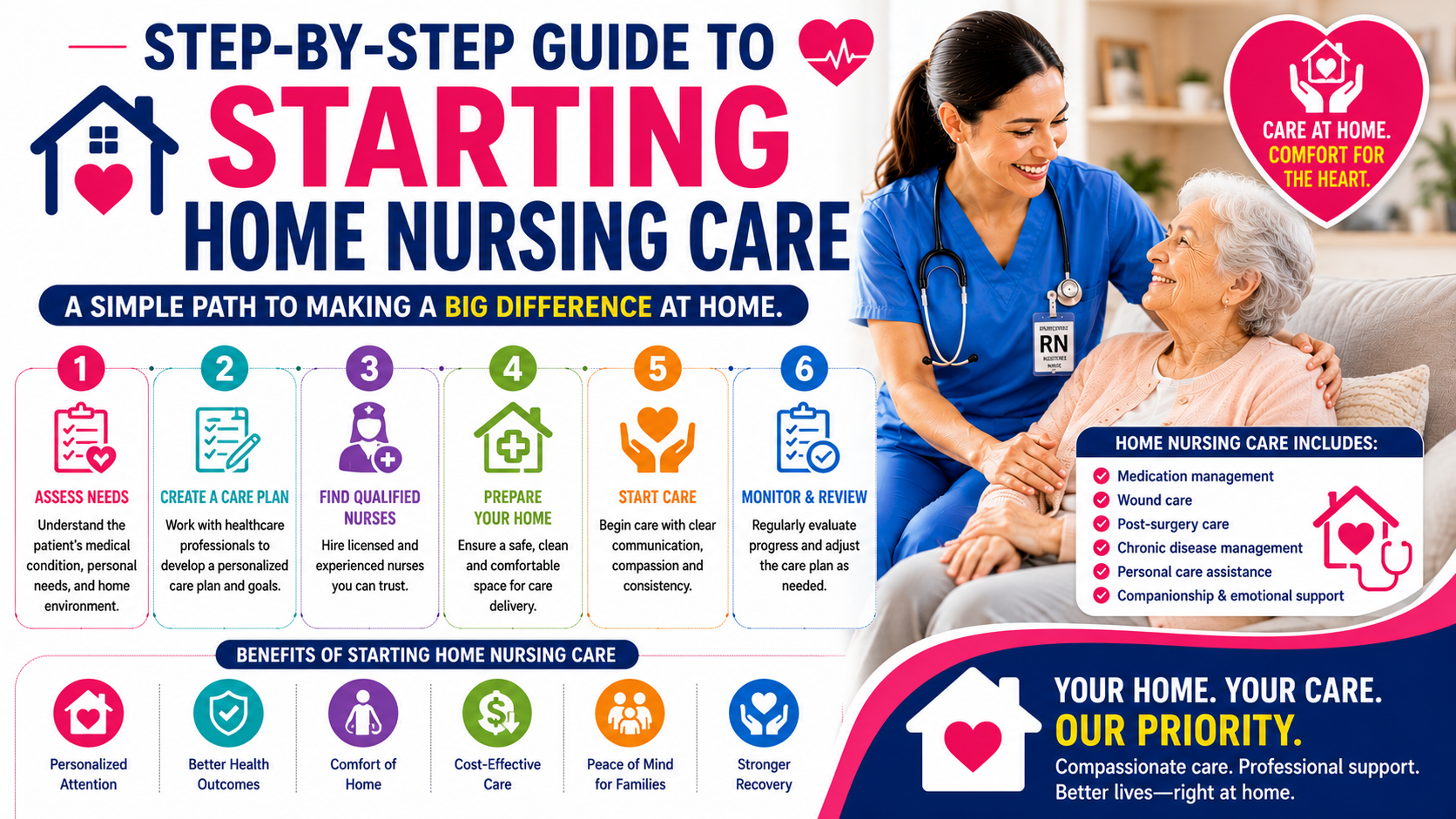
Beginning at-home nursing care is usually straightforward when approached in an organized manner.
The first step is obtaining a medical evaluation from the patient’s physician.
This assessment identifies the level of nursing care required and outlines the recommended treatment plan.
Next, the patient’s health records, medications, allergies, and recent hospital reports should be shared with the nurse.
Having complete medical information allows safe and effective care from the first visit.
The nurse then performs an in-home assessment to evaluate the patient’s condition, mobility, living environment, and safety risks.
Based on this evaluation, a personalized care plan is created.
Once care begins, regular visits focus on monitoring recovery, providing treatments, documenting progress, and communicating updates to the healthcare team.
The care plan is reviewed periodically and adjusted whenever the patient’s condition changes.
This structured approach helps ensure continuity of care while supporting long-term health goals.
Real-World Example
Consider an older adult who returns home after hip replacement surgery.
The patient requires wound dressing changes, pain management, medication monitoring, and mobility support during recovery.
A licensed home health nurse visits several times each week to examine the surgical incision, monitor vital signs, educate the patient about safe movement, and identify early signs of infection.
The nurse also communicates recovery progress with the orthopedic specialist.
Because professional nursing care is provided consistently, the patient avoids unnecessary complications, gains confidence during rehabilitation, and returns to normal daily activities more quickly than expected.
This example highlights how skilled nursing services contribute to both medical safety and improved quality of life.
Common Mistakes Families Should Avoid
Families often make decisions with the best intentions, but a few common mistakes can affect the quality of home nursing care.
Many people assume every home caregiver has the same medical qualifications.
In reality, only licensed nurses can perform many clinical procedures safely.
Another mistake is delaying professional care until health problems become severe.
Early nursing intervention often prevents avoidable complications and hospital readmissions.
Some families also focus only on cost while overlooking clinical experience. Choosing an experienced home healthcare registered nurse who has managed similar conditions can make a significant difference in patient outcomes.
Poor communication is another challenge. Families should always inform the nurse about new symptoms, medication changes, or physician recommendations so that the care plan remains accurate and effective.
Finally, patients sometimes skip follow-up appointments because they feel better.
Home nursing complements physician care but does not replace regular medical evaluations.
Expert Recommendations for Better Home Nursing Outcomes
Healthcare professionals consistently recommend combining skilled nursing with healthy daily habits.
Proper nutrition, regular hydration, medication adherence, and physician-approved physical activity all contribute to successful recovery.
Patients should keep an updated list of medications, emergency contacts, allergies, and medical history in an easily accessible location.
This information allows nurses to respond quickly during routine visits or unexpected situations.
Family involvement also plays an important role.
When relatives participate in care discussions and follow nursing instructions carefully, patients often experience better recovery and greater emotional support.
Consistent communication between the patient, nurse, physician, and family creates a strong healthcare partnership that promotes long-term wellness.
Essential Tips for Getting the Best Results from Home Nursing Care
Patients and families can improve the quality of home nursing care services by following a few practical recommendations.
These simple habits help create a safer environment and support better communication with healthcare professionals.
- Keep all prescribed medications organized and available during every nurse visit.
- Follow the care plan exactly as instructed by the physician and registered nurse.
- Report new symptoms or changes in health immediately instead of waiting for the next appointment.
- Maintain a clean and safe home environment to reduce the risk of falls and infections.
- Attend scheduled medical follow-up appointments even when recovery appears to be progressing well.
- Encourage open communication between family members, nurses, and physicians.
- Keep emergency contact numbers and important medical records in one easily accessible location.
- Ask questions whenever instructions are unclear to ensure safe care at home.
Following these recommendations helps patients receive consistent, high-quality care while reducing preventable complications.
Frequently Asked Questions
What does a registered nurse for home care do?
A registered nurse for home care provides professional medical services at a patient’s home.
These services may include medication administration, wound care, health assessments, chronic disease monitoring, injections, post-operative care, patient education, and coordination with physicians.
Who needs in-home registered nursing services?
Patients recovering after surgery, older adults, individuals with chronic illnesses, people with disabilities, and those requiring specialized medical treatments at home often benefit from in-home registered nursing services.
How is a registered nurse different from a home caregiver?
A registered nurse is licensed to perform medical procedures, administer medications, monitor health conditions, and provide skilled clinical care.
A caregiver primarily assists with daily living activities such as bathing, dressing, meal preparation, and companionship.
How often can a home visit registered nurse provide care?
The frequency of home visit registered nurse services depends on the patient’s condition and physician’s recommendations.
Some patients need daily visits, while others receive weekly or occasional nursing care during recovery.
Is personalized home nursing care suitable for long-term medical conditions?
Yes. Personalized home nursing care is highly beneficial for patients living with diabetes, heart disease, neurological disorders, respiratory illnesses, and other chronic conditions that require ongoing monitoring and professional medical support.
Conclusion
Choosing a registered nurse for home care is an excellent option for patients who require skilled medical support while remaining in the comfort of their own homes.
From post-surgery recovery and chronic disease management to elderly care and long-term nursing support, professional nurses provide personalized treatment that promotes safety, comfort, and better health outcomes.
Unlike non-medical caregivers, registered nurses have the education and clinical expertise to perform medical procedures, monitor health conditions, administer medications, and coordinate care with physicians.
Their role extends beyond treatment by educating patients and families, identifying potential health concerns early, and supporting long-term recovery.
Every patient’s healthcare needs are different. Evaluating medical requirements, verifying nursing qualifications, maintaining clear communication, and following a structured care plan help families make informed decisions that support successful home-based treatment.
As healthcare continues to evolve, home nursing remains one of the most effective ways to deliver compassionate, professional medical care outside the hospital while helping patients maintain independence and quality of life.